

Board game
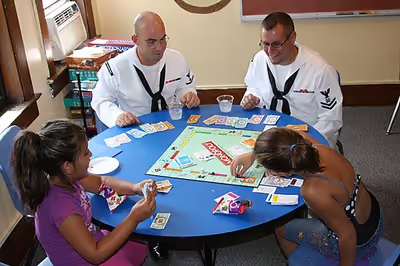
Tabletop social game
- 18 min read
- 8 chapters

Related on Lably
Through Necessity and sufficiency, Genre and Neolithic
While game boards are a necessary and sufficient condition of this genre, card games that do not use a standard deck of cards, as well as games that use neither cards nor a game board, are often colloquially included, with some referring to this genre generally as "table and board games" or simply "tabletop games".
Eras
Ancient era
Board games have been played, traveled, and evolved in most cultures and societies throughout history. They have been discovered in several archaeological sites, and there are several contenders for the oldest game, depending on the exact requirements applied and the accuracy of dating.
Archaeological finds of game boards exist that date from as early as the Neolithic period, including, as of 2024, a total of 14 sites reporting 51 game boards, ranging from the early 7000s BC to the mid-6000s BC.
Some of the oldest discovered gaming pieces have been discovered in southwest Turkey, including a set of elaborate sculptured stones in sets of four, speculated to be designed for a chess-like game, which were created during the Bronze Age around 3000 BC.
Senet has been argued to be the oldest known board game in the world, with possible game board fragments (c. 3100 BC) and undisputed pictorial representations (c. 2686 BC – c. 2613 BC) having been found in ancient Egyptian Predynastic and First Dynasty burials dating as far back as 3500 BC. However, while Senet was played for thousands of years, it fell out of fashion sometime after AD 400 during the Roman period; the rules were never written down, therefore they are not decisively known.
Similarly, Mehen, also from ancient Egypt, is one of the oldest games dated with reasonable confidence, at c. 3000 BC – c. 2300 BC, with some estimating it dates back to c. 3500 BC. The rules, scoring system, and game pieces, however, are also unknown or speculative.
The Royal Game of Ur is estimated to have originated around 2500 BC in ancient Mesopotamia, with specimens found in royal tombs. It has been claimed to be the oldest playable board game in the world, with well-defined game rules discovered written on a cuneiform tablet by a Babylonian astronomer in c. 177 BC – c. 176 BC.
Another game similar to the Royal Game of Ur was discovered in 1977 by the Italian Archaeological Mission in grave no. 731, a pseudo-catacomb grave at Shahr-i Sokhta, a UNESCO World Heritage archaeological site in Iran. This board game set, comprising 27 pieces and 4 different dice, dates to 2600 – 2400 BC. The set has been scientifically analyzed and a reconstruction has been proposed by researchers. It has similarly been claimed to be the oldest complete and playable board game ever discovered.
An example of a game with highly uncertain age is mancala, which includes a broad family of board games with a core design of two rows of small circular divots or bowls carved into a surface. It has had numerous estimations of its generic age due to the many variants that have been discovered in different locations across Africa, the Middle East, and southern Asia. These are dated across many different periods at different sites, from c. 800 BC – c. 200 BC (Roman Settlements); to c. 2500 BC – c. 1500 BC (Egypt); and even c. 7000 BC – c. 5000 BC (Jordan). The latter is based on divots carved out of limestone in a Neolithic dwelling dated to c. 5870 BC ± 240 BC, although this has been disputed.
Furthermore, when considering Neolithic period game board discoveries, caution has been given against considering these finds as representing the definitively earliest human game playing, as the absence of evidence of such games in earlier periods does not equate to evidence that no games were played.
Golden era
The 1880s–1920s were a board game epoch known as the Golden Age, a term coined by American art historian Margaret Hofer, where the popularity of board games was boosted through mass production, making them cheaper and more readily available. The most popular of the board games sold during this period was Monopoly (1935), with 500 million games played as of 1999.
Renaissance era
In the late 1990s, companies began producing more new games to serve a growing worldwide market. The Settlers of Catan (1995) is often credited with popularising German-style board games outside of Europe and growing the hobbyist game market to a wider audience. The early 21st century saw the emergence of a new "Golden Age" for board games called the "Board Game Renaissance". This period of board games industry development, of which board games such as Carcassonne (2000) and Ticket to Ride (2004) were a major part, saw a shift away from the 20th-century domination by well-established standby Golden Era board games like Monopoly (1935) and Game of Life (1960).
Sign in to keep reading
7 more chapters are free with a Lably account.
Regional history
Europe
Board games have a long tradition in Europe. The oldest records of board gaming in Europe date back to Homer's Iliad (written in the 8th century BC), in which he mentions the Ancient Greek game of petteia. This game of petteia would later evolve into the Roman game of ludus latrunculorum.
- Germany
- Kriegsspiel is a genre of wargaming developed in 19th century Prussia, to teach battle tactics to officers.
- Ireland
- Fidchell boards dating from the 10th century has been uncovered in Ireland, with the game said to date back to at least 144 AD.
- Scandinavia
- The ancient Norse game of hnefatafl was developed sometime before 400 AD.
- United Kingdom
- In the United Kingdom, the association of dice and cards with gambling led to all dice games except backgammon being treated as "lotteries by dice" in the Gaming Acts of 1710 and 1845. One of the most prolific publishers of board games of the late 18th and early 19th centuries was the English board game publisher John Wallis and his sons (John Wallis Jr. and Edward Wallis). The global popularisation of board games, with special themes and branding, coincided with the formation of the global dominance of the British Empire. Examples of british empire games included:
Americas
The board game patolli originated in Mesoamerica and was played by a wide range of pre-Columbian cultures such as the Toltecs and the Aztecs.
- United States
- Due to a number of factors, such as the decrease of industrial working hours and the implementation of a Saturday half-day holiday, United States shifted from agrarian to urban living in the nineteenth century, which provided greater leisure time and a rise in middle class income. The American home, once an economic production focus, started to become one for entertainment, enlightenment, and education under maternal supervision, where children were encouraged to play board games that developed literacy skills and provided moral instruction.The first board games published in the United States were Travellers' Tour Through the United States and its sister game Traveller's Tour Through Europe, published in 1822 by New York City bookseller F. & R. Lockwood. Margaret Hofer described this period, from 1880s–1920s, as "The Golden Age" of board gaming in America. Board game popularity was boosted, like that of many items, through mass production, which made them cheaper and more easily available. In the 19th century, the industry itself was still developing, albeit significantly more rapidly; however, the games manufactured in America were still primarily for children. Beginning in the late 20th century, during the period known as board game renaissance, games started to evolve considerably, from a strategic play standpoint and also in terms of increased advertising and marketing. In the modern-day United States, board game venues have recently grown in popularity. In 2016 alone, more than 5,000 board game cafés opened in the United States.
Asia
- Mesopotamia
- A version of the 4,600-year-old board game of the Royal Game of Ur, was found in the ancient Mesopotamian royal tombs of Ur (c. 2600 BC – c. 2400 BC), is the oldest discovered playable board game. The game's rules of this version were written on a cuneiform tablet by a Babylonian astronomer in 177 BC, and involved two players racing their pieces from one end of a 20-square board to the other in a similar way to backgammon, with the central squares being used for fortune telling. Backgammon also originated in ancient Mesopotamia about 5,000 years ago.
- China
- Though speculative, Go has been thought to have originated in China somewhere in the 10th and 4th century BC. While no archeological or reliable documentary evidence exists of the exact origins of the game, according to legend, Liubo was invented in around 1728–1675 BC in China by Wu Cao, a minister of King Jie the last Xia dynasty king. China developed several chess variants, including xiangqi (Chinese chess), dou shou qi (Chinese animal chess), and luzhanqi (Chinese army chess), each with their own variants. Games like mahjong, and Fighting the Landlords (Dou DiZhu) also originated in China.In modern-day China, board game cafes have become popular, with cities like Shanghai having more game cafés than Starbucks.
- India
- Ashtapada, chess, pachisi and chaupar originated in India. In modern day India, a community game called Carrom is popular.
- In Thailand, makruk (Thai: หมากรุก), or Thai chess, is a strategy board game that is descended from the 6th-century Indian game of chaturanga or a close relative thereof, and is therefore related to chess. It is part of the family of chess variants.
- In Cambodia, where basically the same game is played, it is known as ouk (Khmer: អុក) or ouk chatrang (Khmer: អុកចត្រង្គ)
- Iran
- The Shahr-i Sokhta board game set, comprising 27 pieces and 4 different dice, dates to 2600–2400 BCE. The entire set has been scientifically analyzed and reconstructed by researchers, and it is considered the oldest complete and playable board game ever discovered. Jiroft civilization game boards in Iran, is one of several important historical sites, artifacts, and documents shed light on early board games.
- South Korea
- A board game of flicking stones (Alkkagi) became popular among people in South Korea after various Korean variety shows demonstrated its gameplay on television.
- Oman
- A stone slab carved with a grid and cup holes to hold game pieces constituting a large 4,000-year-old stone board game was located in a prehistoric settlement dated back to the Umm an-Nar period (c. 2600 BC to c. 2000 BC) near the village of Ayn Bani Saidahat in the Qumayrah Valley, Oman.
Africa
In Africa and the Middle East, mancala is a popular board game archetype with many regional variations.
- Egypt
- The first complete set of this game was discovered from a Theban tomb that dates to the 13th dynasty. Hounds and jackals, another ancient Egyptian board game, appeared around 2000 BC. This game, originating c. 2600 BC – c. 2400 BC was also popular in Mesopotamia and the Caucasus. Senet, originating from c. 2600 BC – c. 2400 BC, was found in Predynastic c. 3500 BC and First Dynasty c. 3100 BC burials of Egypt, and pictured in fresco wall paintings and papyrus in Egyptian tombs, including the tombs of Merknera (c. 3300 BC–c. 2700 BC BC) and Nikauhor and Sekhemhathor (c. 2465 BC–c. 2389 BC). An ancient games from the African region included the predynastic Egyptian board game of mehen.
Luck, strategy, and diplomacy
Some games, such as chess, depend completely on player skill, while many children's games, such as Candy Land (1949) and snakes and ladders require no decisions by the players and are decided purely by luck.
Many games require some level of both skill and luck. A player may be hampered by bad luck in backgammon, Monopoly, or Risk; but over many games, a skilled player will win more often. The elements of luck can also make for more excitement at times, and allow for more diverse and multifaceted strategies, as concepts such as expected value and risk management must be considered.
Luck may be introduced into a game by several methods. The use of dice of various sorts goes back to one of the earliest board games, the Royal Game of Ur. These can decide everything from how many steps a player moves their token, as in Monopoly, to how their forces fare in battle, as in Risk, or which resources a player gains, as in Catan (1995). Other games such as Sorry! (1934) use a deck of special cards that, when shuffled, create randomness. Scrabble (1948) creates a similar effect using randomly picked letters. Other games use spinners, timers of random length, or other sources of randomness. German-style board games are notable for often having fewer elements of luck than many North American board games. Luck may be reduced in favor of skill by introducing symmetry between players. For example, in a dice game such as Ludo (c. 1896), by giving each player the choice of rolling the dice or using the previous player's roll.
Another important aspect of some games is diplomacy, that is, players making deals with one another. Negotiation generally features only in games with three or more players, cooperative games being the exception. An important facet of Catan, for example, is convincing players to trade with you rather than with opponents. In Risk, two or more players may team up against others. Easy diplomacy involves convincing other players that someone else is winning and should therefore be teamed up against. Advanced diplomacy (e.g., in the aptly named game Diplomacy from 1954) consists of making elaborate plans together, with the possibility of betrayal.
In perfect information games, such as chess, each player has complete information on the state of the game, but in other games, such as Tigris and Euphrates (1997) or Stratego (1946), some information is hidden from players. This makes finding the best move more difficult and may involve estimating probabilities by the opponents.
Software
Many board games are now available as video games. These are aptly termed digital board games, and their distinguishing characteristic compared to traditional board games is that they can now be played online against a computer or other players. Some websites (such as boardgamearena.com, yucata.de, etc.) allow play in real time and immediately show the opponents' moves, while others use email to notify the players after each move. The Internet and cheaper home printing have also influenced board games via print-and-play games that may be purchased and printed. Some games use external media such as audio cassettes or DVDs in accompaniment to the game.
There are also virtual tabletop programs that allow online players to play a variety of existing and new board games through tools needed to manipulate the game board, but do not necessarily enforce the game's rules, leaving this up to the players. There are generalized programs such as Vassal, Tabletop Simulator and Tabletopia that can be used to play any board or card game, while programs like Roll20 and Fantasy Grounds are more specialized for role-playing games. Some of these virtual tabletops have worked with the license holders to allow for use of their game's assets within the program; for example, Fantasy Grounds has licenses for both Dungeons & Dragons and Pathfinder materials, while Tabletop Simulator allows game publishers to provide paid downloadable content for their games. However, as these games offer the ability to add in the content through user modifications, there are also unlicensed uses of board game assets available through these programs.
Market
While the board gaming market is estimated to be smaller than that for video games, it has also experienced significant growth from the late 1990s. A 2012 article in The Guardian described board games as "making a comeback". Other expert sources suggest that board games never went away, and that board games have remained a popular leisure activity which has only grown over time. Another from 2014 gave an estimate that put the growth of the board game market at "between 25% and 40% annually" since 2010, and described the current time as the "golden era for board games". The rise in board game popularity has been attributed to quality improvement (more elegant mechanics, components, artwork, and graphics) as well as increased availability thanks to sales through the Internet. Crowd-sourcing for board games is a large facet of the market, with $233 million raised on Kickstarter in 2020.
A 1991 estimate for the global board game market was over $1.2 billion. A 2001 estimate for the United States "board games and puzzle" market gave a value of under $400 million, and for United Kingdom, of about £50 million. A 2009 estimate for the Korean market was put at 800 million won, and another estimate for the American board game market for the same year was at about $800 million. A 2011 estimate for the Chinese board game market was at over 10 billion yuan. A 2013 estimate put the size of the German toy market at 2.7 billion euros (out of which the board games and puzzle market is worth about 375 million euros), and Polish markets at 2 billion and 280 million zlotys, respectively. In 2009, Germany was considered to be the best market per capita, with the highest number of games sold per individual.
Hobby board games
Some academics, such as Erica Price and Marco Arnaudo, have differentiated "hobby" board games and gamers from other board games and gamers. A 2014 estimate placed the U.S. and Canada market for hobby board games (games produced for a "gamer" market) at only $75 million, with the total size of what it defined as the "hobby game market" ("the market for those games regardless of whether they're sold in the hobby channel or other channels") at over $700 million. A similar 2015 estimate suggested a hobby game market value of almost $900 million.
Research
A dedicated field of gaming research exists, known as game studies or ludology.
While there has been a fair amount of scientific research on the psychology of older board games (e.g., chess, Go, mancala), less has been done on contemporary board games such as Monopoly, Scrabble, and Risk, and especially modern board games such as Catan, Agricola, and Pandemic. Much research has been carried out on chess, partly because many tournament players are publicly ranked in national and international lists, which makes it possible to compare their levels of expertise. The works of Adriaan de Groot, William Chase, Herbert A. Simon, and Fernand Gobet have established that knowledge, more than the ability to anticipate moves, plays an essential role in chess-playing ability.
Linearly arranged board games have improved children's spatial numerical understanding. This is because the game is similar to a number line in that they promote a linear understanding of numbers rather than the innate logarithmic one.
Research studies show that board games such as Snakes and Ladders result in children showing significant improvements in aspects of basic number skills such as counting, recognizing numbers, numerical estimation, and number comprehension. They also practice fine motor skills each time they grasp a game piece. Playing board games has also been tied to improving children's executive functions and help reduce risks of dementia for the elderly. Related to this is a growing academic interest in the topic of game accessibility, culminating in the development of guidelines for assessing the accessibility of modern tabletop games and the extent to which they are playable for people with disabilities.
Additionally, board games can be therapeutic. Bruce Halpenny, a games inventor, said when interviewed about his game, The Great Train Robbery:
With crime, you deal with every basic human emotion and also have enough elements to combine action with melodrama. The player's imagination is fired as they plan to rob the train. Because of the gamble they take in the early stage of the game, there is a build-up of tension, which is immediately released once the train is robbed. Release of tension is therapeutic and useful in our society because most jobs are boring and repetitive.
Playing games has been suggested as a viable addition to the traditional educational curriculum if the content is appropriate and the gameplay informs students on the curriculum content.
Categories
Historical development
Harold Murray's A History of Board Games Other Than Chess (1952) has been called the first attempt to develop a "scheme for the classification of board games", in which he separated board games into five categories: "race", "war", "hunt", "alignment" / "configuration", and "mancala" games. Robert Bell's Board and Table Games from Many Civilizations (1960) similarly espoused a classification of board games, this time divided into four categories, "race", "war", "positional", and "mancala" games. In David Parlett's The Oxford History of Board Games (1999), based on the work of Murray and Bell, he described a "classical" categorization of board games which consisted of four primary categories: "race", "space", "chase", and "displace" games.
Modern board games have been classified in a variety of ways, a classification that can be based on the board game's mechanics, theme, age range, player number, and promotion. The diversity of board games means that some games belong to several categories.
Mechanics
A board game's mechanics usually involve an assessment of a player or player/s achievements while adhering to a series of pre-established rules, i.e. gameplay, such as capturing opponents' pieces, calculation of a final score, or achieving a predefined goal. Board games have a range of rule complexity but also a range of strategic depth, both of which determine the ease of mastering the game, i.e., hard-to-master games like chess possess a relatively simple rule set but have great strategic depth. Examples of categories based on a modern categorization of a board game's mechanics include:
Theme
Parlett also distinguishes between abstract and thematic games, the latter having a specific genre or frame narrative, for example, regular chess versus Star Wars-themed chess. The board games often have themes that emulate concepts in real-life situations or fictional scenarios, but can also have no evident theme.
Such games have come under criticism, usually when trending thematic concepts, such as those based on popular television show licenses, have been used to supplement deficiencies in the game mechanics. When discussing this practice, Edwards wrote, "A bad game, however, remains a bad game even if it has been themed to a favorite television show." Parlett went so far as to describe these promotional and television spin-off games as being "of an essentially trivial, ephemeral, mind-numbing, and ultimately soul-destroying degree of worthlessness".
The prominent themes found in board games of the Golden Era included: travel, sports, courtship, racism, city life, war, education and capitalist enterprise". Common modern thematic game categories include:
Components
Board games can also be categorized by their components, including:
Age range
The recommended age range of a board game's target player market impacts the categorization of that board game:
Player number
Board games can be characterised by the number of players they are designed for. Board games can be; solitaire puzzle games, where a player's performance is assessed against a specified target; or multiplayer games such as competitive games, where a comparison is made between two or more players' achievements, or Cooperative board game where players all players win or lose as a team:
Promotion type
The following categories of board games are not board game types but rather paths board game creators take to promote their game:
Glossary
Although many board games have a jargon all their own, there is terminology that is recognized and widely shared by gamers and the gaming industry.