


Related on Lably
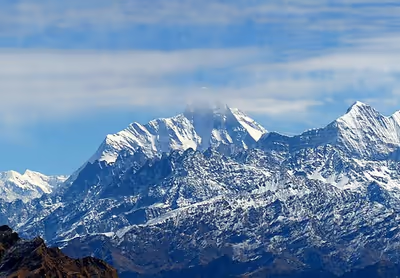
Uttarakhand's history dates back to prehistoric times, with archaeological evidence indicating early human habitation in the region. During the Vedic period, it formed part of the ancient Kuru and Panchal kingdoms. In later centuries, the region witnessed the rise of local dynasties such as the Kunindas and came under the influence of Buddhism, as evidenced by Ashokan edicts found in the area. Uttarakhand is predominantly mountainous, with the Himalayas covering much of the state. Its geography consists broadly of the Greater Himalayas in the north, the Lesser Himalayas in the central region, and the Shiwalik hills and Terai-Bhabar plains in the south. The state contains several of India's highest peaks, including Nanda Devi and Kamet, as well as extensive forests, deep valleys and river gorges. The Ganges is formed at Devprayag by the confluence of the Bhagirathi and Alaknanda rivers; other major rivers include the Ramganga and Mandakini. Forests cover about 45 per cent of the state's geographical area. The cultivable area is 16 per cent of the total geographical area.
Though long known for agriculture and traditional hill farming, the state's economy is now dominated by the services industry and hydropower. Tourism and pilgrimage are important contributors to the state's economy, supported by its Himalayan landscape, religious sites and natural resources. Most of the state’s industries are forest-based. The Gross State Domestic Product (GSDP) of Uttarakhand is ₹3.78 lakh crore (equivalent to ₹3.9 trillion or US$41 billion in 2026). Uttarakhand has five seats in the Lok Sabha and three seats in the Rajya Sabha. Its per-capita income is above the national average. Uttarakhand had a population of approximately 11.9 million. Hindus constitute the majority of the population, while Islam is the second-largest religion. The state's inhabitants are commonly identified as Garhwalior Kumaoni according to their regional origin. Hindi is the principal language of Uttarakhand and one of its official languages, while Sanskrit also has official status. Regional languages include Garhwali, Kumaoni and Jaunsari, as well as several languages spoken by communities in the Himalayan border regions.
The state is sometimes known as Devabhumi ("Land of the Gods") because of its numerous Hindu temples and pilgrimage centres. Major religious destinations include Haridwar, Rishikesh, Kedarnath, Badrinath and the other sites associated with the Char Dham. In addition to the Char Dhams, other sacred circuits such as the Panch Badris, Panch Kedars, and Panch Prayags hold religious significance. The state is also home to two UNESCO World Heritage Sites.
Etymology
The name Uttarakhand derives from Sanskrit: uttara (उत्तर), "north" or "higher") and khaṇḍa (खण्ड, "section" or "part"), thus literally meaning "Northern Section" or "Northern Land." In ancient Hindu scriptures, the term referred not to the present-day state but to a broader Himalayan region extending from the upper Ganges to the Tibet border. The Puranic texts specifically mention two sub-regions within this expanse: Kedarkhand (roughly corresponding to modern Garhwal) and Manaskhand (present-day Kumaon).
Despite its ancient roots, the name fell out of administrative use during the British colonial period. The region was subsumed under the United Provinces of Agra and Oudh (later Uttar Pradesh), and official maps rarely employed "Uttarakhand" until the late 20th century. The name re-entered public discourse during the 1990s, when the Uttar Pradesh Reorganisation Act (1994) first proposed a separate hill state. A contentious debate emerged over the proposed name: the central government favoured Uttaranchal (उत्तरांचल, "northern expanse"), while local activists and the Himalayan People's Association insisted on Uttarakhand, citing its historical and cultural authenticity.
The impasse continued through the creation of the state on 9 November 2000, which was initially named Uttaranchal. However, sustained public pressure — including petitions, rallies, and legislative resolutions — led the Union Cabinet to approve the renaming on 1 January 2007. The state officially became Uttarakhand with effect from 1 January 2007, under the Uttaranchal (Change of Name) Act, 2006.
Sign in to keep reading
12 more chapters are free with a Lably account.
History
Prehistory and antiquity
The history of the region now comprising Uttarakhand extends to prehistoric times, archaeological discoveries, including stone tools, rock shelters, paintings and megalithic remains, attest to human presence in the Himalayan foothills and valleys long before the emergence of historically documented polities. The rock shelters at Lakhudiyar near Almora, which contain prehistoric paintings, are among the best-known archaeological sites in Kumaon. Taken together, the archaeological record indicates that the region's mountainous terrain supported human settlement and movement from an early period and formed part of wider networks linking the Himalayan valleys, foothills and trans-Himalayan routes.
By the early historic period, the region had become connected to the political and cultural networks of northern India. Sanskrit traditions associate parts of the central Himalaya with places such as Uttarakuru, but these references do not establish the existence of a historically identifiable Uttarakuru state in present-day Uttarakhand. More direct evidence comes from archaeological and epigraphic remains. The Ashokan rock edict at Kalsi, in present-day Dehradun district, records the incorporation of the western Himalayan foothills into the Mauryan political sphere and provides evidence for the spread of Buddhism in the region. From around the second century BCE, the Kunindas, an early historic polity associated with the western Himalayas, exercised authority over parts of the area. Their coinage and associated archaeological evidence indicate organised political activity and participation in trade networks extending through the Himalayan passes. The historical record becomes comparatively fragmentary in the centuries following the decline of the early historic polities and preceding the formation of the better-documented medieval kingdoms. During this period, the region was inhabited and influenced by several Himalayan communities and ruling groups, including the Khasas. Literary sources, inscriptions and archaeological remains provide evidence of continuing political and cultural activity, but they do not permit a continuous reconstruction of political authority across the region. Instead, the available evidence suggests a changing landscape of local centres and communities, connected at different times to wider Himalayan and north Indian political, economic and cultural networks.
Medieval kingdoms
A major phase in the political history of the central Himalaya began with the rise of the Katyuris. Between approximately the seventh and eleventh centuries, they established a kingdom centred on the Katyur valley in present-day Kumaon, whose influence at its height extended across substantial parts of the central Himalaya. Baijnath and surrounding settlements emerged as important political and religious centres, while surviving monuments at Baijnath and the Jageshwar temple complex attest to the development of regional traditions of temple architecture and religious patronage during the early medieval period. The decline of Katyuri authority was followed by political fragmentation and the emergence of several local principalities. In Kumaon, the Chand dynasty gradually established itself as the dominant power. The Chands initially centred their rule at Champawat and later made Almora their principal seat, governing Kumaon for several centuries. Their rule was marked by the consolidation of administrative institutions, continued temple patronage and the expansion of regional trade networks. Successive Chand rulers also contributed to the construction and modification of religious monuments, including the Jageshwar complex, reinforcing the importance of established pilgrimage centres within the political and cultural landscape of Kumaon.
In western Uttarakhand, political consolidation followed a different course. Garhwal was divided among numerous local chiefs and fortified settlements, traditionally known as garhs. The Parmar (Paramara/Panwar) dynasty of Garhwal gradually brought many of these territories under a common authority and established the Garhwal Kingdom. Srinagar emerged as its principal capital in the later medieval period. Garhwal and Kumaon consequently developed as separate political entities, although their geographical proximity sustained substantial cultural, religious and economic interaction. The medieval period also saw the expansion of pilgrimage networks centred on major Himalayan shrines, including Badrinath, Kedarnath and Jageshwar. These routes connected settlements in the mountains with pilgrimage and trading centres in the plains and across the Himalayan passes. The movement of pilgrims, merchants, religious specialists and migrants fostered sustained cultural and economic exchange across the region, while reinforcing the importance of Himalayan religious centres within wider north Indian networks.
Gorkha conquest and British rule
The political balance of the central Himalaya changed markedly in the late eighteenth century with the expansion of the Gorkha kingdom of Nepal. Gorkha forces conquered Kumaon in 1790–91 and subsequently advanced into Garhwal. The Garhwal Kingdom was defeated in 1803, and most of the region was brought under Gorkha control. Gorkha rule lasted for roughly a decade and a half and introduced changes to systems of taxation, land administration and political authority. Gorkha expansion brought the Himalayan states into direct conflict with the British East India Company. The resulting Anglo-Nepalese War of 1814–16 ended with the Treaty of Sugauli, under which Kumaon and much of Garhwal came under British control. The British incorporated these territories into their administrative system in northern India, while a reduced Garhwal Kingdom was restored in 1815 under Sudarshan Shah as the princely state of Tehri Garhwal. For the remainder of the colonial period, therefore, the territory of present-day Uttarakhand was divided between British-administered districts and the princely state of Tehri Garhwal.
Under British rule, Kumaon and British Garhwal were administered separately from Tehri Garhwal. This legal status was maintained after the region's incorporation into the larger administrative unit of the North-Western Provinces in 1836, whereby Kumaon became subsumed under the overall jurisdiction of a lieutenant governor. Colonial policies concerning land revenue, forests, labour and natural resources altered established patterns of life in the mountain communities. Restrictions on customary access to forests and the commercialisation of forest resources generated local opposition, while compulsory labour practices prompted movements such as the Coolie Begar agitation. Such conflicts contributed to the emergence of political mobilisation in the Himalayan districts and later formed part of the region's wider political consciousness. During the twentieth century, opposition to the Tehri monarchy grew alongside the wider Indian independence movement and demands for representative government. Following Indian independence, Tehri Garhwal acceded to India and was subsequently incorporated into the United Provinces, bringing the former princely state into the same administrative framework as the neighbouring territories.
Post-independence period and popular movements
After Indian independence in 1947, the territories corresponding to present-day Uttarakhand were incorporated into the state of Uttar Pradesh. The former British-administered districts of Kumaon and Garhwal were retained within the state's administrative structure, while the former princely state of Tehri Garhwal was also integrated into Uttar Pradesh. The region's mountainous terrain, limited transport and communications infrastructure, predominantly rural economy and dependence on agriculture and forests presented persistent challenges to economic development and administration. These conditions contributed to growing concerns over the allocation of resources, employment opportunities and the management of the region's natural resources.
The post-independence period saw the emergence of social movements rooted in the region's environmental and economic concerns. The Chipko movement, which developed in the 1970s in the Himalayan districts, grew out of conflicts over commercial logging, access to forest resources and local livelihoods. Villagers, including large numbers of women, used non-violent direct action to oppose the felling of trees. Chandi Prasad Bhatt and Sunderlal Bahuguna became prominent figures associated with different strands of the movement, while women such as Gaura Devi played important roles in local mobilisation. Although Chipko is widely remembered as an environmental movement, questions of livelihood, access to natural resources and local economic rights were central to its development. The movement subsequently acquired national and international significance in debates about forests, development and environmental politics.
Uttarakhand movement and statehood
Although demands for special rights for the region can be traced to 1815, following the East India Company’s annexation of Kumaon, the movement gained greater prominence in 1938, when Jawaharlal Nehru expressed support for the cause at a special session of the Indian National Congress. The movement was rooted in longstanding regional grievances and the perception that the hill districts had distinct geographical, economic and administrative needs from the plains of Uttar Pradesh. Although Garhwal and Kumaon had historically been separate political entities, their shared geography, cultural connections, economic interests and experience within Uttar Pradesh increasingly provided the basis for a common regional political identity. Despite having a population comparable to that of neighbouring Himachal Pradesh, the hill region of Uttarakhand was represented by 22 seats in the Uttar Pradesh Legislative Assembly, compared with 68 seats in the Himachal Pradesh Legislative Assembly. The Ramashankar Kaushik Committee, constituted by the Uttar Pradesh government in 1994 to examine the demand for a separate hill state, noted concerns regarding the region’s political representation and recommended the creation of a separate state.
The Uttarakhand Kranti Dal and other organisations campaigned for a separate hill state, and the movement gained considerable momentum during the late 1980s and early 1990s. The demand became a mass movement in 1994. Demonstrations and protests were held across the hill districts, while the movement also received support from a wide range of political and social groups. A particularly significant and controversial episode occurred at Rampur Tiraha near Muzaffarnagar on 2 October 1994, when police opened fire on protesters travelling towards Delhi to participate in the statehood movement. The incident, in which several people were killed and others were injured, became a major turning point in the movement and intensified public support for separate statehood.
The political process towards statehood subsequently advanced at the national level. The Uttar Pradesh Legislative Assembly and Legislative Council passed the Uttar Pradesh Reorganisation Bill in 1998. Parliament subsequently enacted the Uttar Pradesh Reorganisation Act, 2000, providing for the creation of a new state from thirteen districts of Uttar Pradesh. The new state, initially named Uttaranchal, came into existence on 9 November 2000 as the 27th state of the Republic of India. The territory consisted of the districts of Pauri Garhwal, Tehri Garhwal, Uttarkashi, Chamoli, Dehradun, Nainital, Almora, Pithoragarh, Bageshwar, Champawat, Rudraprayag, Haridwar and Udham Singh Nagar. The name of the state was changed from Uttaranchal to Uttarakhand in 2006.
Geography
Uttarakhand has a total area of 53,483 km2 (20,650 sq mi), of which about 86 per cent is mountainous and 45 per cent is covered by forest (about 66 per cent of its geographical area). The state shares international borders with the Tibet (through Uttarkashi, Chamoli, and Pithoragarh districts) and with Nepal (through Pithoragarh, Champawat, and Udham Singh Nagar districts), and interstate borders with Himachal Pradesh to the north-west and Uttar Pradesh to the south. Most of the northern part of the state is occupied by the high Himalayas.
The state's geography can broadly be divided into three physiographic regions: the Greater Himalayas in the north, the Lesser Himalayas in the central region, and the Shiwalik foothills and Terai-Bhabar plains in the south. The Greater Himalayan region includes high peaks such as Nanda Devi, the second-highest peak in India and Kamet, as well as glaciers including Gangotri, Pindari, Milam, and Khatling, along with snowfields and rugged mountain terrain. The Lesser Himalayan region consists largely of forested hills, deep valleys and river gorges, while the southern foothills descend into the alluvial plains of the Terai and Bhabar. The Bhabar belt lies at the base of the Shiwalik Hills and consists largely of porous gravel and pebbles deposited by Himalayan streams. South of the Bhabar is the Terai, characterised by fertile alluvial soils, wetlands, forests and grasslands. These lowland areas support diverse wildlife and include protected areas such as Jim Corbett National Park and Rajaji National Park. Much of the lowland forest has been cleared for agriculture, although forested areas remain.
Uttarakhand's climate and vegetation vary considerably with elevation. The highest elevations are characterised by glaciers, bare rock and alpine vegetation, while elevations of about 3,000 and 5,000 metres (9,800 and 16,400 ft) support western Himalayan alpine shrub and meadows. Below the alpine zone are temperate western Himalayan subalpine conifer forests, where chir pine (Pinus roxburghii) is the dominant species, followed at lower elevations by western Himalayan broadleaf forests. Himalayan subtropical pine forests occur at still lower elevations, while the lowlands along the Uttar Pradesh border contain moist deciduous forests and Terai-Duar savanna and grasslands. The State Forest Department manages approximately 70 per cent of the state's forest area. Some forests areas are also managed by local communities through Van Panchayats. Satellite data analysed by ARIES, has shown that vegetation in parts of Uttarakhand is declining, mainly due to deforestation, farming, illegal logging, and growing pollution.
Two of India's major rivers, the Ganges and the Yamuna, have their headwaters in Uttarakhand, associated with the Gangotri and Yamunotri regions respectively. The rivers of the state are perennial and are fed by glaciers, although a substantial proportion of their water is derived from underground seepage. Their tributaries, including the Alaknanda, Bhagirathi, and Mandakini, form an extensive river network that shapes the region's landscape through erosion and sediment deposition while sustaining agriculture and human settlements. The numerous Himalayan rivers and glaciers provide important water resources and contribute to the state's hydroelectric potential. The state's varied terrain and geological conditions make parts of Uttarakhand vulnerable to landslides, flash floods and soil erosion, particularly during the monsoon season.
Climate
Uttarakhand's climate varies considerably with elevation and geography, ranging from subtropical conditions in the southern lowlands to alpine conditions in the higher Himalayan regions. The winter season lasts from October to February, with peak winter and heavy snowfall occurring between December and February. Temperatures are generally lower in the high-altitude mountain regions, where they frequently fall below freezing and precipitation may occur as snow. Lower elevations experience milder winter conditions, with temperatures generally ranging from about 5 °C (41 °F) to 20 °C (68 °F). The decline in winter precipitation has occurred alongside a warming trend in minimum temperatures. Precipitation has also declined during January–February, at approximately 6 mm per decade, indicating a reduction in rainfall extending across much of the winter season. Minimum temperatures during the winter months have increased across the western Himalayan region, with Uttarakhand recording an increase of approximately 0.1–0.2 °C (32.2–32.4 °F).
The pre-monsoon or hot-weather season extends from March to May, with temperatures rising through the spring and reaching their highest levels in May and early June. Mean maximum temperatures in the southern parts and valleys of the state generally reach about 34–38 °C (93–100 °F), while mean minimum temperatures are around 20–24 °C (68–75 °F). Temperatures can be higher during periods of extreme heat, particularly in the lower elevations.
The southwest monsoon generally occurs from June to September, followed by the post-monsoon season during October and November. Most of Uttarakhand's annual precipitation occurs during the southwest monsoon, when weather systems associated with the Bay of Bengal bring moisture to the region. The amount and distribution of rainfall vary considerably across the state because of its rugged terrain and differences in elevation. Precipitation occurs as rain at lower elevations and increasingly as snow at higher elevations. Long-term observations indicate changes in the winter climate of Uttarakhand. Analysis of India Meteorological Department (IMD) data for 1951–2025 indicates a declining trend in precipitation during both the early and later parts of the winter season. Rainfall during October–December has decreased by approximately 10 mm per decade. Additionally, the state's rugged terrain influences local wind patterns and produces substantial climatic variation over relatively short distances. Winds are generally light in the valleys but become stronger with increasing elevation.
Flora and fauna
Uttarakhand's vegetation varies considerably with altitude and climate. Subtropical forests occur in the lower hills and foothills, while temperate broadleaf forests, coniferous forests, subalpine vegetation and alpine meadows occur at higher elevations. Evergreen oaks (Quercus spp), rhododendrons and conifers are characteristic of the higher hills, while sal (Shorea robusta) is prominent in the lower elevations. Other trees found in the state include Sour cherry (Prunus cerasoides), Red silk-cotton tree (Bombax ceiba), Shisham (Dalbergia sissoo), Kumkum tree (Mallotus philippensis), Black cutch (Acacia catechu), Bidi leaf (Bauhinia racemosa), Orchid (Bauhinia variegata) and Kala siris (Albizia chinensis). The state’s diverse habitats support a wide range of plant species, including nearly 700 species of medicinal plants used in folk and documented systems of medicine such as Ayurveda, Siddha, Unani and Homoeopathy. The Herbal Research and Development Institute (HRDI), a state government institution, conducts research on medicinal plants and supports their conservation and cultivation.
Uttarakhand contains several protected areas that conserve its diverse flora and fauna. These include Jim Corbett National Park in Nainital and Pauri Garhwal districts; Nanda Devi and Valley of Flowers national parks in Chamoli district; Rajaji National Park in Haridwar, Dehradun and Pauri Garhwal districts; and Govind Pashu Vihar and Gangotri national parks in Uttarkashi district. Nanda Devi and Valley of Flowers national parks form the Nanda Devi and Valley of Flowers National Parks UNESCO World Heritage Site. Valley of Flowers is particularly notable for its alpine flora, with hundreds of species of higher plants, including numerous flowering plants. Several plants found there are internationally threatened, while others have a restricted distribution. The valley and other parts of the state also contain medicinal plants such as Himalayan Marsh Orchid (Dactylorhiza hatagirea), Kutki (Picrorhiza kurroa), Wolfsbane (Aconitum violaceum), Solomon's seal (Polygonatum multiflorum), Yellow Himalayan Fritillary (Fritillaria roylei) and Indian may apple (Podophyllum hexandrum).
The forests and grasslands of Uttarakhand support a wide range of mammals. Tigers and leopards occur mainly in forested areas, particularly in the foothills and lowlands, while smaller felids include the jungle cat, fishing cat and leopard cat. Deer include chital, sambar, hog deer and barking deer. Other mammals include sloth bears, Himalayan black bears, Himalayan brown bears, bharal, Indian pangolins, yellow-throated martens, mongooses, otters, langurs, red panda and rhesus macaques. Asian elephants occur in the foothills and are particularly associated with the forested corridors of the Terai and Shivalik regions. The state's rivers and wetlands support a variety of reptiles, including mugger crocodiles and gharials. Several species of freshwater turtles and terrapins also occur in its river systems, including the Indian roofed turtle, Brahminy river turtle and Ganges softshell turtle. Conservation and captive-breeding programmes have contributed to the recovery of some crocodilian populations, including the reintroduction of captive-bred animals into suitable river habitats. Uttarakhand also supports a diverse bird and butterfly fauna. Birds recorded in the state include the jungle babbler, tawny-bellied babbler, great slaty woodpecker, red-breasted parakeet, orange-breasted green pigeon and chestnut-winged cuckoo. The region has also recorded rare and migratory species, including the bean goose. The Himalayan quail, a critically endangered species endemic to the western Himalayas, has not been recorded with certainty since the nineteenth century. Butterflies found in Uttarakhand include the red helen, great eggfly, common tiger and pale wanderer.
Natural hazards
The state's location in the seismically active Himalayan belt, combined with steep slopes, fragile geology, and heavy monsoon rainfall, make parts of Uttarakhand vulnerable to landslides, flash floods and soil erosion, particularly during the monsoon season. The entire state — including its plains and mountainous regions — falls under seismic Zone VI, the highest category for earthquake vulnerability. Landslides are common during the monsoon season, particularly in the higher reaches of Garhwal and Kumaon, where road networks are frequently disrupted and settlements are at risk.
The state has experienced major flood and land-subsidence events in recent decades. In June 2013, several days of extremely heavy rain caused devastating floods in the region, resulting in more than 5,000 people missing and presumed dead, described in the Indian media as a "Himalayan Tsunami." In February 2021, floods emerging from the Nanda Devi glacier devastated locations along the Rishi Ganga, Dhauli Ganga, and Alaknanda rivers, causing widespread damage to Raini village, river dams, and hydropower infrastructure. The disaster resulted in at least 80 confirmed deaths, with more than 120 people reported missing. In January 2024, the town of Joshimath in Chamoli district experienced land subsidence, with cracks appearing in over 800 houses and widespread damage to roads and infrastructure. The subsidence, attributed to a combination of geological instability, construction activity, and water seepage from hydropower tunnels, led to the evacuation of more than 500 families. In response, the state government declared Joshimath a subsidence zone, halted all construction activities.
Forest fires are another recurrent hazard, with significant episodes recorded in 2016, 2020, and 2021, particularly in the pine forests of the lower and middle Himalayas. The fire season typically occurs during the dry summer months, and rising temperatures combined with accumulating forest litter. Forest fires in Uttarakhand have significant ecological consequences. While some fires are natural and can regenerate certain species, the increasing frequency and intensity of fires—particularly in chir pine (Pinus roxburghii) forests—disrupt forest regeneration, alter species composition, and degrade wildlife habitat. Ground-dwelling fauna, including small mammals, reptiles, and insects, are directly affected by fire events, while the loss of understory vegetation reduces food and shelter for larger herbivores and their predators. Repeated fires also contribute to soil erosion, loss of soil moisture, and a decline in native plant diversity, as fire-resistant species such as chir pine gradually replace broadleaf species like oak (Quercus), which are less fire-tolerant but ecologically more valuable for retaining soil moisture and supporting biodiversity.
Demographics
Population
Uttarakhand's population is concentrated in its two principal geocultural regions, Garhwal and Kumaon. The state's inhabitants are commonly identified as Uttarakhandis, with Garhwali and Kumaoni referring more specifically to the respective regional and linguistic communities.
According to the 2011 Census of India, Uttarakhand had a population of 10,086,292, comprising 5,137,773 males and 4,948,519 females. About 69.77 per cent of the population lived in rural areas. The state accounted for approximately 0.83 per cent of India's population while occupying about 1.63 per cent of its land area. It ranked twentieth among India's states by population. The population was projected to reach 11.6 million in 2023 and 13.3 million by 2036. Uttarakhand's population growth has been accompanied by declining fertility. According to the National Family Health Survey (2019–21), the state's total fertility rate was 1.9 children per woman, below the replacement level of 2.1 and slightly below the national average of 2.0. The state recorded a crude birth rate of 18.6 and a crude death rate of 6.6. Its infant mortality rate was 43 per 1,000 live births, while the maternal mortality ratio was 188 per 100,000 live births. According to the 2011 census, Uttarakhand had 989 females for every 1,000 males, compared with 943 nationally. The literacy rate was 78.82 per cent, which is higher than the national average of 73 per cent. The state's population density was 189 people per km², while its population increased by 18.81% between 2001 and 2011.
Social groups
Uttarakhand's population comprises Garhwali and Kumaoni communities alongside various caste and tribal groups. Historically, Rajput and Brahmin communities have occupied prominent positions in the state's social structure. Estimates of their population shares vary by source; a 2007 study by the Centre for the Study of Developing Societies estimated that Brahmins constituted about one-fifth of Uttarakhand's population and reported that the state had the highest proportion of Brahmins among Indian states at the time. Rajputs have also constituted a substantial proportion of the population, with one estimate placing their share at about 35 per cent.
Other Backward Classes (OBCs) account for an estimated 18.3 per cent of the population, with Gurjars among the state's larger OBC communities. Scheduled Castes (SCs) accounted for 18.76 per cent of the population, while Scheduled Tribes (STs) accounted for 2.89 per cent. Recognised Scheduled Tribes include the Jaunsaris, Bhotiyas, Tharus, Buksas, Rajis, Jads and Banrawats. The state is also home to communities that are not included among the state's constitutionally recognised Scheduled Tribes, including the Shaukas and Van Gujjars. The Van Gujjars are primarily associated with the Shiwalik foothills and have traditionally followed a pastoral way of life.
Languages
Hindi is the official language of Uttarakhand and serves as the state's principal lingua franca, being spoken natively by approximately 43 per cent of the population. Garhwali, Kumaoni, and Jaunsari are three native languages of Uttarakhand. Both Kumaoni and Garhwali are listed in UNESCO’s "Atlas of the World’s Languages in Danger". According to the 2011 census, Garhwali is spoken by about 23 per cent of the population, primarily in the Garhwal region, while Kumaoni is the native language of approximately 20 per cent and predominates in the Kumaon region. Jaunsari, mainly spoken in the Jaunsar-Bawar area of Dehradun district, accounts for around 1.3 per cent of the population. In 2010, Uttarakhand became the first Indian state to designate Sanskrit as a second official language alongside Hindi. English is a non-official language widely used in education, business, and for communication with the central government. Since the late twentieth century, these regional languages have experienced a gradual decline in usage, a trend that has prompted various preservation and revitalization efforts. Scholars have attributed this decline in part to the widespread promotion of Hindi as the state's principal language of administration and education.
In addition to Hindi and the state's principal regional languages, Uttarakhand has several smaller Indo-Aryan and Sino-Tibetan language communities. The 2011 Census recorded Urdu as the mother tongue of about 4.2 per cent[ per cent of the state's population, Punjabi of about 2.6, Bengali of 1.5 per cent, Nepali about 1.1 per cent and Bhojpuri of about 0.9 per cent; smaller recorded mother-tongue communities included Tharu (0.5 per cent), Bhoti (0.1 per cent), Halam (0.1 per cent) and Gujari (0.1 per cent). The Census also recorded a small number of speakers under other mother-tongue categories. Several indigenous Sino-Tibetan languages are spoken in the Himalayan border districts. Jad is spoken in Uttarkashi district, while Rongpo is associated with Chamoli district. Eastern Pithoragarh is home to Byangsi, Chaudangsi, Darmiya (Darma), Raji, and Rawat. These languages form part of the diverse Tibeto-Burman linguistic heritage of the western Himalaya and are spoken by relatively small communities. Rangkas (Rangas), another language of the region, ceased to be spoken during the 20th century, with its former speakers subsequently shifting to Kumaoni. Uttarakhand's linguistic diversity has also been shaped by migration. Punjabi and Urdu have substantial speaker populations, particularly in the southern plains, while Bengali and Bhojpuri speakers are especially numerous in Udham Singh Nagar district. Nepali is spoken across the state, with particularly prominent communities in Dehradun and Uttarkashi.
Human Development Index and healthcare
According to subnational Human Development Index (HDI) estimates, Uttarakhand recorded an HDI of 0.714 in 2022, compared with 0.676 for India as a whole, placing the state above the national average. Life expectancy at birth in the state was estimated at approximately 69.5 years in 2022. The National Multidimensional Poverty Index (MPI) 2023 reported that 9.67 per cent of Uttarakhand's population was multidimensionally poor during 2019–21, a decline from 17.67% in 2015–16. The improvement was observed across all three dimensions measured by the MPI – health, education, and living standards – reflecting broad-based progress in human development indicators. Despite these indicators, the state faces challenges in human development. The hill districts experience out-migration due to limited economic opportunities, which affects the demographic profile and places strain on social infrastructure in rural areas. Additionally, the 2021–22 labour force participation rate (LFPR) for women in Uttarakhand was only 22.4 per cent, compared to 68.8 per cent for men, indicating a significant gender gap in workforce participation.
Healthcare infrastructure in the state includes 1,878 government health institutions (as of 2022), comprising 41 district hospitals, 89 community health centres, 259 primary health centres, and 1,489 sub-centres. The state has 10 medical colleges and 3,285 hospital beds in government facilities, translating to approximately 2.6 beds per 1,000 population. Immunisation coverage for children aged 12–23 months stood at 87.3 per cent (NFHS-5, 2019–21), marginally above the national average of 76.4 per cent.
The state faces challenges in healthcare delivery, particularly in rural and hill areas. According to the Rural Health Statistics 2021–2022, Uttarakhand was among the states with the most pronounced shortages of auxiliary nurse midwives at sub-centres. A 2016 report noted that 47 per cent of health worker posts were vacant, with 97 PHCs operating without doctors and 148 specialist posts vacant at CHCs. The average rural population served per PHC in Uttarakhand was 28,646 persons in 2018–2019, higher than the national norm of 20,000 for hill areas, indicating a shortfall in infrastructure relative to population needs.
Religion
According to the 2011 Census of India, more than four-fifths (82.97 per cent) of Uttarakhand's population adheres to Hinduism, making it the majority religion. Muslims constitute the largest religious minority, comprising 13.95 per cent of the population, while Sikhs (2.34 per cent), Christians (0.37 per cent), Buddhists (0.15 per cent), Jains (0.09 per cent), and other religions or not stated (0.13 per cent) account for smaller proportions. Religious composition varies geographically, with Hinduism predominant across the hill regions, while Muslims and Sikhs have a more substantial presence in the plains. Christian, Buddhist and Jain communities are present in several parts of the state, particularly in urban areas. Tibetan Buddhism is practised among Tibetan refugee communities in settlements such as the Tibetan Colony in Dehradun and the Tibetan Monastery in Bylakuppe, as well as among some Himalayan populations in districts bordering Tibet. Indigenous religious traditions continue to influence the cultural practices of some tribal communities, including the Tharu, Bhotia, and Jaunsari, sometimes alongside Hinduism or Buddhism.
Between the 2001 and 2011 censuses, the Hindu population declined marginally from 84.96 per cent to 82.97 per cent, while the Muslim population increased from 11.92 per cent to 13.95 per cent, reflecting a 2.02 percentage point rise over the decade. Uttarakhand recorded the second-highest growth rate of Muslim population among Indian states during this period, after Assam.
Administrative divisions
Uttarakhand is divided into two administrative divisions, Garhwal and Kumaon, comprising 13 districts. Each division is headed by a Divisional Commissioner. Dehradun is the state capital and principal administrative centre, housing the executive and legislative branches of the state government, while Bhararisain in Chamoli district has been designated as the summer capital. The Uttarakhand High Court, the state's highest court, is located in Nainital.
Each district is administered by a district magistrate, who is an Indian Administrative Service (IAS) officer appointed Government of Uttarakhand and reports to Divisional Commissioner of the division in which his/her district falls. The districts are further divided into sub-divisions, which are administered by sub-divisional magistrates; sub-divisions comprise tehsils which are administered by a tehsildar and community development blocks, each administered by a block development officer.
Local governance comprises Panchayati Raj Institutions in rural areas—district councils, block panchayats (block councils) and gram panchayats (village councils) —and urban local bodies such as Nagar Nigams (municipal corporations), Nagar Palikas (municipal councils), and Nagar Panchayats. Each of these bodies is governed by elected councils with five-year terms and administered by a chief executive officer. These bodies are responsible for local administration, development works, and delivery of basic services.
The state has 8 municipal corporations, 43 Nagar Palika Parishads and 41 Nagar Panchayats; its rural local government comprises 13 Zila Panchayats, 95 blocks and 7,485 Gram Panchayats. According to the 2011 census, Dehradun, and Udham Singh Nagar are the most populous districts, each of them having a population of over one million.
Government and administration
Uttarakhand has a parliamentary system of government based on the Constitution of India. The state legislature, the Uttarakhand Legislative Assembly, is unicameral and has 70 members elected from single-member constituencies for five-year terms, unless the Assembly is dissolved earlier. The Speaker presides over the Assembly, while the Leader of the Opposition heads the largest opposition party or coalition. Uttarakhand sends five members to the Lok Sabha and three to the Rajya Sabha.
The Governor is the constitutional head of the state and is appointed by the President of India. Executive authority is exercised by the Council of Ministers, headed by the Chief Minister, who is appointed by the Governor and normally leads the party or coalition commanding a majority in the Legislative Assembly. The Council of Ministers includes Cabinet Ministers and Ministers of State (MoS), with the latter sometimes holding independent charge of specific departments. The Council of Ministers is collectively responsible to the Assembly. The state Secretariat, headed by the Chief Secretary, assists the government in the formulation and implementation of policy and in the administration of the state's departments.
For administrative purposes, Uttarakhand is divided into two divisions, Garhwal and Kumaon, comprising thirteen districts. Divisional administration is headed by a Divisional Commissioner, while the district administration is headed by a District Magistrate, who is responsible for general administration and coordination of government activities in the district. Police administration is headed at the state level by the Director General of Police, with district law-and-order responsibilities exercised by Superintendents of Police. Forest administration is separately organised under the state forest department, with Divisional Forest Officers responsible for the management of forest divisions. The Uttarakhand Public Service Commission (UKPSC) forms part of the state's civil administration, with its officers serving in various executive and administrative positions at the state and district levels.
The Uttarakhand High Court is the state's highest court. It was established at Nainital on 9 November 2000 under the Uttar Pradesh Reorganisation Act, 2000, following the creation of Uttarakhand, then known as Uttaranchal. It is headed by a Chief Justice appointed by the President of India in accordance with the constitutional appointment process. The High Court exercises jurisdiction over civil and criminal matters throughout the state, with subordinate judicial administration organised through district, and sessions courts, along with subordinate courts at the tehsil level. District courts administer the subordinate courts within their respective jurisdictions.
Politics in Uttarakhand has been characterised by competition primarily between the Bharatiya Janata Party (BJP) and the Indian National Congress (INC). The state has experienced frequent changes in chief ministerial leadership, with several chief ministers leaving office before completing a full five-year term. This political turnover has been attributed to factionalism within political parties, regional and caste-based rivalries, and interventions by central party leadership.
Economy
Since its formation in 2000, Uttarakhand's economy has undergone a gradual structural transformation, with the relative contribution of agriculture declining as industry and services have expanded. The share of the primary sector, comprising agriculture and allied activities, declined from about 14% of the state's output in 2011–12 to below 10% in 2024–25. During the same period, the share of the tertiary sector increased from 33.88% to 46.02%. Manufacturing accounted for 26.02% of the state's GSDP in 2024–25. Uttarakhand also ranks among the Indian states with the highest per capita industrial Gross State Value Added (GSVA), reflecting the expansion of industrial activity since the state's formation. Tourism has emerged as an important component of the service economy and contributes substantially to the state's GSVA. The Gross State Domestic Product (GSDP) at current prices was estimated at ₹3,81,889 crore (US$43.2 billion), with a growth rate of 7.23%. According to government figures for the 2024-25 fiscal year, Per capita income was estimated at ₹2,73,921 outpacing the national average. The fiscal deficit is estimated at approximately ₹12,579.70 crore, which is below the 3% ceiling of the GSDP mandated by fiscal responsibility rules. Uttarakhand's total debt has crossed Rs 94,000 crore, with estimates projecting it could breach Rs 1 lakh crore by March 2027.
Despite economic growth and diversification, unemployment and underemployment remain challenges in Uttarakhand, particularly in rural and hill areas. Uttarakhand recorded the highest unemployment rate among all Indian states at 8.9%, well above the national average of 5.2 per cent. Limited non-agricultural employment opportunities, seasonal work, and migration from the hill districts have contributed to persistent employment pressures, with the state's labour market shaped in part by the decline of traditional agriculture. Power outages and supply shortages have periodically affected the state. Unscheduled power cuts have resulted from supply–demand imbalances and technical faults, including damage to high-voltage transmission lines caused by falling trees, sometimes disrupting electricity supply for extended periods. The state's mountainous terrain and dispersed settlements also present challenges for electricity distribution.
Agriculture remains an important component of Uttarakhand's rural economy and a major source of livelihood. More than 75 per cent of the state's population depends on agriculture and allied activities for their livelihoods. Women constitute a substantial proportion of the agricultural workforce, particularly in the hill regions, where they perform much of the work associated with cultivation and animal husbandry. The cultivable area is approximately 7.41 lakh hectares, representing about 14 per cent of the state's total geographical area. Wheat occupies the largest share of the cultivated area, followed by rice, accounting for approximately 30 per cent and 24–25 per cent, respectively. In the hill regions, traditional crops such as mandua, jhangora, chaulai, kangni, and black soybean (kala bhatt) remain important. The predominance of mountainous terrain, with about 86 per cent of the state consisting of hills, limits the availability of cultivable land and contributes to relatively low agricultural productivity. The Economic Survey (2024–25) identified Uttarakhand's agricultural sector as more sustainable than the national average.
Uttarakhand's varied agro-climatic conditions also support the cultivation of medicinal and aromatic plants (MAPs). Aromatic crops include Rosemary (Salvia rosmarinus) and Lavender in Tehri Garhwal, Uttarkashi and Chamoli; Damask rose (Rosa × damascena) in Bageshwar and Almora; Timur (Zanthoxylum armatum) in Munsyari and Pithoragarh; Mint (Mentha) in Udham Singh Nagar; Cinnamon in Champawat and Nainital; and Lemongrass (Cymbopogon) in Dehradun, Haridwar, and Pauri. The Herbal Research and Development Institute (HRDI) at Gopeshwar and the Centre for Aromatic Plants (CAP) at Selaqui were established to promote research, cultivation, processing, and marketing of medicinal and aromatic plants. MAP cultivation has been promoted as an alternative to conventional agriculture, particularly in the hill regions, where small landholdings, labour shortages, low agricultural returns, and crop damage by wildlife constrain agricultural production. The cultivation of these crops provides an additional source of income and has been associated with efforts to develop more sustainable livelihoods in rural areas.
Transportation
Roads are the principal means of transportation in Uttarakhand, particularly in the mountainous parts of the state where rail and air connectivity is limited. The state's road network includes national highways, state highways and roads maintained by the Public Works Department and other agencies. As of 2021–22, Uttarakhand had a total road length of 50,393 km, which expanded to 51,278 km by 2024–25. The state's high-altitude terrain makes road construction and maintenance difficult, particularly in remote areas that are vulnerable to landslides and other natural hazards. The Uttarakhand Disaster Recovery Project, supported by the World Bank, reconstructed 81 bridges and more than 1,500 km (930 mi) km of roads to restore rural connectivity and improve the resilience of transport infrastructure following the 2013 floods. The Uttarakhand Transport Corporation (UTC), established on 31 October 2003 after the reorganisation of the State Road Transport Corporation, operates bus services on nationalised and interstate routes. Private operators also provide passenger services on routes within the state and to neighbouring states. Local transportation in towns and cities includes auto rickshaws, e-rickshaws, and other shared transport services. Infrastructure programmes have also sought to improve rural connectivity and strengthen bridges and roads in areas vulnerable to natural hazards.
Railway connectivity is concentrated in the plains because of the state's mountainous terrain. Major railway stations in Uttarakhand include Dehradun and Haridwar in the Garhwal region and Kathgodam in the Kumaon region. Dehradun railway station and Haridwar Junction are important stations on the Northern Railway network, providing connections to major cities in northern and eastern India. Roorkee, also on the Northern Railway network, is an important junction in the state's western plains and lies on the Moradabad–Ambala line, providing connections to the wider Delhi–Howrah railway network. Other important railway centres include Rishikesh, Haldwani, Lalkuan, Kotdwar and Ramnagar. The Rishikesh–Karnaprayag line is under construction to extend rail connectivity deeper into the Garhwal Himalayas.
Air transport provides additional connectivity to the state. Jolly Grant Airport near Dehradun is the principal airport serving the state, while Pantnagar Airport serves the Kumaon region. Other civil airfields and airports, including Naini Saini Airport at Pithoragarh and Gauchar Airport in Chamoli district, support regional connectivity. The state government has pursued improvements to air connectivity through the UDAN (Ude Desh Ka Aam Naagrik) regional connectivity scheme, with proposals to develop new airstrips and helipads in remote areas. As of 2024–25, the state had 7 heliports and 118 helipads, providing critical access to areas inaccessible by road, particularly for emergency services and tourism.
Tourism
Tourism is an important part of Uttarakhand's economy and is based on the state's Himalayan landscape, religious traditions, forests and wildlife, historic settlements, and opportunities for outdoor recreation. According to the Uttarakhand Tourism Development Board, tourism contributes approximately 13 to 14 per cent to the state's GSDP. The state attracts pilgrims, domestic and international leisure tourists, trekkers and mountaineers. The Uttarakhand Tourism Development Board's statistics for major tourist destinations recorded about 59.6 million visits in 2024, with Haridwar, Dehradun, Tehri, Mussoorie, Badrinath, Kedarnath and Nainital among the most visited destinations. Tourism in the high Himalayas is subject to seasonal access, environmental regulations and, in protected areas, limits on visitor numbers and activities.
Religious tourism is a major component of tourism in Uttarakhand. The state is home to the four pilgrimage centres of the Chota Char Dham (also known as "four abodes")—Yamunotri, Gangotri, Kedarnath and Badrinath—which are among the principal Hindu pilgrimage destinations in the Himalayas. Yamunotri and Gangotri are associated with the Yamuna and Ganges respectively, while Kedarnath is dedicated to Shiva and Badrinath to Vishnu. The pilgrimage season generally coincides with the months when the high-altitude shrines are accessible. Haridwar, situated on the Ganges, is another major centre of Hindu pilgrimage and hosts the Kumbh Mela at intervals prescribed by the Kumbh cycle. Rishikesh, further upstream, is associated with yoga, meditation and spiritual tourism as well as pilgrimage. Other Hindu pilgrimage destinations include Devprayag and the other Panch Prayag river confluences, Bageshwar, Jageshwar and Joshimath. Uttarakhand also has important pilgrimage sites associated with other religious traditions. These include Piran Kaliyar Sharif near Roorkee for Muslims and several Sikh gurdwaras, notably Hemkund Sahib, Nanakmatta Sahib and Reetha Sahib. The state is also home to important Tibetan Buddhist institutions, including Mindrolling Monastery in Dehradun.
Uttarakhand's forests, alpine meadows, glaciers and mountain landscapes support nature-based tourism. The state has six national parks, together with wildlife sanctuaries and conservation reserves. Jim Corbett National Park, established in 1936 as Hailey National Park, is particularly well known for wildlife tourism and is one of the state's principal destinations for safaris. Rajaji, Nanda Devi, Valley of Flowers, Gangotri and Govind national parks also provide opportunities for wildlife viewing, trekking and nature tourism. The Nanda Devi and Valley of Flowers National Parks constitute a UNESCO World Heritage property. The property combines the high-mountain wilderness around Nanda Devi with the alpine meadows of the Valley of Flowers and is recognised for its biodiversity and populations of threatened Himalayan species. Access and tourism within the protected areas are regulated to limit environmental pressures. The state's cultural and built heritage also contributes to tourism. There are 44 centrally protected monuments and sites under the Archaeological Survey of India, including historic temples and other architectural remains. Hill towns such as Nainital, Mussoorie, Almora and Ranikhet developed as important leisure destinations, while smaller settlements such as Kausani, Chaukori and Munsiyari attract visitors for their Himalayan scenery.
The Himalayan terrain makes Uttarakhand a major destination for trekking, mountaineering, rock climbing, skiing and camping. Popular trekking areas include the routes around Kedarnath, Gangotri, the Valley of Flowers and the high-altitude meadows known as bugyals. Auli is one of the state's principal winter-sports destinations and is particularly associated with skiing. River-based adventure tourism is concentrated principally around Rishikesh, where the Ganges is used for white-water rafting and related activities. Other activities promoted in the state include kayaking, paragliding, mountain biking and bungee jumping. Tehri Lake has emerged as another centre for recreational and water-based tourism, with activities including boating, kayaking, water skiing and other water sports.
Education
Uttarakhand has a broad education system comprising government and private schools, colleges, universities, technical and medical institutions, and specialised research and training centres. The state's literacy rate was 79.6 per cent in the 2011 Census, compared with 74.0 per cent for India as a whole; male literacy was 88.3 per cent and female literacy 70.7 per cent. In 2023–24, the state had 22,551 schools, about 2.37 million students and 130,741 teachers. The state has a gross enrolment ratio (GER) of 92.3 per cent at the primary level and 76.5 per cent at the secondary level (2020–21), with a dropout rate of 8.2 per cent at the elementary level. The pupil-teacher ratio at the primary level is 24:1, lower than the national average of 26:1.
The educational system prevailing in the state's schools specifies an initial 10-year course of study, which is divided into three stages: lower primary, upper primary, and secondary school—known as 4+3+3, which signifies the number of years for each stage. After the first 10 years of schooling, students typically enroll in Higher Secondary Schooling in one of the three major streams—liberal arts, commerce, or science. Upon completing the required coursework, students can enroll in general or professional undergraduate (UG) degree-college programmes. School education is administered by the state Department of School Education, with the State Council of Educational Research and Training (SCERT) responsible for academic support and the Uttarakhand Board of School Education (UBSE) responsible for state-board examinations. Schools may be affiliated with the state board or national boards such as the Central Board of Secondary Education (CBSE), Indian Certificate of Secondary Education (ICSE) and the Council for the Indian School Certificate Examinations (CISCE). The majority of public schools are affiliated with the UBSE, use Hindi as a medium of instruction. Private schools—which use English as the language of instruction—are affiliated to CBSE, CISCE, or ICSE.
Uttarakhand has more than 20 universities, including one central university, twelve state universities, three deemed universities, one IIT in Roorkee, one IIM in Kashipur and an AIIMS in Rishikesh. Inaugurated by Jawahar Lal Nehru in 1960, G.B. Pant University of Agriculture and Technology, provides research and training in agriculture and engineering. Located in Bharsar and Ranichauri, Veer Chandra Singh Garhwali Uttarakhand University of Horticulture and Forestry, is a state agricultural university and has two campuses, one is in Bharsar town of Pauri Garhwal district and other is in Ranichauri town of Tehri Garhwal district. Kumaun University; located in Nainital, is one of the oldest universities in the region. Located in Srinagar, NIT Uttarakhand (NIT-UK) is an institute, specialising in engineering and technology education.
Uttarakhand is home to some of premier institutes of India that hold the status of national importance due to their significant contributions to education, research, and national development. The Lal Bahadur Shastri National Academy of Administration (LBSNA) trains officers of the Indian Administrative Service and other civil services, while the Indian Military Academy (IMA) trains officers for the Indian Army. Located in Dehradun, the Doon School has been ranked as one of India's leading all-boys residential schools and has topped several national school rankings. The Indira Gandhi National Forest Academy (IGNFA) provides professional training to Indian Forest Service officers.
The mountainous geography of the state presents particular challenges for education. Dispersed settlements, difficult terrain and out-migration from some hill areas affect access to schools and educational infrastructure, while the plains have a greater concentration of private and higher-education institutions. These geographical differences contribute to variations in educational access and participation across the state.
Sports
Uttarakhand has a heritage of traditional folk games that have been played in its rural and hilly regions for generations. Among the most prominent is Arpa Sual, also known as Murga Jhapat, a traditional balance game in which players balance on one leg and attempt to push their opponent out of a marked circle, inspired by the stance of roosters. The game is particularly popular in districts such as Pithoragarh, Bageshwar, and Almora, and is valued for improving balance, coordination, and physical strength. Traditional sports Mallakhamb (pole gymnastics), Gatka (a form of martial arts) and Gulli Danda (similar to cricket) are preserved, but have limited exposure. Golf is particularly notable in Uttarakhand at Ranikhet, which is known for its golf course.
The state has two sports colleges viz. Maharana Pratap Sports College (Dehradun) and Shri Hari Singh Thapa Sports College. By 2025, the state had 26 stadiums, 17 multipurpose sports halls, 27 indoor sports halls, five swimming pools, and an ice-skating rink. Athletes from the state have gained international recognition, with para-athlete Shubham Juyal (Roorkee) winning a silver medal and Unnati Sharma (Dehradun) securing a bronze medal in judo, at the 2026 Commonwealth Games in Glasgow.
The Cricket Association of Uttarakhand is the governing body for cricket activities. The Uttarakhand cricket team represents Uttarakhand in Ranji Trophy, Vijay Hazare Trophy and Syed Mushtaq Ali Trophy. Rajiv Gandhi International Cricket Stadium in Dehradun is the home ground of Uttarakhand cricket team. Uttarakhand has state-level associations for various sports that organise tournaments and promote talent development. The Uttarakhand State Football Association is the governing body for association football. The Uttarakhand football team represents Uttarakhand in the Santosh Trophy and other leagues. The Indira Gandhi International Sports Stadium in Haldwani is the home ground of Uttarakhand football team.
Uttarakhand's mountainous terrain has enabled the development of adventure sports, including paragliding, mountaineering, trekking, skydiving, rafting, and bungee jumping. Additionally, the Himalayan environment supports high-altitude and winter sports such as skiing. Auli, nestled in the Garhwal Himalayas at an elevation of approximately 2,800 metres, is widely regarded as India's premier ski destination, drawing both domestic and international tourists for its well-maintained slopes and panoramic views of the Himalayan peaks. Nanda Devi and Tirsuli, are preferred for mountaineering expeditions and climbing activities.
Culture
Architecture and crafts
The architecture of Uttarakhand reflects the state's Himalayan environment and the traditions of its Garhwali and Kumaoni communities. Traditional houses in the hill regions were generally constructed from locally available stone, timber, and slate, with designs adapted to steep terrain and climatic conditions. In parts of Kumaon, traditional houses are characterised by stone masonry, carved wooden doors and windows, and slate roofs. The koti banal style of wooden architecture, found mainly in parts of Garhwal, is notable for its timber-frame construction and resistance to earthquakes. Deodar (Cedrus deodara) wood valued for its durability, distinctive aroma, and anti-termite properties.
Religious architecture forms an important part of the state's built heritage. Temples in the Himalayan districts commonly incorporate stone and timber construction, while the temples of the Char Dham—Badrinath, Kedarnath, Gangotri, and Yamunotri—are among the best-known religious structures in the region. Jageshwar in Almora district is a temple complex dating largely from the early medieval period, while the group of temples at Baijnath represents example of medieval North Indian Nagara-style architecture Garwhali Miniature painting is a form of miniature painting that flourished in the region between the 17th and 19th century. Mola Ram is credited as a pioneer of the Garhwali Branch of the wider Pahari School. Kumaoni art often is geometrical in nature, while Garhwali art is known for its closeness to nature.
The Likhai tradition is particularly prominent in the Kumaon region, where architectural elements such as doors (kholi), windows (tyapaari), pillars, and railings are adorned with detailed carvings. The main door of a traditional house often features an image of Lord Ganesha at its centre, framed by floral patterns. The craft also extends to household items such as vessels, lamps, and spoons. Aipan, a GI certified traditional decorative art of Kumaon, consists of geometric and ritual designs traditionally drawn with rice paste on a red ochre background and is associated with religious and domestic ceremonies.
Arts and literature
Uttarakhand has distinct literary traditions in both Garhwali and Kumaoni, alongside Hindi and other languages used in the state. Oral traditions, devotional poetry, folk narratives, and songs have historically played an significant role in transmitting local history, beliefs, and social customs. The state government confers the Uttarakhand Sahitya Bhushan Samman, the highest literary honour of the state, to recognise outstanding contributions to literature. Many of its traditional tales originated in the form of lyrical ballads and chanted by itinerant singers and are now considered classics of Hindi literature.
Sumitranandan Pant, born in Kausani in Almora district, was one of the principal figures of the Chhayavad movement in modern Hindi poetry. His poetry is noted for its engagement with nature, and the Himalayan landscape influenced much of his literary work. Gaura Pant 'Shivani', whose family was associated with Kumaon, wrote extensively in Hindi and became known for novels and stories drawing on social and cultural life. Contemporary literature in Garhwali and Kumaoni includes poetry, fiction, journalism, and efforts to preserve and promote the languages as part of the state's cultural heritage. Folk theatre, storytelling, painting, and ritual art also form part of the wider artistic traditions of Uttarakhand.
Cuisine
The cuisine of Uttarakhand is shaped by the region's mountainous terrain, agricultural practices, and locally available crops. Traditional food relies extensively on cereals, pulses, millets, leafy vegetables, and locally grown herbs. In the hill regions, where agricultural land is limited, foods based on hardy crops such as mandua (finger millet), jhangora (barnyard millet), and locally cultivated pulses have traditionally been important. Millets form the backbone of the traditional hill diet.
Among the signature dishes of Uttarakhand are Kafuli, a preparation of leafy greens; chainsoo, made from ground black gram or other pulses; 'bhatt ki churkani, prepared from black soybean; aloo ke gutke, spiced potatoes commonly served as a side dish; and jholi, a yoghurt-based preparation. Bal Mithai, a popular sweet made from roasted khoya and coated with sugar balls. Non-vegetarian food forms an important part of the state cuisine. Mutton and chicken are commonly consumed, while traditional preparations include Bhutwa, a dish made from goat intestines and other offal.
Dances and music
The folk music and dance traditions of Uttarakhand are closely associated with the cultural traditions of its Garhwal and Kumaon regions. Traditional performances are commonly linked to religious ceremonies, seasonal celebrations, community gatherings, and local festivals. Folk songs have historically served as a means of preserving oral traditions and expressing themes related to migration, agriculture, devotion, nature, and everyday life. Songs are played on instruments including Dhol, Damau, Turri, Ransingha, Dholki, Daur, Thali, Bhankora, Mandan and Mashakbaja.
Among the best-known folk dances are Chholiya, traditionally performed in the Kumaon region during weddings and other festive occasions. Langvir Nritya, a traditional performance associated with Garhwal in which performers balance on a tall pole while performing acrobatic movements. Barada Nati, a community dance from the Jaunsar region; Jhora, a group dance, is performed during social and festive gatherings, while Chanchari and Pandav Nritya are associated with the folk traditions of the state. Bedu Pako Baro Masa is a traditional Garhwali folk song that celebrates the region's culture and way of life and is widely regarded as an emblematic song of Uttarakhand.
Music is also used as a medium through which the gods are invoked. Jagar is a form of spirit worship in which the singer, or Jagariya, sings a ballad of the gods, the ballads evoke local deities with allusions to great epics, like Mahabharat and Ramayana, that describe the adventures and exploits of the god being invoked.
Fairs and festivals
Uttarakhand's calendar is marked by numerous fairs and festivals, many of which are tied to religious traditions, agricultural cycles, and seasonal changes. Hindu festivals such as Diwali, Holi, Dussehra, Navratri, Makar Sankranti, and Shivratri are widely observed, while local fairs and festivals often have distinctive traditions associated with particular regions and temples. The state also hosts numerous religious fairs associated with temples and pilgrimage centres. The Kumbh Mela at Haridwar, held periodically, is one of India's largest religious gatherings. Other important fairs include the Purnagiri Mela in Champawat, the Jageshwar Monsoon Festival and the Nanda Devi Mela in Almora. Other fairs and cultural events held across Uttarakhand include the Kanwar Yatra, Kandali Festival, Kauthig, Nauchandi Mela, Giddi Mela, and Uttarayani Mela.
The Nanda Devi Raj Jat is one of the most significant traditional religious festivals of Uttarakhand. Held at intervals of approximately twelve years, the pilgrimage travels through parts of the Garhwal Himalayas and is associated with the worship of the goddess Nanda Devi. The route traditionally extends from Nauti in Chamoli district towards the high-altitude shrine of Homkund. Other important regional festivals include Harela, particularly associated with Kumaon and celebrated to mark the onset of the monsoon and the agricultural cycle; Phool Dei, a spring festival in which young girls traditionally place flowers at the entrances of houses; and Igas, a festival celebrated in the Garhwal region approximately eleven days after Diwali. Kumaoni Holi, which incorporates distinctive musical traditions, mostly celebrated in the rural areas of Kumaon region. Kandali Mahotsav celebrated in the Chaudans region of Pithoragarh district once every twelve years, when the Kandali flower blooms. Women lead the procession, and the week-long festival includes rituals, community feasts, and singing. Bikhauti Mela, celebrated mainly in the Kumaon region, particularly in Dwarahat and Bageshwar, this festival marks the victory of good over evil and coincides with the Hindu New Year. Ramman is an agro-religious festival and ritual masked theatre endemic to the Garhwali People in the Saloor Dungra village of the Painkhanda Valley in the Chamoli district.