

Heart Sutra
Popular sutra in Mahāyāna Buddhism
- 20 min read
- 8 chapters

Related on Lably
Through Four Noble Truths, South Asia and Pala Empire
The sūtra famously states, "Form is emptiness (śūnyatā), emptiness is form." It has been called "the most frequently used and recited text in the entire Mahayana Buddhist tradition." The text has been translated into English dozens of times from Chinese, Sanskrit, and Tibetan, as well as other source languages.
Summary of the sūtra
In the sūtra, Avalokiteśvara addresses Śaripūtra, explaining the fundamental emptiness (śūnyatā) of all phenomena, known through and as the five aggregates of human existence (skandhas): form (rūpa), feeling (vedanā), volitions (saṅkhāra), perceptions (saṃjñā), and mind (vijñāna). Avalokiteśvara famously states, "Form is Emptiness (śūnyatā). Emptiness is Form", and declares the other skandhas to be equally empty—that is, dependently originated.
Avalokiteśvara then goes through some of the most fundamental Buddhist teachings, such as the Four Noble Truths, and explains that in emptiness, none of these notions apply. This is interpreted according to the two truths doctrine as saying that teachings, while accurate descriptions of conventional truth, are mere statements about reality—they are not reality itself—and that they are therefore not applicable to the ultimate truth that is by definition beyond mental understanding. Thus the bodhisattva, as the archetypal Mahayana Buddhist, relies on the perfection of wisdom, defined in the Mahāprajñāpāramitā Sūtra to be the wisdom that perceives reality directly without conceptual attachment, thereby achieving nirvana.
Sign in to keep reading
7 more chapters are free with a Lably account.
Popularity and stature
The Heart Sūtra is "the single most commonly recited, copied, and studied scripture in East Asian Buddhism." It is recited by adherents of Mahayana schools of Buddhism regardless of sectarian affiliation with the exception of Shin Buddhists and Nichiren Buddhists, apart from being recited by Yiguandao believers, who also worship Avalokiteśvara Bodhisattva, known as the "Ancient Buddha of the Southern Seas".
While the origin of the sūtra is disputed by some modern scholars, it was widely known throughout South Asia (including Afghanistan) from at least the Pala Empire period (c. 750–1200 CE) and in parts of India until at least the middle of the 14th century. The stature of the Heart Sūtra throughout early medieval India can be seen from its title 'Holy Mother of all Buddhas Heart of the Perfection of Wisdom' dating from at least the 8th century CE (see philological explanation of the text).
The long version of the Heart Sūtra is extensively studied by the various Tibetan Buddhist schools, where the Heart Sūtra is chanted, but also treated as a tantric text, with a tantric ceremony associated with it. It is also viewed as one of the daughter sūtras of the Prajnaparamita genre in the Vajrayana tradition as passed down from Tibet.
The text has been translated into many languages, and dozens of English translations and commentaries have been published, along with an unknown number of informal versions on the internet.
Versions
There are two main versions of the Heart Sūtra: a short version and a long version.
The short version as translated by Xuanzang is the most popular version of adherents practicing East Asian schools of Buddhism. Xuanzang's canonical text (T. 251) has a total of 260 Chinese characters. Some Japanese and Korean versions have an additional 2 characters. The short version has also been translated into Tibetan but it is not part of the current Tibetan Buddhist Canon.
The long version differs from the short version by including both an introductory and concluding section, features that most Buddhist sūtras have. The introduction introduces the sūtra to the listener with the traditional Buddhist opening phrase "Thus have I heard". It then describes the venue in which the Buddha (or sometimes bodhisattvas, etc.) promulgate the teaching and the audience to whom the teaching is given. The concluding section ends the sūtra with thanks and praises to the Buddha.
Both versions are chanted on a daily basis by adherents of practically all schools of East Asian Buddhism and by some adherents of Tibetan and Newar Buddhism.
Dating and origins
Earliest Chinese translation
The earliest version of the Heart Sūtra may have been translated by Zhi Qian in 222–250 CE. However, because it was already lost by Xuanzang's time, its contents are unknown. According to Conze, Kumarajiva's (fl 4th century CE) translation of the short version of the Heart Sūtra (T250) is the earliest translation of the Heart Sūtra; however he believes it should be attributed to one of Kumarajiva's disciples. John McRae and Jan Nattier have argued that this translation was created by someone else, much later, based on Kumārajīva's Mahāprajñāpāramitāupadeśa (Great Treatise on the Perfection of Wisdom). The earliest extant copy of Kumarajiva's translation however, dates only to the Jin dynasty (1115–1234). According to Huili's biography, Xuanzang learned the sūtra from an inhabitant of Sichuan, and subsequently chanted it during times of danger on his journey to the West (i.e. India). Xuanzang however did not translate the Heart Sūtra until some years after his return to China in 649 CE. Xuanzang's version of the Heart Sūtra (T251) in the Chinese Tripiṭaka is the first extant version to use the title "Heart Sūtra" (心經; xīnjīng). Fukui Fumimasa has argued that Heart Sūtra may mean dhāraṇī sūtra.
This sūtra is classified by Edward Conze as belonging to the third of four periods in the development of the Prajñāpāramitā canon, although because it contains a mantra (sometimes called a dhāraṇī), it does overlap with the final, tantric phase of development according to this scheme, and is included in the tantra section of at least some editions of the Kangyur. Conze estimates the sūtra's date of origin to be 350 CE; some others consider it to be two centuries older than that.
Earliest extant versions and references to the Heart Sūtra
The earliest extant dated text of the Heart Sūtra is a stone stele dated to 661 CE. It was engraved three years before the death of Tripitaka Master Xuanzang and twelve years after its translation, by patrons from Yueyang County adjacent to Chang'an (today known as Xian) not far from where Xuanzang was doing his translation work at the time. It is part of the Fangshan Stone Sūtra and located in Yunju Temple nearby Beijing. The second oldest extant dated text of the Heart Sūtra is another stone stele located at Yunju Temple. It is dated to 669 CE. The third earliest extant dated text of the Heart Sūtra is a stone stele dated to 672 CE; formerly believed to be the oldest extant text which now stands in the Beilin Museum, Xian. All of the above stone steles have the same descriptive inscription: "(Tripitaka Master) Xuanzang was commanded by Emperor Tang Taizong to translate the Heart Sūtra."
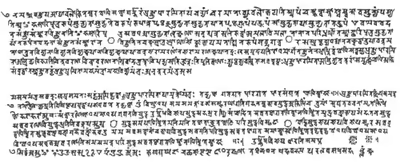
A palm-leaf manuscript found at the Hōryū-ji Temple is the earliest undated extant Sanskrit manuscript of the Heart Sūtra. It is dated to c. 7th–8th century CE by the Tokyo National Museum where it is currently kept.
Authorship of the Heart Sūtra
Nattier's hypothesis
According to Conze (1967), approximately 90% of the Heart Sūtra is derivable from the larger Sanskrit Prajñāpāramitā Sūtras, including the Pañcaviṃśatisāhasrikā Prajñāpāramitā Sūtra (Prajñāpāramitā Sūtra in 25,000 lines), the Aṣṭasāhasrikā Prajñāpāramitā Sūtra (Prajñāpāramitā Sūtra in 8,000 lines), and the Śatasāhasrikā Prajñāpāramitā Sūtra (Prajñāpāramitā Sūtra in 100,000 lines).
Nattier (1992) questions the Sanskrit origins of the Heart Sūtra. Nattier states that there is no direct or indirect evidence (such as a commentary) of a Sanskrit version before the 8th century, and she dates the first evidence (in the form of commentaries by Xuanzang's disciples Kuiji and Woncheuk, and Dunhuang manuscripts) of Chinese versions to the 7th century. Nattier believes that the corroborating evidence supports a Chinese version at least a century before a Sanskrit version.
Nattier further argues that it is unusual for Avalokiteśvara to be in the central role in a Prajñāpāramitā text. Early Prajñāpāramitā texts involve Subhuti, who is absent from both versions of the Heart Sūtra. The Buddha is only present in the longer version of the Heart Sūtra. Nattier claims the presence of Avalokitesvara in the Heart Sūtra could be considered evidence that the text is Chinese in origin as Avalokitesvara was never as popular in India. Nattier also points out that the "gate gate" mantra exists in several variations, and is associated with several different Prajñāpāramitā texts.
According to Nattier, only 40% of the extant text of the Heart Sūtra is a quotation from the Mahāprajñāpāramitāupadeśa (Great Treatise on the Perfection of Wisdom), a commentary on the Pañcaviṃśatisāhasrikā Prajñāpāramitā Sūtra written by Nāgārjuna and translated by Kumārajīva; while the rest was newly composed. Based on textual patterns in the extant Sanskrit and Chinese versions of the Heart Sūtra, the Mahāprajñāpāramitāupadeśa and the Pañcaviṃśatisāhasrikā Prajñāpāramitā Sūtra, Nattier has argued that the supposedly earliest extant version of the Heart Sūtra, translated by Kumārajīva (344–413), that Xuanzang supposedly received from an inhabitant of Sichuan prior to his travels to India, was probably first composed in China in the Chinese language from a mixture of material derived from Kumārajīva's Chinese translation of the Mahāprajñāpāramitāupadeśa, and newly composed text (60% of the text). According to Nattier, Xuanzang's version of this text (Taisho 251) was later translated into Sanskrit, or properly speaking, back-translated, since part of the sūtra was a translation of a Sanskrit text.
According to Nattier, excluding the new composition, Kumarajiva's version of the Heart Sūtra (T250) matches the corresponding parts of Kumārajīva's translation of the Mahāprajñāpāramitāupadeśa almost exactly; the other, Xuanzang's version (T251) are missing two lines with a number of other differences, including one different line, and differences in terminology. The corresponding extant Sanskrit texts (i.e., Heart Sūtra and Prajñāpāramitā Sūtra in 25,000 lines), while agreeing in meaning, differ in virtually every word.
Criticism of Nattier
Nattier's hypothesis has been rejected by several scholars, including Harada Waso, Fukui Fumimasa, Ishii Kōsei, and Siu Sai Yau, on the basis of historical accounts and comparison with the extant Sanskrit Buddhist manuscript fragments. Harada and Ishii, as well as other researchers such as Hyun Choo and Dan Lusthaus, also argue that evidence can be found within the 7th-century commentaries of Kuiji and Woncheuk, two important disciples of Xuanzang, that undermine Nattier's argument.
Li states that of the Indic Palm-leaf manuscript (patra sūtras) or sastras brought over to China, most were either lost or not translated. Red Pine, a practicing American Buddhist, favours the idea of a lost manuscript of the Large Perfection of Wisdom Sūtra (Pañcaviṃśatisāhasrikā Prajñāpāramitā Sūtra) with the alternate Sanskrit wording, allowing for an original Indian composition, which may still be extant, and located at the Giant Wild Goose Pagoda.
Harada rejects Nattier's claims that the central role of Avalokiteśvara points to a Chinese origin for the Heart Sūtra. Harada notes that the Aṣṭasāhasrikā Prajñāpāramitā ("Prajñāpāramitā Sūtra in 8,000 lines"), one of the two oldest prajñāpāramitā sūtras, also has other speakers than the Buddha, namely Subhuti, Saripūtra as well as Ananda. Harada also notes the blending of Prajñāpāramitā and Avalokiteśvara Bodhisattvas in Mahayana Buddhist belief beginning from at least Faxian and Xuanzang's time (i.e. 4th–5th century CE and 7th century CE); and therefore Avalokiteśvara's presence in the Heart Sūtra is quite natural. Siu also notes that Avalokitesvara's presence as the main speaker in the Heart Sūtra is justifiable on several bases.
However, the question of authorship remains controversial, and other researchers such as Jayarava Attwood (2021) continue to find Nattier's argument for a Chinese origin of the text to be the most convincing explanation.
Philological explanation of the text
Title
Historical titles
The titles of the earliest extant manuscripts of the Heart Sūtra all include the words "hṛdaya" or "heart" and "prajñāpāramitā" or "perfection of wisdom". Beginning from the 8th century and continuing at least until the 13th century, the titles of the Indic manuscripts of the Heart Sūtra contained the words "bhagavatī" or "mother of all buddhas" and "prajñāpāramitā".
Later Indic manuscripts have more varied titles.
Titles in use today
In the western world, this sūtra is known as the Heart Sūtra (a translation derived from its most common name in East Asian countries). But it is also sometimes called the Heart of Wisdom Sūtra. In Tibet, Mongolia and other regions influenced by Vajrayana, it is known as The [Holy] Mother of all Buddhas Heart (Essence) of the Perfection of Wisdom.
In the Tibetan text the title is given first in Sanskrit and then in Tibetan: Sanskrit: भगवतीप्रज्ञापारमिताहृदय (Bhagavatīprajñāpāramitāhṛdaya), Tibetan: བཅོམ་ལྡན་འདས་མ་ཤེས་རབ་ཀྱི་ཕ་རོལ་ཏུ་ཕྱིན་པའི་སྙིང་པོ, Wylie: bcom ldan 'das ma shes rab kyi pha rol tu phyin pa'i snying po; transl. Mother of All Buddhas Heart (Essence) of the Perfection of Wisdom.
In other languages, the commonly used title is an abbreviation of Prajñāpāramitāhṛdayasūtraṃ (i.e., the Prajñāhṛdaya Sūtra or the Heart of Wisdom Sūtra). For example, Korean: Banya Shimgyeong (반야심경); Chinese: Bore Xinjing (般若心经; 般若心經; bōrě xīnjīng); Japanese: Hannya Shingyō (般若心経); Vietnamese: Bát-nhã tâm kinh (般若心經).
Content
Various commentators divide this text into different numbers of sections.
Opening
In the longer version, there exists the traditional opening "Thus have I heard" and Buddha along with a community of bodhisattvas and monks gathered with the bodhisattva of great compassion, Avalokiteśvara, and Saripūtra, at Gridhakuta (a mountain peak located at Rajgir, the traditional site where the majority of the Perfection of Wisdom teachings were given). Through the power of Buddha, Saripūtra asks Avalokiteśvara for advice on the practice of the Perfection of Wisdom.
The longer sūtra then describes, while the shorter opens with, the liberation of Avalokiteśvara, gained while practicing the paramita of prajña (wisdom), seeing the fundamental emptiness (śūnyatā) of the five skandhas: form (rūpa), feeling (vedanā), perceptions (saṃjñā), volitions (saṅkhāra), and consciousness (vijñāna).
Form is emptiness
Avalokiteśvara addresses Śaripūtra, who was the promulgator of abhidharma according to the scriptures and texts of the Sarvastivada and other early Buddhist schools, having been singled out by the Buddha to receive those teachings. Avalokiteśvara famously states, "Form is empty (śūnyatā). Emptiness is form", and declares the other skandhas to be equally empty of the most fundamental Buddhist teachings such as the Four Noble Truths and explains that in emptiness none of these notions apply. This is interpreted according to the two truths doctrine as saying that teachings, while accurate descriptions of conventional truth, are mere statements about reality—they are not reality itself—and that they are therefore not applicable to the ultimate truth that is by definition beyond mental understanding.
The specific sequence of concepts listed in lines 12–20 ("...in emptiness there is no form, no sensation, ... no attainment and no non-attainment") is the same sequence used in the Mūlasarvāstivādin Samyukta Āgama; this sequence differs in comparable texts of other sects. On this basis, Red Pine has argued that the Heart Sūtra is specifically a response to Sarvastivada teachings that, in the sense "phenomena" or its constituents, are real. Lines 12–13 enumerate the five skandhas. Lines 14–15 list the twelve ayatanas or abodes. Line 16 makes a reference to the 18 dhatus or elements of consciousness, using a conventional shorthand of naming only the first (eye) and last (conceptual consciousness) of the elements. Lines 17–18 assert the emptiness of the Twelve Nidānas, the traditional twelve links of dependent origination, using the same shorthand as with the eighteen dhatus. Line 19 refers to the Four Noble Truths.
Reliance on the prajnaparamita
The bodhisattva, as the archetypal Mahayana Buddhist, relies on the perfection of wisdom, defined in the Mahaprajnaparamita Sūtra to be the wisdom that perceives reality directly without conceptual attachment thereby achieving nirvana. All Buddhas of the three ages (past, present and future) rely on the Perfection of Wisdom to reach unexcelled complete Enlightenment.
Unsurpassed knowledge
The final lines of the Heart Sūtra can be read in two different ways, depending on the interpretation of the character 咒, zhòu, meaning either mantra (dharani), or "a superlative kind of practical knowledge or incantation (vidyā). According to Attwood, vidyā may be misunderstood, and the concluding mantra may have been a later addition.
Therefore, the Perfection of Wisdom is the all powerful mantra/knowledge, the great enlightening mantra/knowledge, the unexcelled mantra/knowledge, the unequalled mantra/knowledge, able to dispel all suffering. This is true and not false.
Conclusion
The shorter sūtra concludes with the following mantra:
gate gate pāragate pārasaṃgate bodhi svāhā
(IPA: )
This mantra has been recorded and transliterated into many languages, including:
- Sanskrit as recorded in Siddham script of the era: 𑖐𑖝𑖸 𑖐𑖝𑖸 𑖢𑖯𑖨𑖐𑖝𑖸 𑖢𑖯𑖨𑖭𑖽𑖐𑖝𑖸 𑖤𑖺𑖠𑖰𑖭𑖿𑖪𑖯𑖮𑖯
- Sanskrit as recorded in modern Devanagari script: गते गते पारगते पारसंगते बोधि स्वाहा
- simplified Chinese: 揭谛揭谛,波罗揭谛,波罗僧揭谛,菩提萨婆诃; traditional Chinese: 揭諦揭諦,波羅揭諦,波羅僧揭諦,菩提薩婆訶; pinyin: Jiēdì jiēdì, bōluójiēdì, bōluósēngjiēdì, pútí sàpóhē
- Vietnamese: Yết đế, yết đế, Ba la yết đế, Ba la tăng yết đế, Bồ đề tát bà ha
- Japanese: 羯諦羯諦、波羅羯諦、波羅僧羯諦、菩提薩婆訶; rōmaji: Gyatei gyatei haragyatei harasōgyatei boji sowaka
- Korean: 아제 아제 바라아제 바라승아제 모지 사바하; romaja: Aje aje bara-aje baraseung-aje moji sabaha
- Tibetan: ག༌ཏེ༌ག༌ཏེ༌པཱ༌ར༌ག༌ཏེ༌པཱ༌ར༌སཾ༌ག༌ཏེ༌བོ༌དྷི༌སྭཱ༌ཧཱ། (gate gate paragate parasangate bodi soha)
Translations of this mantra vary, but include:
- Max Müller (1884) - Gone, gone, gone to the other shore, landed at the other shore, 'O Wisdom Svaha!'
- D.T. Suzuki (1953) - O Bodhi, gone, gone, gone to the other shore, landed at the other shore, Svaha!
- Edward Conze (1958) - Gone, gone, gone beyond, gone altogether beyond, O what an awakening, all-hail!
- Tanahashi and Halifax (2007) - Arriving, arriving, arriving all the way, arriving all the way together: awakening Joy!
In the longer version, Buddha praises Avalokiteśvara for giving the exposition of the Perfection of Wisdom and all gathered rejoice in its teaching. Many schools traditionally have also praised the sūtra by uttering three times the equivalent of "Mahāprajñāpāramitā" after the end of the recitation of the short version.
Buddhist exegetical works
China, Japan, Korea and Vietnam
Two commentaries of the Heart Sūtra were composed by pupils of Xuanzang, Woncheuk and Kuiji, in the 7th century. These appear to be the earliest extant commentaries on the text. Both have been translated into English. Both Kuiji and Woncheuk's commentaries approach the Heart Sūtra from both a Yogācāra and Madhyamaka viewpoint; however, Kuiji's commentary presents detailed line by line Madhyamaka viewpoints as well and is therefore the earliest surviving Madhyamaka commentary on the Heart Sūtra. Of special note, although Woncheuk did his work in China, he was born in Silla, one of the kingdoms located at the time in Korea. The chief Tang dynasty commentaries have all now been translated into English.
Notable Japanese commentaries include those by Kōbō Daishi (9th Century, Japan), who provides a Shingon commentary by treating the text as a tantra, and Hakuin, who gives a Zen commentary.
There is also a Vietnamese commentarial tradition for the Heart Sūtra. The earliest recorded commentary is the early 14th century Thiền commentary entitled 'Commentary on the Prajñāhṛdaya Sūtra' by Pháp Loa.
All of the East Asian commentaries are commentaries of Xuanzang's translation of the short version of the Heart Sūtra. Kōbō Daishi's commentary is purportedly of Kumārajīva's translation of the short version of the Heart Sūtra; but upon closer examination seems to quote only from Xuanzang's translation.
India
Eight Indian commentaries survive in Tibetan translation and have been the subject of two books by Donald Lopez. These typically treat the text either from a Madhyamaka point of view, or as a tantra (esp. Śrīsiṃha). Śrī Mahājana's commentary has a definite "Yogachara bent". All of these commentaries are on the long version of the Heart Sūtra. The Eight Indian Commentaries from the Kangyur are (cf first eight on chart):
There is one surviving Chinese translation of an Indian commentary in the Chinese Buddhist Canon. Āryadeva's commentary is on the short version of the Heart Sūtra.
Other
Besides the Tibetan translation of Indian commentaries on the Heart Sūtra, Tibetan monk-scholars also made their own commentaries. One example is Tāranātha's A Textual Commentary on the Heart Sūtra.
In modern times, the text has become increasingly popular amongst exegetes as a growing number of translations and commentaries attest. The Heart Sūtra was already popular in various East Asian Buddhist traditions such as Chan, Zen, Shingon and Tendai Buddhism, but it has also become a staple for Tibetan Buddhist Lamas as well.
Selected English translations
The first English translation was presented to the Royal Asiatic Society in 1863 by Samuel Beal, and published in their journal in 1865. Beal used a Chinese text corresponding to T251 and a 9th Century Chan commentary by Dadian Baotong (大顛寶通) [c. 815 CE]. In 1881, Max Müller published a Sanskrit text based on the Hōryū-ji manuscript along an English translation.
There are more than 40 published English translations of the Heart Sūtra from Sanskrit, Chinese, and Tibetan, beginning with Beal (1865). Almost every year new translations and commentaries are published. The following is a representative sample.
Recordings
The Heart Sūtra has been set to music a number of times. Many singers solo this sūtra.
- The Buddhist Audio Visual Production Centre (佛教視聽製作中心) produced a Cantonese album of recordings of the Heart Sūtra in 1995 featuring a number of Hong Kong pop singers, including Alan Tam, Anita Mui and Faye Wong, and composed by Andrew Lam Man Chung (林敏聰) to raise money to rebuild the Chi Lin Nunnery.
- Malaysian Imee Ooi (黄慧音) sings the short version of the Heart Sūtra in Sanskrit, accompanied by meditative music entitled 'The Shore Beyond, Prajna Paramita Hrdaya Sūtram', released in 2009, popularizing the Sanskrit version worldwide. She has also sung the Heart Sutra in Cantonese and Mandarin and is part of the modernization of Buddhist Chant wave starting from the 1990s across East and Southeast Asia.
- Hong Kong pop singers, such as the Four Heavenly Kings, sang the Heart Sūtra to raise money for relief efforts related to the 1999 Jiji earthquake.
- A Mandarin version was first performed by Faye Wong in May 2009 at the Famen Temple for the opening of the Namaste Dagoba, a stupa housing the finger relic of Buddha rediscovered at the Famen Temple. She has sung this version numerous times since and its recording was subsequently used as a theme song in the blockbusters Aftershock (2010) and Xuanzang (2016).
- Shaolin monk Shi Yan Ming recites the Sūtra at the end of the song "Life Changes" by the Wu-Tang Clan, in remembrance of the deceased member ODB.
- The outro of the b-side song "Ghetto Defendant" by the British first wave punk band The Clash also features the Heart Sūtra, recited by American beat poet Allen Ginsberg.
- An Esperanto translation of portions of the text furnished the libretto of the cantata La Koro Sutro by American composer Lou Harrison.
- The Heart Sūtra appears as a track on an album of sūtras "performed" by VOCALOID voice software, using the Nekomura Iroha voice pack. The album, Syncretism of Shinto and Buddhism by VOCALOID, is by the artist tamachang.
Popular culture
In the centuries following the historical Xuanzang, an extended tradition of literature fictionalizing the life of Xuanzang and glorifying his special relationship with the Heart Sūtra arose, of particular note being Journey to the West, which was written in the 16th century during the Ming dynasty. In chapter nineteen of Journey to the West, the fictitious Xuanzang learns by heart the Heart Sūtra after hearing it recited one time by the Crow's Nest Chan Master, who flies down from his tree perch with a scroll containing it, and offers to impart it. A full text of the Heart Sūtra is quoted in this fictional account.
The 1782 Japanese text "The Secret Biwa Music that Caused the Yurei to Lament" (琵琶秘曲泣幽霊), commonly known as Hoichi the Earless, because of its inclusion in the 1904 book Kwaidan: Stories and Studies of Strange Things, makes usage of this sūtra. It involves the titular Hoichi having his whole body painted with the Heart Sūtra to protect against malicious spirits, with the accidental exception of his ears, making him vulnerable nonetheless. A filmed adaptation of this story is included in the 1964 horror anthology Kwaidan.
In the 2003 Korean film Spring, Summer, Fall, Winter...and Spring, the apprentice is ordered by his Master to carve the Chinese characters of the sūtra into the wooden monastery deck to quiet his heart.
The Sanskrit mantra of the Heart Sūtra was used as the lyrics for the opening theme song of the 2011 Chinese television series Journey to the West.
The 2013 Buddhist film Avalokitesvara tells the origins of Mount Putuo, the famous pilgrimage site for the bodhisattva Avalokitesvara in China. The film was filmed onsite on Mount Putuo and featured several segments where monks chant the Heart Sūtra in Chinese and Sanskrit. Egaku, the protagonist of the film, also chants the Heart Sūtra in Japanese.
In the 2015 Japanese film I Am a Monk, Koen, a twenty-four year old bookstore clerk, becomes a Shingon monk at the Eifuku-ji after the death of his grandfather. The Eifuku-ji is the fifty-seventh temple in the eighty-eight temple Shikoku Pilgrimage Circuit. He is at first unsure of himself. However, during his first service as he chants the Heart Sūtra, he comes to an important realization.
Bear McCreary recorded four Japanese-American monks chanting the entire Heart Sūtra in Japanese in his sound studio. He picked a few discontinuous segments and digitally enhanced them for their hypnotic sound effect. The result became the main theme of King Ghidorah in the 2019 film Godzilla: King of the Monsters.
Since 2010, a large number of musical arrangements of the Heart Sutra went viral on Japanese social media and video-sharing platforms, especially Nico Nico Douga. These mainly include rearrangements of the track featuring Hatsune Miku, a virtual Vocaloid idol, reciting the sutra in various musical styles, as well as vocal and instrumental covers.
Influence on western philosophy
Schopenhauer, in the final words of his main work, compared his doctrine to the Śūnyatā of the Heart Sūtra. In Volume 1, § 71 of The World as Will and Representation, Schopenhauer wrote: "...to those in whom the will [to continue living] has turned and has denied itself, this very real world of ours, with all its suns and Milky Ways, is—nothing." To this, he appended the following note: "This is also the Prajna–Paramita of the Buddhists, the 'beyond all knowledge,' in other words, the point where subject and object no longer exist."