


Related on Lably
Through Jesus, Christianity and Grassroots
- Medieval Europe – Rise and Spread of ChristianityClass 7 · History & Civics
- Grassroots Democracy — Part 1: GovernanceClass 6 · Social Science
- Grassroots Democracy — Part 2: Local Government in Rural AreasClass 6 · Social Science
- Grassroots Democracy — Part 3: Local Government in Urban AreasClass 6 · Social Science
Christianity was a mostly urban grassroots movement that grew to over a million adherents by the third century. In its first century, it began developing a church government and a religious text, which was not formalized as canon until the fourth century. Constantine the Great issued the Edict of Milan legalizing it in 313. Christian art, architecture, and literature blossomed during the fourth century, but competing theological doctrines led to divisions. The Nicene Creed of 325, the Nestorian schism, the Church of the East and Oriental Orthodoxy resulted.
After the fall of Rome in 476, the West was divided. Monks preserved culture and provided social services. Early Muslim conquests devastated many Christian communities in the Middle East and North Africa causing decline. The church in the East prospered in Asia and helped form the states of Eastern Europe. The 1054 East–West Schism marked the separation of Eastern Orthodoxy and the Catholic Church. In spite of many differences, the East requested western military aid against the Turks, resulting in the Crusades. Gregorian reform led to a more centralized and bureaucratic Catholicism. Faced with internal and external challenges, the church fought heresy and established courts of inquisition. Artistic and intellectual advances among western monks played a part in the Renaissance of the 12th century and the later Scientific Revolution.
In the 14th century, the Western Schism and several European crises led to the 16th-century Reformation when Protestantism formed. Reformation Protestants advocated for religious tolerance and the separation of church and state and impacted economics. Quarrelling royal houses took sides in the European wars of religion. Christianity spread with the colonization of the Americas, Australia, and New Zealand. Different parts of Christianity influenced the Age of Enlightenment, American and French Revolutions, the Industrial Revolution, and participated in the Atlantic slave trade and its abolition. Some Protestants created biblical criticism while others responded to rationalism with Pietism and religious revivals that created new denominations. Nineteenth century missionaries laid the linguistic and cultural foundation of many nations.
In the twentieth century, Christianity declined in most of the Western world but grew in the Global South, particularly Southeast Asia and Sub-Saharan Africa. In the twenty first century, Christianity has become the largest and most diverse and pluralistic of the world's religions embracing over 3000 of the world's languages.
Early Christianity (c. 27 – fourth century)
First century
Christianity began in the first century with Jesus of Nazareth, a Jewish man and itinerant preacher in Galilee and the Roman province of Judea. He was a prophetic figure who proclaimed the coming kingdom of God, and taught the "relativity of earthly authority", which was seen as a threat by those who eventually had him crucified. Much about Jesus is uncertain, but his crucifixion c. 30 is well attested.
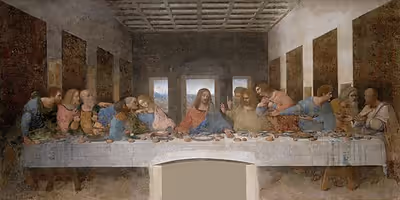
The religious, social, and political climate in Judaea was characterized by turmoil and numerous religious and political movements. Jewish messianism promised a messianic redeemer descended from Israel's ancient King David. Those who followed Jesus, called disciples, saw him as that Messiah. Incarnation, the belief that God (or the Word of God) was embodied in Jesus, and resurrection, the belief that after his crucifixion, he rose from the dead, were Christianity's earliest beliefs. Its earliest rituals were baptism, a rite of initiation, and the communal Eucharist, a celebration of the new covenant at Jesus' last meal before death.
Christianity most likely began with fewer than 1000 believers, which grew to approximately one hundred small household churches, each with an average of seventy members, by the year 100. The largest cities in the Roman Empire, such as Rome, Alexandria, Antioch, Ephesus, and Carthage, all had Christian congregations by the end of the first century.
The first Christians were predominantly Jews identified "by their allegiance to Jesus of Nazareth". They gathered in small groups inside private homes where the typical setting for worship was the communal meal. Elders (called presbyters or bishops) oversaw the small groups, providing for the economic requirements of the meal and for charitable distributions. Women comprised significant numbers of Christianity's earliest members.
Of the original believers, Jesus had kept twelve disciples closest to him. They became known as the Twelve Apostles though there were other apostles. Saul of Tarsus, who became Paul the Apostle, was a Jewish Pharisee who persecuted early Christians. According to his own account, his life took a turn in the opposite direction after he had an experience with Christ on the road to Damascus. The twelve Apostles and Paul identified evangelism as a task to be undertaken, which prompted them to travel through foreign lands sharing their message. Christianity spread along the trade and travel routes, into the Jewish diaspora, and beyond the Roman Empire.
In the early centuries, the languages most used by Christianity were Greek, Syriac (a form of Aramaic), and Latin. Christian writings in Koine Greek, including the four gospels (the accounts of Jesus' ministry), letters of Paul, and letters attributed to other early Christian leaders, were written in the first century and had considerable authority, even in the formative period. Letters sent by Paul the Apostle to Christian communities were circulating in collected form by the end of the first century.
Despite martyrs such as Stephen, the movement grew, reaching Antioch where converts were first called Christian by non-Christians. From Antioch, Barnabas and Paul went to Cyprus, then Asia Minor, where the gospel was received by both Jewish and non-Jewish people. The conversion of Gentiles led to disputes with a group who desired observance of Mosaic law including circumcision. James, brother of Jesus, called the Council of Jerusalem (c. 50) to address this issue. The council determined that converts should avoid "pollution of idols, fornication, things strangled, and blood" but should not be required to follow other aspects of Jewish Law (KJV, Acts 15:20–21). Disagreements over Jewish law, progenitors of Rabbinic Judaism, and insurrections against Rome, contributed to a gradual separation from Judaism. Nevertheless, Jewish Christianity remained influential in Palestine, Syria, and Asia Minor into the second and third centuries.
Ante-Nicene period (100–312)
The Christian faith spread east into Syria and Mesopotamia where the population spoke Aramaic, not Greek. Aramaic Christians were in Adiabene (northern Iraq) by the second century. By the second century Christianity was in North Africa, and by the third century, it had spread across the Mediterranean region, from Greece and Anatolia into the Balkans in the East, and as far as Roman Britain in the northwest.
Christianity's ideology, combined with its social impact, was pivotal to this growth. Christianity offered people new ways of thinking. For example, the idea that the power of God was manifested through Jesus in a reversal of power challenged Roman concepts of hierarchy. In sociologist Rodney Stark's view, Christianity grew because it constituted an "intense community" which provided a unique "sense of belonging". However, early Christianity demonstrates both inclusion and exclusion. Belief in Jesus was the crucial and defining characteristic for becoming a Christian, and early Christianity was highly inclusive toward anyone who expressed such belief. However, believers were also highly exclusive; they were separated from unbelievers by a strong social boundary that avoided traditional practices such as public baths and military service.
Women are prominent in the Pauline epistles and early Christian art. Church rolls from the second century list groups of women "exercising the office of widow". Much of the most virulent anti-Christian criticism of this period was linked to "female initiative", which may have contributed to the sporadic but increasing persecution.
Christians were persecuted by the Roman empire because they did not uphold fundamental beliefs of Roman society and their withdrawal from public religion made them targets of suspicion and rumor. For most of its early centuries, Christianity was tolerated, and episodes of persecution were local. For example, Emperor Nero's persecution of Christians during the mid-1st century was confined to Rome. There were no empire-wide persecutions until the 250s. Official persecution reached its height under Diocletian in 303–311.
By 200, Christian numbers had grown to over 200,000 people, and communities with an average size of 500–1000 people existed in approximately 200–400 towns. By 250, Christianity had grown to over a million. House churches were then succeeded by buildings designed to be churches, complete with assembly rooms, classrooms, and dining rooms. A more formal church government developed. Bishops were essential to this, and they rose in power and influence as they began to preside over larger areas with multiple churches.
Christian sects, cults, and movements rose during the second and third centuries. Gnosticism challenged the physical nature of Jesus, Montanism suggested that the apostles could be superseded, and Monarchianism emphasized the unity of God over the Trinity. In the face of such diversity, unity was provided by the shared scriptures and bishops. The four gospels and the letters of Paul were generally regarded as authoritative, but other writings, such as the Book of Revelation and the epistles to the Hebrews, James, and 1 John, were assigned different degrees of authority.
The fluidity of the New Testament in the first century does not seem to have affected belief in the Trinity as it connected to Christology and salvation. Christianity's central mystery, the Trinity, defines the Holy Spirit, Father, and Son as one God in three persons. However, there is also an evolution of thought in the Patristic writings, then the development of the canon, and later in the theological controversies of the fourth century, that shaped the concept's development and gradually created a more technical Trinitarian vocabulary.
There are few remnants of early Christian art, but the oldest, dated between 200 and 400, have been found in the catacombs of Rome. It typically fused Graeco-Roman style and Christian symbolism: the most common image was Jesus as the good shepherd.
Sign in to keep reading
6 more chapters are free with a Lably account.
Late antiquity (313 – c. 600)
In 313, the emperor Constantine, a self-declared Christian, issued the Edict of Milan expressing tolerance for all religions. Constantine supported Christianity by giving bishops judicial power and establishing them as legally equal to polytheistic priests. He devoted personal and public funds to building churches and endowed them with funds to support their clergy.
Christianity transformed. Christian art, architecture, and literature blossomed. The basilica, a type of Roman municipal court hall, became the model for Christian architecture. Frescoes, mosaics, statues, and paintings blended classical and Christian styles. Similarly, a hybrid form of poetry written in classical styles with Christian concepts emerged. In the late fourth century, Jerome was commissioned to translate the Greek biblical texts into the Latin language; this translation was called the Vulgate. Church Fathers of this period, such as Augustine of Hippo, John Chrysostom, Gregory of Nyssa, Athanasius of Alexandria, Basil of Caesarea, Gregory of Nazianzus, Cyril of Alexandria, and Ambrose of Milan, wrote vast numbers of works. There were churches in the majority of Roman cities by the end of the fourth century.
Before the fourth century, Judaism had been an approved religion, while Christianity was persecuted as an illegal superstition; during the fourth century, Christianity became favored by emperors and Judaism came to be seen as similar to heresy. Still, Augustine of Hippo argued that Jews should not be killed or forcibly converted; they should be left alone because they preserved the teachings of the Old Testament and were "living witnesses" of the New Testament. Aside from the Visigothic Kingdom, Jews and Christians peacefully coexisted, for the most part, into the High Middle Ages.
Imperial and ecclesiastical politics grew increasingly intertwined, and Christianity moved from being the church of outsiders into the heart of state politics. Church leaders responded with the first fully articulated limitation on secular authority. However, the successors to Peter as Bishop of Rome (known as the Pope) had limited influence, and they lacked the power to break free of secular involvement in church affairs. Entanglement with the state continued to be problematic into the twentieth-century.
Monasticism
The ascetic ideal was embraced by monasticism, which had begun earlier in Syria and was key to the development of Christianity. In Late Antiquity, monastic communities became associated with the urban holy places in Palestine, Cappadocia, Italy, Gaul, and Roman North Africa. In the 370s, Basil the Great founded the Basileias, a monastic community in Caesarea (Mazaca) which developed the first health care system for the poor, a forerunner of modern public hospitals.
Geographical spread
Christianity grew rapidly throughout this period. Christians in Persia, (present-day Iraq), were deeply persecuted in Late Antiquity, but their numbers still grew. In the fourth century the percentage of Christians was as high in the Sasanian Empire as in the Roman Empire. A form of Christianity made inroads among Arabs in Palestine, Yemen, and Arabia. Even as the Huns, Ostrogoths, Visigoths, and Vandals caused havoc in the Roman Empire in the fourth and fifth centuries, many of them converted to Christianity. Syria was home to a thriving theological school. The gospel was first brought to Central Asia and China by Syriac-speaking missionaries.
Christian institutions in Asia or East Africa never developed the kind of influence that the European churches and Byzantium held. Even so, in 301, the Kingdom of Armenia became the first nation to adopt Christianity as its state religion, soon followed by Caucasian Albania and the East African Kingdom of Aksum. In the early fifth century, missionaries began converting Ireland. Christianity, a minority faith in Britain since the second century, began to be displaced by Anglo-Saxon paganism in the fifth century. However, this process reversed after the Gregorian mission of 597.
Religious violence
Traditionally, scholars interpreted Late Antique writings describing violence by Christians against paganism as evidence of a widespread historical reality. Modern scholarship has broken up the old paradigms, finding that both Christians and pagans misattributed and over-reported violence. There were violent incidents, but they were few, local, limited, and at the ordinary level of occurrence in Roman society.
Christians saw Constantine's conversion as proof the Christian God had defeated the pagan gods in Heaven. The purpose of claims of violence in their writings was to further the new identity they adopted for themselves as "victors". For example, literature says Constantine ordered the destruction of the altar at Mamre, building a church in its place; archaeology found Constantine's church, but it was in a peripheral sector that left the rest unhindered. Temple destruction is attested in 43 cases in the written sources, but only four are supported by archaeological evidence.
Constantine adopted a policy of toleration with limits toward non-Christians; there were no forced conversions, no purges, and no pagan martyrs. However, there was virulent legal hostility toward certain pagan practices. Blood sacrifice, which had been a central rite of virtually all religious groups in the pre-Christian Mediterranean, disappeared by the end of the fourth century due in part to hostile imperial laws. Still, polytheism remained active into the fifth century, and in some places, into the ninth, even though popular support for the polytheistic religions had been in decline since the second century BC.
Debate was the primary method of competition between pagans and Christians. Persuasion, rhetoric and polemics centered on the true meaning of the word. Pagans asserted its correct meaning was allegorical and could be found in ancient myths and poetics. Christians asserted Jesus as the living word in their first true ontologies.
Constantine generally supported resolving religious disputes through debate without violence, but in 304, Donatists formed a schism in North Africa, refusing, often violently, to accept back into the church those who had cooperated with the Romans during Diocletian's persecution. The emperor attempted to impose public order through force, but it was ineffective. In 321, Constantine decided no more punishment would be given to Donatists, but their Catholic victims would be venerated as Christian martyrs.
In 408, Augustine of Hippo defended the government's violent response by asserting that coercion could not produce genuine conversion, but it could soften resistance and make conversion possible. According to Peter Brown, Augustine thus "provided the theological foundation for the justification of medieval persecution".
Heresies, schisms, and councils
Regional variants of Christianity produced diverse and sometimes competing theologies. Ancient Christians identified any practice or doctrine which differed from apostolic tradition as heresy. The number of laws directed at heresy indicate it was a much higher priority than paganism for Christians of this period.
For decades, Arianism embroiled the entire church, non-clergy and clergy alike, in arguing whether Jesus' divinity was of the same type as the Father's. The First Council of Nicaea (325) attempted to resolve the controversy with the Nicene Creed. Resolution went back and forth between Arians and non-Arians for the next 56 years.
Biblical commentators between 300 and 600 focused more on aiding ordinary Christians whose main concern was sin and salvation. Christian baptism was distinctive and demonstrated how Christians understood these concepts in terms of the death of Christ.
Christian scriptures were formalized as the New Testament and distinguished from the Old Testament by the fourth century. Despite agreement on these texts, differences between East and West were becoming evident.
Controversies over how Jesus' human and divine natures coexisted peaked when Nestorius declared Mary as the mother of Jesus' humanity, not his divinity, thereby giving Jesus two distinct natures. This led to a series of ecumenical councils: the Council of Ephesus was the church's third council, and it condemned Nestorius. Held in 431, the church in the Persian Empire refused to recognize its authority. This led to the first separation between East and West and cut off Syrian theologians and writers from the rest of Christendom.. Two groups, one mostly Persian and the other Syrian, separated from Catholicism; Persians became the Church of the East (also known as the Assyrian, Nestorian, or Persian Church), while the majority of Christians in Syria and Mesopotamia became the Syrian Orthodox Church (Jacobite). The Church of the East lay almost entirely outside the Byzantine Empire. It became the principal Church in Asia in the Middle Ages.
In 451, the fourth council was the influential Council of Chalcedon. While most of Christianity accepted the Chalcedonian Definition, which emphasizes that the Son is "one person in two natures," there were those who found that description too close to the duality of Nestorianism, so after 484, they separated into Oriental Orthodoxy that sees only "One Nature of God the Incarnate Logos".
After 476
After the political fall of the Western Roman Empire in 476, the Eastern Roman Empire continued to see itself as a Roman Empire with an emperor, a civil government, and a large army. The religious policies of the Eastern Roman Emperor Justinian I (r. 527–565) reflected his conviction that the unity of the Empire presupposed unity of faith: he persecuted pagans and religious minorities, purging the government and church bureaucracies of any who disagreed with him. Justinian contributed to cultural development, and integrated Christian concepts with Roman law in his Corpus Juris Civilis, which remains the basis of civil law in many modern states. Until 751, the Pope was a subject of the Byzantine emperor.
After 476, European Christianity lost its imperial character and became increasingly localized. For the next five centuries, Western culture and civilization were primarily preserved and passed on by monks. In Gaul, the Frankish king Clovis I converted to Catholicism; his kingdom became the dominant polity in the West in 507, gradually converting into a Christian kingdom over the next centuries.
Pope Gregory I gained prestige and power for the papacy by leading the response to invasion by the Lombards in 592 and 593, by reforming the clergy, standardizing music in worship, sending out missionaries, founding new monasteries, and by forming attitudes and papal policy toward the Jews. There are 800 of Gregory's letters still in existence, and only 20 deal with the Jews, yet Gregory I was singularly influential concerning the Jews into the thirteenth century. Gregory ordered that Jews should not be molested, that they should be protected from violence, and permitted the free exercise of their religion. He expressed disapproval of forced conversion, and wrote the Sicut Judaeis granting them papal protection. He also expressed that Jews were full of perfidia (treachery) and unbelief, should be restrained from having authority over Christians, and must not be allowed equal status with Christians.
Early Middle Ages (c. 600–1000)
By the early 600s, Christianity had spread around the Mediterranean. In this age of uncertainty, monasteries provided islands of safety, prayer, and scholarly pursuits. Relics and holy men able to provide special access to the divine were an ongoing source of wealth for monasteries, which became increasingly organized. They gradually established their own authority, separate from political and familial authorities, thereby revolutionizing social history.
Until the eighth century, most of Western Europe remained largely impoverished, politically fragmented, and dependent on the church. During this period, invasion, deportation, and neglect left some communities without a church, allowing Christianity to syncretize with local pagan traditions. Nevertheless, "Christendom", the notion of all Christians becoming united as a polity, emerged as a concept.
After the 600s, the Eastern empire was under almost constant siege from its Muslim neighbors. War on multiple fronts contributed to the Eastern Empire becoming the Byzantine Empire, though it gradually lost most of its lands until it fell to the Turks in 1453. Between 632 and 750, Islamic caliphates conquered the Middle East, North Africa, and the Iberian Peninsula. Most urban Asian churches disappeared, but some Christian communities in remote areas survived.
Monasticism and art
Until the end of the Early Middle Ages, Western culture was preserved and passed on primarily by monks known as "regular clergy" because they followed a regula: a rule. The rule included chastity, obedience and poverty sought through prayer, memorization of scripture, celibacy, fasting, manual labour, and almsgiving.
Many monasteries served as orphanages and inns for travelers, and many provided food for those in need. What determined its focus was its location, the monastic order it belonged to, its economic resources, and its local leadership. Medieval monasteries were known for their public hospitals, hospices, and contributions to medicine. The sixth-century Rule of Saint Benedict also had a widespread influence. Monasteries supported literacy, practiced classical arts, crafts, and copied and preserved ancient texts creating illuminated manuscripts. From the sixth to the eighth centuries, most schools were connected to monasteries, but methods of teaching an illiterate populace could also include mystery plays, vernacular sermons, saints' lives in epic form, and artwork.
The East developed an approach to sacred art unknown in the West, adapting ancient portraiture in icons as intercessors between God and humankind. In the 720s, the Byzantine Emperor Leo banned the pictorial representation of Christ, saints, and biblical scenes, and destroyed much early representational art. The West condemned the Byzantine iconoclasm of Leo and some of his successors. By the tenth and early eleventh centuries, Byzantine culture began to recover its artistic heritage.
Regional differences
In 635, the Church of the East brought Christianity into China. Emperor Taizong decreed that the Christian faith was allowed and its license was copied onto the Sianfu stele. It spread into northwestern China, Khotan, Turfan, and south of Lake Balkash in southeastern Kazakhstan, but its growth was halted in 845 by Emperor Wuzong of Tang who favoured Taoism. The Church of the East evangelized all along the Silk Road and was instrumental in converting some of the Mongolic and Turkic peoples. After 700, when much of Christianity was declining, there were flourishing Christian societies along all the main trade routes of Asia, South India, the Nubian kingdoms, Ethiopia, and the Caucasus region.
In Western Europe, canon law was instrumental in developing key norms concerning oaths of loyalty, homage, and fidelity. These norms were incorporated into civil law where traces remain. Within the tenets of feudalism, the church created a new model of consecrated kingship unknown in the East, and in 800, Clovis' descendant Charlemagne became its recipient when Pope Leo III crowned him emperor. Charlemagne engaged in a number of reforms which began the Carolingian Renaissance, a period of intellectual and cultural revival. His crowning freed the Papacy from Byzantine control, and the former lands of the Exarchate became States of the church. However, the papacy was still in need of aid and protection. In Rome, the papacy came under the control of the city's aristocracy.
Eastern Europe had been exposed to Christianity during Roman rule, but it was Byzantine Christianity, brought by the ninth-century saints Cyril and Methodius, that was integral to the formation of its modern states. Dukes and kings used the new faith to solidify their position and promote unity, while some directly enforced it with new laws, building churches, and establishing monasteries. The brothers developed the Glagolitic alphabet to translate the Bible into the local language, and their disciples then developed the Cyrillic script. This spread literacy and became the cultural and religious foundation for all Slavic nations.
In Russia, the baptism of Vladimir of Kiev in 989 is traditionally associated with the conversion of the Kievan Rus'. Their new religious structure included dukes maintaining control of a financially-dependent church. Monasticism was the dominant form of piety for both peasants and elites who identified as Christian while retaining many pre-Christian practices.
Viking raids in the ninth and tenth centuries destroyed many churches and monasteries, inadvertently leading to reform. Patrons competed in rebuilding so that "by the mid-eleventh century, a wealthy, unified, better-organized, better-educated, more spiritually sensitive Latin Church" resulted. There was another rise in papal power in the tenth century when William IX, Duke of Aquitaine, and other powerful lay founders of monasteries, placed their institutions under the protection of the papacy.
High Middle Ages (c. 1000–1300)
The High Middle Ages was a period of profound transformation for Christianity. The western church became centralized and assertive in its own defense, driven by papal reform, intellectual revival, and new religious movements. This period saw the formation of fundamental doctrines such as the seven sacraments, the "terms of Christian marriage, the nature of clerical celibacy, and the appropriate lifestyle for priests". Heresy was more precisely defined. Purgatory became an official doctrine. In 1215, confession became required. Voluntary poverty as a way of emulating Christ became a powerful influence.
Schism, spread, and retraction
The Church of the East, which had separated after Chalcedon, survived against the odds with help from Byzantium. At the height of its expansion in the thirteenth century, it stretched from Syria to eastern China and from Siberia to southern India and southern Asia. Along with geographical separation, there had long been many cultural differences, geopolitical disagreements, and a lack of respect between east and west. Their second separation took place in 1054 when the church within the Byzantine Empire formed Byzantine Eastern Orthodoxy, which thereafter remained in communion with the Ecumenical Patriarchate of Constantinople, not the Pope.
Christianity was declining in Mesopotamia and inner Iran. As churches in Egypt, Syria, and Iraq became subject to fervently Islamic militaristic regimes, Christians were designated as dhimmi, a status that guaranteed their protection but enforced their legal inferiority. Different communities adopted various survival strategies: some withdrew from interaction, others converted to Islam, and others sought outside help.
Crusade
The Byzantine emperor Alexios I Komnenos asked Pope Urban II for help with the Seljuk Turks in 1081, and in 1095, Urban asked European Christians to "go to the aid of their brethren" in counterattack against the inroads of Islam.
Urban's message had great popular appeal. Drawing on powerful and prevalent aspects of folk religion, it connected pilgrimage, charity, and absolution with a willingness to fight. It gave ordinary Christians a tangible means of expressing brotherhood with the East and carried a sense of historical responsibility. Tens of thousands answered. Among the first was Peter the Hermit who led the People's Crusade to a disastrous end in 1096. Eight Crusades, which lasted from 1096 to 1272, had little to no overall military success, failed as a religious endeavor, contributed to the development of national identities in European nations and, eventually, increased division with the East. Scholars struggle with no agreement on estimates of how many died.
The cult of chivalry, which upheld the ideal of the Christian knight, emerged with powerful and wide-spread social and cultural influence before its decline during the 1400s. Another significant effect of the Crusades was the invention of the indulgence. Mary, mother of Jesus became a central aspect of the period.
The nobility of Eastern Europe prioritized subduing the Balts, the last major polytheistic population in Europe, over crusading in the Holy Land. In 1147, the Divina dispensatione gave these nobles indulgences for the first of the Northern Crusades, which intermittently continued, with and without papal support, until 1316. Forced conversions occurred despite continued theological emphasis on voluntary conversion.
Centralization and power struggles
The reform of Pope Gregory VII (1073–1085) began "a new period in church history" by pressing for an end to simony (the sale of church offices), the enforcement of clerical celibacy, and the establishment of papal supremacy. Reform enabled reorganization of the administration of the Papal States, which brought a substantial increase in wealth, consolidated territory, centralized authority, and established a bureaucracy.
Gregorian Reform was intended to free the church from state control and establish the preeminence of the church. After a prolonged period of interference from aristocrats, Pope Nicholas II moved to protect the papacy through his 1059 papal bull In nomine Domini, establishing that popes could only be elected by a College of Cardinals, however, nobles still claimed the right to appoint bishops and abbots. This led to the Investiture Controversy, a conflict between the Holy Roman Emperor Henry IV and Pope Gregory VII over the secular appointment of bishops and abbots and control of their revenues in the Holy Roman Empire. For the church, ending lay investiture would support independence from the state, encourage reform, and provide better pastoral care. For the kings, ending lay investiture meant the power of the Holy Roman Emperor and the European nobility would be reduced.
The Dictatus Papae of 1075 declared that the pope alone could invest bishops. Disobedience to the Pope became equated with heresy; when Henry IV rejected the decree, he was excommunicated, which contributed to a civil war. A similar controversy occurred in England. Struggles over division of power between church and state continued throughout the medieval era.
Monks and Cathars
Beginning at Cluny Abbey, which used Romanesque architecture to convey a sense of awe and wonder and inspire obedience, monasteries gained influence through the Cluniac Reforms.
The Cistercian movement was a wave of monastic reform after 1098. Cistercians were instrumental in promoting technological advancement and were among the best industrialists of the Middle Ages. Of the 740 twelfth-century Cistercian monasteries, nearly all possessed a water wheel used to develop innovative hydraulic engineering techniques, water circulation systems for central heating, produce olive oil or forge metal and produce iron. They taught and practiced advanced farming techniques, such as crop rotation, and were skilled metallurgists.
The twelfth century saw a change in the goal of a monk from contemplative to active reformer. Among these new activist preachers was Dominic. He founded the Dominican Order in 1216 and was significant in opposing Catharism. In 1209, Pope Innocent III and King Philip II of France initiated the Albigensian Crusade against Catharism. The campaign took a political turn when the king's army seized and occupied strategic lands of nobles who had not supported the heretics but had instead been in the good graces of the Church. It ended in 1229 with a treaty which brought the region under the rule of the French king, creating southern France, while Catharism continued until 1350.
Persecution of minorities
The cultural and religious dominance of monks began to decline in the mid-eleventh century when secular clergy and courtiers became "more literate, more worldly, and more self-assertive". The practice of canon and civil law became professionalized. Monastery schools lost influence as cathedral schools spread, and independent schools arose. Universities formed as self-governing corporations.
Between 950 and 1250, the interests and concerns of this new class of functionaries led to the systematic “socially sanctioned" persecution of minorities. Newly centralized states demanded an increasing cultural conformity from citizens, while the church wrote new canon laws that left out Christianity's earlier principles of equity and inclusivity.
The church did not repudiate its doctrine of protecting the Jews, however, in the 12th and 13th centuries, crusading, prohibitions against money lending, condemnation of the Talmud, increasing pressure from the common folk, the growth of polemical literature, and the creation of the mendicant orders, made it difficult for the papacy to retain its earlier Pauline/Augustinian theology of tolerance toward the Jews.
A turning point in Jewish-Christian relations occurred when the Talmud was put "on trial" in 1239 by the French King Louis IX and Pope Gregory IX. Talmudic Judaism came to be seen as so different from biblical Judaism that old Augustinian obligations to leave Jews alone no longer applied. Throughout the medieval era, local rulers evicted Jews from their lands and confiscated their property. Supersessionism was never a formal doctrine of the church, but it was a popular belief among the common people, and other popular legends, such as blood libel and the accusation that Jews had poisoned wells during the plague and desecrated the Christian eucharist, spread paranoia about the Jews.
Jews had often acted as financial agents for the nobility, which freed them from certain financial obligations and attracted jealousy and resentment. Count Emicho of Leiningen massacred Jews in search of supplies and protection money, while the York massacre of 1190 also appears to have originated in a conspiracy by local leaders to liquidate their debts.
The Papacy officially dissociated itself from such popular antisemitism; six Popes in the 12th century and ten in the 13th century reissued Gregory the Great's proclamation of protection, the Sicut Judaeis. The papacy's unequivocal condemnation of forced baptism led to clashes with secular authorities over the Jews. Yet, the proposed solution remained conversion, which produced a different condemnation from the church concerning Jewish "stubbornness".
Inquisition
Pope Innocent III initiated the Medieval Inquisition, which lasted from 1184 to the 1230s, to prosecute crimes for which there were no eyewitnesses, such as murder, sexual misconduct of the clergy, heresy, and witchcraft. These courts were established when someone was accused, and afterwards dissolved. Though these courts had no joint leadership or organization, the Dominican Order held primary responsibility for conducting inquisitions. Inquisitorial procedure guarded the rights of due process, while at the same time trials for exceptional crimes such as treason, heresy, and sorcery, allowed judges to suspend the accused's rights. Between 8,000 and 40,000 people were brought before the courts. The penalty imposed most often was an act of penance, which might include public confession, and death sentences were rare.
The Medieval Inquisition was dependent upon the civil courts. In theory, the Fourth Lateran Council of 1215 granted inquisitors extraordinary powers, but in practice, without sufficient local secular support, their task became so difficult that inquisitors were endangered and some were murdered. Before 1252, it was not legal for the Medieval Inquisition to torture suspects, then on May 15, 1252, Pope Innocent IV issued the papal bull, Ad Exterpanda, authorizing secular authorities to use moderate torture to extract confessions. Bishops were the lead inquisitors, but they did not possess absolute power, nor were they universally supported. Public opposition and riots against the Dominicans occurred.
Renaissance, science and technology
The Christian wars of reconquest began in Italy in 915 and in Spain in 1009, lasted over 200 years, and caused fleeing Muslims to leave their libraries behind. Between 1150 and 1200, monks searched those libraries and found the works of Aristotle, Euclid, and other ancient writers.
The West's rediscovery of the complete works of Aristotle led to the Renaissance of the twelfth century. It also created conflict between faith and reason. Thomas Aquinas resolved the conflict through a "middle way" revolution in thought called scholasticism that impacted Catholic theology and influenced secular philosophy and law into the modern day.
Monks also responded to Aristotle by reviving the scientific study of natural phenomena, which laid the necessary foundation for the Scientific Revolution in the West. There was no parallel in the East.
Byzantine art exerted a powerful influence on Western art in the twelfth and thirteenth centuries. Gothic architecture, intended to inspire contemplation of the divine, began in the same centuries.
The Christianization of Scandinavia occurred in two stages: first, in the ninth century, missionaries operated without secular support; then, a secular ruler would begin to oversee Christianization in their territory until an organized ecclesiastical network was established. By 1350, Scandinavia was an integral part of Western Christendom.
Renaissance and Reformation (c. 1300–1650)
Division in the West
The many calamities of the "long fourteenth century", which included plague, famine, wars, and social unrest, led European people to believe the end of the world was imminent. This belief ran throughout society and became intertwined with anti-clerical and anti-papal sentiments. Criticism of the church became an integral part of late medieval European life, and was expressed in both secular and religious writings, and movements of heresy or internal reform. Most attempts at reform between 1300 and 1500 failed.
In 1309, Pope Clement V fled Rome's factional politics by moving to Avignon in southern France. By leaving Rome and the "seat of Peter" behind, this Avignon Papacy, consisting of seven successive popes, unintentionally diminished papal prestige and power. Pope Gregory XI returned to Rome in 1377. After Gregory's death the following year, the papal conclave elected Urban VI to succeed him, but the French cardinals disapproved and elected Robert of Geneva instead. This began the Western Schism, during which there was more than one pope. In 1409, the Council of Pisa's attempted resolution resulted in the election of a third separate pope. The schism was finally resolved in 1417, with the election of Pope Martin V.
Throughout the Late Middle Ages, the church faced powerful challenges and vigorous political confrontations. The English scholastic philosopher John Wycliffe (1320–1384) urged the church to embrace its original simplicity, give up its property and wealth, end subservience to secular politics, and deny papal authority. Wycliffe's teachings were condemned as heresy, but he was allowed to live out the last two years of his life in his home parish. In 1382, the first English translation of the Bible, known as Wycliffe's Bible, was published. Wycliffe's teachings influenced the Czech theologian Jan Hus (1369–1415) who also spoke out against what he saw as corruption in the church. Hus was convicted of heresy and burned at the stake. This was the impetus for the Bohemian Reformation and led to the Hussite Wars.
Meanwhile, a vernacular religious culture called the Devotio Moderna attempted to work toward a pious society of ordinary people. Through the Dutch scholar Desiderius Erasmus Roterodamus (1466–1536), Christian humanism grew and impacted literature and education. Between 1525 and 1534, William Tyndale used the Vulgate and Greek texts from Erasmus to create the Tyndale Bible. King James commissioned the King James Version in 1604, using all previous versions in Latin, Greek, and English as sources. It was published in 1611.
East and Renaissance
In 14th-century Byzantium, St. Gregory Palamas, defended hesychast spirituality (a mystical tradition that seeks union with God through interior quietude), and the Orthodox understanding of God, against the criticisms of Barlaam a Calabrian humanist philosopher, by writing his most influential work, "Triads", in 1341.
A reunion agreement between the Orthodox and Catholic churches in 1452 was negated by the Fall of Constantinople to the Ottoman Empire in 1453, which sealed off Orthodoxy from the West for more than a century. Islamic law did not acknowledge the Byzantine church as an institution, but a concern for societal stability allowed it to survive. Financial handicaps, constant upheaval, simony, and corruption impoverished many, and made conversion an attractive solution. This led to the state confiscating churches and turning them into mosques. The patriarchate became a part of the Ottoman system under Suleiman the Magnificent (1520–1566), and by the end of the sixteenth century, widespread desperation and low morale had produced crisis and decline. When Cyril I Loukaris (1572 – 1638) became Patriarch in 1620, he began leading the church toward renewal. A shared hostility towards Catholicism led Cyril to reach out to the Protestants of Europe and to be deeply impacted by their Reformation doctrines. Protestant pressure produced the Lukaris Confession embracing Calvinism.
The flight of Eastern Christians from Constantinople, as well as the manuscripts they carried with them, were important factors in stimulating literary renaissance in the West. The Catholic Church became a leading patron of art and architecture, commissioning work and supporting renowned artists. Even while fifteenth-century popes struggled to reestablish papal authority, the Renaissance Papacy transformed Rome by rebuilding St. Peter's Basilica and establishing the city as a prestigious centre of learning. Reformation Protestants condemned these popes as corrupt for their lack of chastity, nepotism, and selling "hats and indulgences".
In Russia, Ivan III of Russia adopted the style of the Byzantine imperial court to gain support among the Rus' elite who saw themselves as the new 'chosen' and Moscow as the New Jerusalem. Jeremias II (1536–1595), the first Orthodox patriarch to visit north-eastern Europe, founded the Orthodox Patriarchate of Russia during his journey.
The sixteenth-century success of Christianity in Japan was followed by severe repression, such as the crucifixion of the 26 Martyrs of Japan.
Colonialism and missions
Beginning in the fifteenth century, colonialism originated on a militaristic/political path, a commercial one, or with settlers who wanted land. Christianity provided the early moral rationale for what governments were already doing, however, Christian missionaries generally had a separate agenda. Missionaries promoted human development and provided healthcare and education, which colonial governments were unwilling, or unable, to provide, making relations between missionaries and colonial governments antagonistic.
Some early Catholic missionaries worked against those of the military, landowners, trading companies, and traders who took advantage of natives. They created important debate about "the status and nature of human beings, voiced forceful denunciations of the ill-treatment of indigenous peoples in the Americas, and prompted new laws and measures aimed at controlling abuses".
Missionaries sometimes relied on colonial governments for protection, transportation, and status, and thereby benefitted from the exploitation inherent in political colonialism. Those who accepted the social views of the day, which saw Western culture as superior, encouraged the adoption of European practices and values to the detriment of indigenous customs and the disruption of local societies. Some even participated in forced relocation programs and boarding school systems that separated children from their families and cultures.
Similar numbers of missionaries opposed colonialism. Some actively worked to maintain the rights of indigenous peoples, advocated for their protection, and opposed oppressive colonial policies. These missionaries respected local cultural structures, maintained local language and customs, and advocated for a "self-supporting, self-governing, and self-propagating church". Missionaries like John Mackenzie fought for equal legal protection and protected native lands. Some of them can be seen as the forerunners of today's human-rights-advocates smuggling out reports of colonial abuses to their media contacts willing to expose injustices. Religious societies such as the Moravians and the Quakers opposed slavery and worked toward abolition.
Women, witch frenzy, and Modern Inquisition
Women in the Middle Ages were considered incapable of moral judgment and authority. However, there were women who became distinguished leaders of nunneries, exercising the same powers and privileges as their male counterparts, such as Hildegard of Bingen (d. 1179), Elisabeth of Schönau (d. 1164/65), and Marie d'Oignies (d. 1213). Hildegard began writing the first of her three-volume theology in 1141.
Although the Catholic Church had long ruled that witches did not exist, the conviction that witches were both real and malevolent developed throughout fifteenth-century European society. No single cause of the "witch frenzy" which followed is known, although the Little Ice Age is thought to have been a factor. Between 100,000 and 200,000 people were accused most often by fellow villagers. Approximately 80% of the accused were women; most were acquitted; most trials were civil trials. Inquisitions lessened the impact by requiring strict evidence. From 1561 to 1670, it is estimated that between 40,000 and 50,000 people were executed.
Between 1478 and 1542, the Spanish and Portuguese inquisitions were initially authorized by the church but soon became state institutions. Authorized by Pope Sixtus IV in 1478, the Spanish Inquisition was established to combat fears that Jewish converts were conspiring with Muslims to sabotage the new state. Five years later, a papal bull conceded control of the Spanish Inquisition to Spanish monarchs, making it the first national, unified, centralized institution of the nascent Spanish state. The monarchy centralized state power by absorbing and adapting military orders, Inquisitorial courts and police organizations for political purposes.
The Portuguese Inquisition, controlled by a state board of directors, incorporated anti-Judaism before the end of the fifteenth century. Many of these forcibly converted Jews, known as New Christians, fled to Portuguese colonies in India, where they subsequently suffered as targets of the Goa Inquisition. The bureaucratic and intellectual Roman Inquisition, best known for its condemnation of Galileo, served the papacy's political aims in Italy.
Reformation
Protests against the church led to the Protestant Reformation which began in 1517 when the Catholic monk Martin Luther nailed his Ninety-five Theses to the church door in Wittenberg. Luther challenged the nature of the church's role in society and its authority. For Catholics, authority meant the Pope. For the protesters, authority was found in the priesthood of believers and in Scripture. Luther asserted there were two realms of human existence, the secular and the sacred, that neither should be allowed to dominate the other, and only secular authority had the right to use force. Edicts issued at the Diet of Worms in 1521 condemned Luther.
After protracted and acrimonious struggle, three religious traditions emerged alongside Roman Catholicism: the Lutheran, Reformed, and Anglican traditions. Reformed churches, formed by followers of theologian John Calvin, argued that the church had the right to function without interference from the state, and they advocated for a constitutional representative government in both the church and in society. Puritans and other Dissenter groups in England, Huguenots in France, "Beggars" in Holland, Covenanters in Scotland who produced Presbyterianism, and Pilgrim Fathers of New England are Reformed churches that trace their theological roots to Calvin. The Anglican church was first created as the Church of England by Henry VIII (1491 – 1547) who severed it from papal authority and appointed himself Supreme Head of the Church of England. Henry preserved Catholic doctrine and the church's established role in society.
The Roman Catholic Church responded in the Counter-Reformation, spearheaded by ten reforming popes between 1534 to 1605. The Council of Trent (1545–1563) answered each Protestant claim, and laid the foundation of modern Catholic policies. New monastic orders were formed, including the Society of Jesus – the "Jesuits" – who adopted military-style discipline and strict loyalty to the Pope. Monastic reform also led to the Spanish mystics and the French school of spirituality, as well as the Uniate church which used Eastern liturgy but recognized the authority of Rome.
Quarreling royal houses, already involved in dynastic disagreements, became polarized into the two religious camps. In 1562, France became the centre of a series of wars, of which the largest and most destructive was the Thirty Years' War (1618–1648). While some scholars argue that these wars were varieties of the just war tradition for religious liberty and freedom, most historians argue that the wars were also about nationalistic state-building and economics.
Modern period (1650–1945)
Ideological movements
The era of political absolutism followed the breakdown of Christian universalism in Europe. Abuses from absolutist Catholic kings gave rise to a virulent critique of Christianity that first emerged among the more extreme Protestant reformers in the 1680s as an aspect of the Age of Enlightenment. For 200 years, Protestants had been arguing for religious toleration, and by the 1690s, secular thinkers were rethinking the state's reasons for persecution, and they too began advocating for religious toleration. Concepts of freedom of religion, speech, and thought began being established in the West.
Secularisation spread at every level of European society. Pioneered by Protestants, Biblical criticism advocated historicism and rationalism to make study of the Bible more scholarly and secular in the 1700s. In reaction to rationalism, pietism, a holiness movement within Lutheranism, began in Europe and spread to the Thirteen Colonies where it contributed to the First Great Awakening, a religious revival of the 1700s. Pietist Moravians came to Georgia in 1732 where they influenced John Wesley, an Anglican missionary in Savannah. After returning to England, Wesley began preaching in open-air meetings, leading to the creation of the Methodist church. In the colonies, Presbyterians and Baptists contributed to revival, and to divisions over it, which formed political parties and lent crucial support for the American Revolution. Some radical revolutionaries violently sought the dechristianization of France during the French Revolution leading the Eastern Orthodox Church to reject Enlightenment ideas as too dangerous to embrace.
The rise of Protestantism contributed to belief in the value of human capital, the Protestant work ethic, the European state system, modern capitalism, and overall economic growth. However, urbanization and industrialisation created a plethora of new social problems. In Europe and North America, both Protestants and Catholics provided massive aid to the poor, supported family welfare, and offered medicine and education.
Nineteenth and twentieth centuries
The Second Great Awakening - a religious revival of the 1800s–1830s - produced Mormonism, Restorationism, and the Holiness movement. Mormons preached the restoration of first-century Christianity and sought to create a religious utopia. Restorationists, such as the Churches of Christ, Jehovah's Witnesses, and Seventh Day Adventists, also focused on restoring practices of the early church. The Holiness movement focused on avoiding sin. It contributed to the later development of Pentecostalism, typified by the 1906 Azusa Street Revival, by combining Restorationism with the goal of sanctification defined as a deeper spiritual experience.
This revival focused on evidencing conversion through active moral reform in areas such as women's rights, temperance, literacy, and the abolition of slavery. The pursuit of women's rights established "prayer, worship, and biblical exegesis as weapons of political warfare". Women were involved in temperance reform from the early 1800s. Concern for women who suffered at the hands of drunkards was a recurrent theme of temperance literature which used moral persuasion to effect change. In Maine of 1851, the power of the state to effect immediate social change overshadowed such efforts, and temperance became prohibition: a political movement. The Woman's Christian Temperance Union (WCTU) was founded in 1874; many supporters went on to contribute to the women's rights movement.
The 300-year-old trans-Atlantic slave trade, in which some Christians had participated, had always garnered moral objections, and by the eighteenth century, individual Quakers, Methodists, Presbyterians, and Baptists began a written campaign against it. Congregations led by black preachers kept abolitionism alive into the early nineteenth century when some American Protestants organized the first anti-slavery societies. This ideological opposition eventually ended the trans-Atlantic slave trade, changing economic and human history on three continents.
The Third Great Awakening began in 1857 and took root throughout the world, especially in English-speaking countries, contributing to a surge of missionary zeal. Nineteenth-century Protestant missionaries, many of them women, played a significant role in shaping nations and societies. They translated the Bible into local languages, generating a written grammar, a lexicon of native traditions, and a dictionary of the local language. These were used to teach in missionary schools, resulting in the spread of literacy and indigenization. According to historian Lamin Sanneh, Protestant missionaries thus stimulated the "largest, most diverse and most vigorous movement of cultural renewal" in African history.
Liberal Christians embraced seventeenth-century rationalism, but its disregard of faith and ritual in maintaining Christianity led to its decline. Fundamentalist Christianity rose in the early 1900s as a reaction against modern rationalism. By 1930, Protestant fundamentalism in America appeared to be dying. However, in the second half of the 1930s, a theology against liberalism that also included a reevaluation of Reformation teachings began uniting moderates of both sides.
World War I profoundly impacted Christianity. In response, in 1938, the World Council of Churches (WCC) formed to address social issues, create cooperation, and open a dialogue among Christians on a global scale. The WCC played an important role in the Universal Declaration of Human Rights in 1948.
The Roman Catholic Church became increasingly centralized, conservative, and focused on loyalty to the Pope. As Nazism rose, Pope Pius XI declared the irreconcilability of the Catholic position with totalitarian fascist states that placed the nation above God. Most leaders and members of the largest Protestant church in Germany, the German Evangelical Church, supported the Nazi Party when they came to power in 1933. About a third of German Protestants formed the Confessing Church which opposed Nazism; its members were harassed, arrested, and otherwise targeted. In Poland, Catholic priests were arrested and Polish priests and nuns were executed en masse.
Russian Orthodoxy
The church reform of Peter I of Russia in the early 1700s placed the Orthodox authorities under the control of the emperor. Russian emperors continually involved the church in campaigns of russification, contributing to antisemitism. The communist revolutionaries who established the Soviet Union saw the Church as an enemy of the people and part of the monarchy. The communist Soviet Union heavily persecuted the Russian Orthodox Church, executing up to 8,000 people by 1922. The League of Militant Atheists adopted a five-year plan in 1932 "aimed at the total eradication of religion by 1937". Despite this, the Orthodox Church continued to contribute to theology and culture.
After World War II
Worldwide
After WWII, decolonization strengthened the indigenization efforts of Christian missionaries, leading to explosive growth in the churches of many former colonies. In sub-Saharan Africa of 1900, about six and a half percent of the total population were Christian (Christians numbered just under nine million out of the total population of 140 million). By 1960, this increased to just under 21%: 60 million out of a total population of 286.7 million. By 2005, the percentage of Christians in Africa was about half of the continent's population, which remained consistent into 2022.
Before 1945, about a third of the people in the world were Christians, and about 80% of them lived in Europe, Russia, and the Americas. In 2025, Christians remain at the same proportion, with 31% of adults around the world declaring themselves Christian, but they are no longer concentrated in the West. Christianity has declined in Europe and America. From 2019 to 2024, the Christian share of the adult population in the United States was between 60% and 64%. It is estimated that fewer than a quarter of the world's Christians will live in its western locations by 2060.
According to PEW, religion is very important to people in Africa, the Middle East, South Asia, and Latin America where populations are growing and are likely to continue to grow. Combined with Western decline, the geographic center of Christianity is shifting to sub-Saharan Africa where more than forty percent of the world's Christians are projected to live by 2060.
Christianity in Southeast and East Asia, especially Korea, grew faster after colonialism ended. Rapid expansion began in the 1980s. The Council on Foreign Relations reports that the number of Chinese Protestants has grown by an average of 10% annually since 1979, with growth especially prominent among young people.
With the Fall of the Eastern Bloc, Christianity expanded in some Eastern European countries while declining in others. Catholic countries have displayed secularization, while Orthodox countries have experienced a revival of church participation. Orthodox Christianity made a partial resurgence in the former Soviet Union after 1991 and continues to be an important element of national identity for many citizens there.
In the first quarter of the twenty-first century, Christianity is present in all seven continents and a multitude of different cultures. Diverse and pluralist, it embraces over three thousand of the world's languages through "Bible translation, prayer, liturgy, hymns, and literature". Most Christians live outside North America and Western Europe; white Christians are a global minority, and slightly over half of worldwide Christians are female. In 2017, PEW reported that Christianity is the world's largest religion with roughly 2.4 billion followers, equal to 31.2% of the world's population.
Modern movements
The Second Vatican Council (Vatican II), from 1962-1965, brought about numerous reforms, liturgical changes, promoted the involvement of laypeople, and improved relations with other Christian denominations.
In 1992, the Catholic Church and the Lutheran World Federation signed the Joint Declaration on the Doctrine of Justification. Roman Catholic ecumenical goals are to re-establish full communion amongst all the various Christian churches, but there is no agreement amongst evangelicals. There is, however, a trend at the local level toward discussion, pulpit exchanges, and shared social action. Less than 40% of Orthodox Christians favor reconciliation with the Roman Catholic Church. Orthodox Christians of the Greek, Russian and Balkans branches tend to be more conservative on most issues than Protestants and Catholics.
In the last quarter of the twentieth century, Christianity faced the challenges of secularism and a changing moral climate concerning sexual ethics, gender, and exclusivity, leading to a decline in church attendance in the West. In a 2018 PEW survey of 27 countries, the majority of nations had more residents claim that the role of religion has decreased over the preceding twenty years than said it had increased. However, people in Southeast Asian and Sub-Saharan African countries reported the opposite trend, suggesting that secularization is a region-specific trend.
In 2000, approximately one-quarter of all Christians worldwide were part of Pentecostalism and its associated movements. By 2025, Pentecostals are expected to constitute one-third of the nearly three billion Christians worldwide, making it the largest branch of Protestantism and fastest-growing Christian movement.
The three main branches of Eastern Christianity are the Eastern Orthodox Church, Oriental Orthodox Communion, and Eastern Catholic Church. Roughly half of Eastern Orthodox Christians live in formerly Eastern Bloc countries. Its oldest communities in Jerusalem, Antioch, Alexandria, Constantinople, and Georgia, are decreasing due to forced migration from religious persecution. In 2020, 57 countries had "very high" levels of government restrictions on religion, banning or giving preferential treatment to particular groups, prohibiting conversions, and limiting preaching. As of 2022, Christians were harassed in 166 countries, compared to Muslims in 148 and Jews in 90. Anti-Christian persecution has become a consistent human rights concern.
The multiple wars of the twentieth century brought questions of theodicy to the forefront. For the first time since the pre-Constantinian era, Christian pacifism became an alternative to war. The Holocaust forced many to realize that supersessionism, the belief that Christians had replaced the Jews as God's chosen people, can lead to hatred, ethnocentrism, and racism. Supersessionism was never an official doctrine or universally accepted, and supersessionist texts are increasingly challenged.
For theologians writing after 1945, theology became dependent on context. Liberation theology was combined with the social gospel, redefining social justice, and exposing institutionalized sin to aid Latin American poor, but its context limited its application in other environments. Different historical and socio-political situations produced black theology and feminist theology. Combining Christianity with questions of civil rights, aspects of the Black Power movement, and responses to black Muslims produced a black theology that spread to the United Kingdom and parts of Africa, confronting apartheid in South Africa. The feminist movement of the mid-twentieth century began with an anti-Christian ethos but soon developed an influential feminist theology dedicated to transforming churches and society. Feminist theology developed at the local level through movements such as the womanist theology of African-American women, the "mujerista" theology of Hispanic women, and Asian feminist theology.
In the mid to late 1990s, postcolonial theology emerged globally from multiple sources. It analyzes structures of power and ideology to recover what colonialism erased or suppressed in indigenous cultures.
Modern motivation toward missions has declined in some denominations. The missionary movement of the twenty-first century has become a multi-cultural, multi-faceted global network of NGOs, volunteer doctors, short-term student volunteers, and traditional long-term bilingual, bicultural professionals who focus on evangelism and local development.