


Related on Lably
Through Inflation, Interest rate and Infrastructure
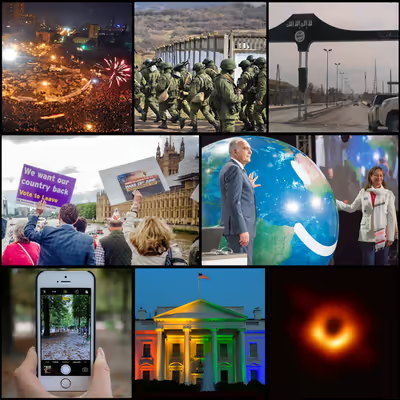
The decade began with an economic recovery from the Great Recession. Inflation and interest rates stayed low and steady throughout the decade, gross world product grew from 2010 to 2019. Global economic recovery accelerated during the latter half of the decade, fueled by strong economic growth in many countries, robust consumer spending, increased investment in infrastructure, and the emergence of new technologies. However, the recovery developed unevenly while many countries autocratized. Socioeconomic crises in some countries—particularly in the Arab world—triggered political revolutions in Tunisia, Egypt, and Bahrain as well as civil wars in Libya, Syria, and Yemen in a regional phenomenon that was commonly referred to as the Arab Spring. Meanwhile, Europe had to grapple with a debt crisis that was pronounced early in the decade. Shifting social attitudes saw LGBT rights make substantial progress throughout the decade, particularly in developed countries.
The decade saw the musical and cultural dominance of dance-pop, electronic dance music, hipster culture and electropop. Globalization and an increased demand for variety and personalisation in the face of music streaming services such as Spotify, SoundCloud and Apple Music created many musical subgenres. As the decade progressed, diversity was also seen with the mainstream success of K-pop, Latin music and trap. Superhero films became box office leaders, with Avengers: Endgame becoming the highest-grossing film of all time. Cable providers saw a decline in subscribers as cord cutters switched to lower cost online streaming services such as Netflix, Amazon Prime, Hulu and Disney+. The video game industry continued to be dominated by Nintendo, Sony, and Microsoft; while indie games became more popular, with Minecraft becoming the best-selling game of all time. Handheld console gaming revenue was overtaken by mobile gaming revenue in 2011. The best-selling book of this decade was Fifty Shades of Grey. Drake was named the top music artist of the decade in the U.S. by Billboard.
The United States continued to retain its superpower status while China sought to expand its influence in the South China Sea and in Africa through its economic initiatives and military reforms. It solidified its position as an emerging superpower, despite causing a series of conflicts around its frontiers. Within its border, China enhanced its suppression and control of Hong Kong, Xinjiang, and Tibet. These developments led the United States to implement a containment policy and initiate a trade war against China. Elsewhere in Asia, the Koreas improved their relations after a prolonged crisis between the two countries, and the war on terror continued as a part of the U.S.'s continued military involvement in many parts of the world. The rise of the Islamic State of Iraq and the Levant extremist organization in 2014 erased the Syria-Iraq border, resulting in a multinational intervention against it. In Africa, South Sudan broke away from Sudan, and mass protests and various coups d'état saw longtime strongmen deposed. In the U.S., celebrity businessman Donald Trump was elected president in 2016 amid an international wave of populism and neo-nationalism. The European Union experienced a migrant crisis in the middle of the decade and withdrawal of the United Kingdom as a member state following the historic United Kingdom EU membership referendum. Russia attempted to assert itself in international affairs, annexing Crimea in 2014. In the last months of the decade, the first cases of the COVID-19 pandemic emerged in Wuhan, China, before spreading to the rest of the world.
Information technology progressed, with smartphones becoming widespread and increasingly displacing desktop computers for many users. Internet coverage grew from 29% to 54% of the world population, and also saw advancements in wireless networking devices, mobile telephony, and cloud computing. Advancements in data processing and the rollout of 4G broadband allowed data, metadata, and information to be collected and dispersed among domains at paces never before seen while online resources such as social media facilitated phenomena such as the Me Too movement, the rise of slacktivism, and online cancel culture. WikiLeaks gained international attention for publishing classified information on topics related to Guantánamo Bay, Syria, the Afghan and Iraq wars, and United States diplomacy. Edward Snowden blew the whistle on global surveillance, raising awareness on the role governments and private entities play in global surveillance and information privacy. Baidu (4th), Twitter (6th) and Instagram (8th) emerged to become among the top 10 most visited websites, while Wikipedia went from the 9th to the 5th most popular website, almost sextupling its monthly visits. Yahoo significantly declined in popularity, descending from being the 1st to the 9th most popular site, with monthly visits declining by two-thirds. Google, Facebook, and YouTube maintained relatively consistent popularity and remained within the top 10 throughout the decade.
Global warming became increasingly noticeable through new record temperatures in different occurrences and extreme weather events on all continents. The CO2 concentration rose from 390 to 410 PPM over the decade. At the same time, combating pollution and climate change continued to be areas of major concern, as protests, initiatives, and legislation garnered substantial media attention. The Paris Agreement was adopted in 2015, and the global climate youth movement was formed. Major natural disasters included the 2010 Haiti earthquake, the 2011 Tōhoku earthquake and tsunami, the Nepal earthquake of 2015, the 2018 Sulawesi earthquake and tsunami, the devastating tropical cyclones Bopha (Pablo), Haiyan (Yolanda), and Maria, as well as the 2019 European heat waves.
During the decade, the world population grew from 6.9 to 7.7 billion people. There were approximately 1.4 billion births during the decade (140 million per year), and about 560 million deaths (56 million per year).
Politics and wars
Major conflicts
The prominent wars of the decade include:
International wars
Civil wars
Revolutions and major protests
Successful revolutions and otherwise major protests of the decade include, but are not limited to:
Arab Spring
The Arab Spring was a series of anti-government protests, uprisings, and armed rebellions that spread across much of the Islamic world in the early 2010s. It began in response to oppressive regimes and a low standard of living, starting with protests in Tunisia. Social media was heralded as the driving force behind the swift spread of revolution throughout the world, as new protests appeared in response to success stories shared from those taking place in other countries. Many governments began recognising the importance of social media for citizens to organise and began shutting down certain websites or blocking Internet service entirely, especially prior to major rallies. Governments also scrutinised or suppressed discussion in online forums through accusing content creators of unrelated crimes or shutting down communication on specific sites or groups, such as through Facebook.
Nuclear proliferation
- On 8 April 2010, the United States and Russia signed a treaty in Prague, Czech Republic agreed to reduce the stockpiles of their nuclear weapons by half. It is meant to replace the Strategic Offensive Reductions Treaty (SORT), which was set to expire. The treaty went into force on 5 February 2011 after it was ratified by both nations.
- In 2015, Iran and other world powers agreed to trade sanctions relief for explicit constraints on Iran's contentious nuclear program, including allowing the inspections of nuclear facilities by the International Atomic Energy Agency (IAEA). On 16 January 2016 the IAEA confirmed that Iran had complied with the agreement (the JCPOA), allowing the United Nations to lift sanctions immediately. However, on 8 May 2018, United States President Donald Trump announced the United States was withdrawing from the deal.
- On 7 July 2017, the United Nations passed the Treaty on the Prohibition of Nuclear Weapons, the first legally binding international agreement to comprehensively prohibit nuclear weapons, with the goal of leading towards their total elimination. It has been signed by 58 nations.
- Throughout the decade, North Korea expanded its nuclear capabilities, performing alleged nuclear tests in 2013 and 2016, which governments responded by placing international sanctions on the country. In response North Korea has threatened the United States, South Korea and Japan with pre-emptive nuclear strikes. However, in 2018, North Korea suggested that they may disarm their nuclear arsenal after negotiations with the United States.
- On 1 February 2019, The US formally suspended the Russo-American Intermediate-Range Nuclear Forces Treaty (INF), and Russia did the same on the following day in response. The US formally withdrew from the treaty on 2 August 2019.
- The United States initiated a renovation of its nuclear weapon arsenal.
Terrorist attacks
The most prominent terrorist attacks committed against civilian populations during the decade include, but are not limited to:
Political trends
International relations
China was increasingly called a superpower in the early 2010s, including at the 2011 meeting between President Hu Jintao and United States President Barack Obama. By the end of the decade, China overtook the U.S. as the world's largest trading nation and the country filing the most patents, dramatically expanded its military and landed its lunar rover Yutu on the moon, ending a four-decade hiatus of lunar exploration. In 2018, global military spending reached its highest level since 1988, late Cold War levels, largely fuelled by increased defence spending by the United States (4.6% increase to $649 billion) and China (5% increase to $250 billion). Together, their budgets accounted for half of the world's total military spending. In 2019, the Lowy Institute Asia Power Index, which measures the projections of power across eight indexes in the Indo-Pacific, ranked the United States at #1 with a score of 84.5 and China #2 with a score of 75.9.
Along with the United States and China, Russia under President Vladimir Putin steadily increased its defence spending and continued to modernise its military throughout the decade. This included the development of the T-14 Armata main battle tank and the fifth-generation Sukhoi Su-57 jet fighter. Russia also exercised its power projection capabilities in its 2014 annexation of Crimea and interventions in eastern Ukraine and the Syrian Civil War. Russia also waged information warfare campaigns against its geopolitical foes, interfering in the 2016 U.S. elections via hacking and leaking emails of U.S. political party leadership and by spreading disinformation via the Internet Research Agency. Other alleged Russian intelligence operations included the 2016 Montenegrin coup plot and the 2018 Skripal poisonings, both of which were attributed by some to the GRU's Unit 29155. Collectively, these activities—and the Western-led efforts to combat them—have been referred to as marking the beginning of the Second Cold War.
The European Union went through several crises. The European debt crisis caused severe economic problems to several eurozone member states, most notably Greece. The 2015 migration crisis led to several million people entering the EU illegally in a short period of time. There was a significant rise in the vote shares of several eurosceptic parties, including the League in Italy, Alternative for Germany, and the Finns Party in Finland. As a result of a referendum, the United Kingdom became the first member state in the EU's history to leave the Union.
Western polarisation
Socio-political polarisation increased as conservatives and social liberals clashed over the role and size of government and other social, economic and environmental issues in the West. In the United States, polls showed a divided electorate regarding healthcare reform, immigration, gun rights, taxation, job creation, and debt reduction. In Europe, movements protesting increasing numbers of refugees and migrants from Islamic countries developed, such as the English Defence League and Pegida. The trend of polarisation in the West was partially influenced by the prevalence of identity politics, both left-wing and right-wing, among activist movements. Beginning around 2011, far-left and progressive concepts such as combating social inequality and economic inequality, often via progressive stack tactics, proliferated in the Western world and elsewhere. Around the middle of the decade, phenomenon such as white nationalism, identitarianism and emboldened feelings of nativism saw a marked reemergence in the West due to drastically increased migration and corresponding crime and amongst both the right and left general dissatisfaction with Western government and Media responses to certain issues. There were also increased calls for egalitarianism, including between the sexes, and some scholars assert that a fourth wave of feminism began around 2012, with a primary focus on intersectionality.
Anti-establishment politics
Populism in politics saw a widespread surge throughout the decade, with many politicians and various political movements expressing populist sentiments and utilising populist rhetoric. This included conservative wave phenomenon in Latin America and neo-nationalist fervor in Europe and North America. The 2019 European Parliament election saw the highest voter turnout in two decades and saw relatively moderate centre-right and centre-left parties suffer significant losses to less moderate far-right, environmentalist, and both pro-EU and eurosceptic parties, who made gains. Examples of 2010s populist movements included the Tea Party movement, Occupy Wall Street, Brexit, Black Lives Matter, and the alt-right. Examples of populist country leaders were just as extensive, with Donald Trump, Narendra Modi, Andrés Manuel López Obrador, Hugo Chávez, Matteo Salvini, Jair Bolsonaro, Rodrigo Duterte, Boris Johnson, Viktor Orbán, Robert Fico, Antonis Samaras and Alexis Tsipras left and right-wing, described as such.
Related to the rise of populism and protests movements was the decline of traditional political parties. In Europe, pasokification described the loss of vote share experienced by traditional centre-left or social democratic parties. In France, specifically, Emmanuel Macron's La République En Marche! party won a majority in its first election in 2017.
Centre-left, neoliberal and traditional social democratic parties often lost their vote share to more socialist or democratic socialist alternatives, especially in Europe. This happened most completely in Greece, where PASOK was replaced by Syriza as the main left-wing party. Other far-left parties which rose in prominence included Podemos in Spain and La France Insoumise in France. In the two-party systems of the English-speaking world, these challenges mainly came from within the established parties of the left, with Bernie Sanders in the Democratic Party and Jeremy Corbyn in the Labour Party pushing for more left-wing policies.
The political establishment was also challenged in many countries by protest movements, often organised through new social media platforms. These included the various Arab Spring protests, the Occupy movement, and the yellow vests movement.
Democratisation and authoritarianism
Countries which democratised fully or partially during the decade included Angola, which reformed under João Lourenço; Armenia, which went through a revolution; Ecuador, which reformed under Lenín Moreno; Ethiopia; and Malaysia, where the ruling party lost the first election since independence.
Long-term dictators ousted from power included Muammar Gaddafi of Libya (after 42 years), Robert Mugabe of Zimbabwe (37 years), Ali Abdullah Saleh of Yemen (33 years), Omar al-Bashir of Sudan (30 years), Hosni Mubarak of Egypt (29 years), and Ben Ali of Tunisia (23 years).
The Arab Winter refers to the resurgence of authoritarianism, absolute monarchies and Islamic extremism evolving in the aftermath of the Arab Spring protests in Arab countries. The term "Arab Winter" refers to the events across Arab League countries in the Mid-East and North Africa, including the Syrian Civil War, the Iraqi insurgency and the following civil war, the Egyptian Crisis, the Libyan crisis and the crisis in Yemen. Events referred to as the Arab Winter include those in Egypt that led to the removal of Mohamed Morsi and the seizure of power by General Abdel Fattah el-Sisi in an anti-Muslim Brotherhood campaign.
Democratic backsliding also occurred in countries such as Hungary, Venezuela, and Turkey.
In 2018, China's National People's Congress approved a constitutional change that removed term limits for its leaders, granting Xi Jinping the status of "leader for life". Xi is the General Secretary of the Chinese Communist Party (de facto leader).
Deaths
Sitting world leaders such as Hugo Chávez of Venezuela, Muammar Gaddafi of Libya, Kim Jong-il of North Korea, Abdullah of Saudi Arabia, Lech Kaczyński of Poland, Zillur Rahman of Bangladesh, Islam Karimov of Uzbekistan and Beji Caid Essebsi of Tunisia, all died in office.
Prominent political events
Coups
Coups d'état against ruling governments during the decade include:
The following tables of events is listed by the region and by chronological order. The prominent political events include, but are not limited to:
Africa
Americas
Asia
Europe
World leaders
Sign in to keep reading
8 more chapters are free with a Lably account.
Assassinations and attempts
Prominent assassinations, targeted killings, and assassination attempts include: 8
Disasters
Non-natural disasters
Aviation
General
Fires
Marine
Pollution
Natural disasters
Earthquakes and tsunamis
Tropical cyclones
Tornadoes
Floods, avalanches, and mudslides
Volcanic eruptions
Droughts, heat waves, and wildfires
Economics
The global economy during the 2010s was generally strong. It saw steady growth, low unemployment, and increasing consumer confidence recovering from the great recession. The decade ended with a strong finish, with 2019 seeing record highs in many areas. A sovereign-debt crisis in Europe began in early 2010, and the Greek government admitted that it was having difficulties servicing its large sovereign debt. In the summer and fall of 2011, bond yields for Italy and Spain spiked above 6 percent. By 2015 bond rates had returned to normal ranges across Europe, save for Greece, which accepted another, even more stringent bailout package. The size of the European Financial Stability Facility was increased from €440 billion to €2 trillion. Despite the Eurozone debt crisis, the American Dow Jones Industrial Average had its longest stretch of gains since the late 1990s tech boom. However, economic issues, including inflation and an increase in commodity prices, sparked unrest in many lower-income countries. In some countries, particularly those in the Arab world, political unrest evolved into socioeconomic crises, resulting in the Arab Spring leading to political instability and civil wars.
As a result of the global recession, many central banks instituted a zero interest-rate policy, or close to it. Another form of monetary stimulus was that of quantitative easing. The resulting flood of market liquidity caused a rise in asset prices. As a result, for example, United States stock prices reached record highs. Another consequence has been the rise in housing prices in many major world cities. Some of the cities which recorded the most dramatic rises included Sydney, San Francisco, Vancouver, and Auckland.
In 2010, China became the second largest global economy, surpassing Japan. Japan also saw a rating downgrade the following year due to debt burden. In August 2011, the S&P downgraded the United States' credit rating from triple AAA to AA-plus following a debt ceiling crisis. Also in 2011, a Gallup poll found that more than half of Americans believed the country was still in a recession. In June 2015, the Shanghai Stock Exchange lost a third of the value of A-shares within one month, an event known as the 2015–16 Chinese stock market turbulence. India became the fastest growing major economy of the world in 2015, surpassing China. In 2018, as the U.S. Federal Reserve raised interest rates, fears of a yield curve inversion preceding a potential U.S. recession sent inflation higher in several emerging markets, including Argentina, where interest rates hit 40% and an International Monetary Fund bail out was issued. In 2019, Singapore supplanted the United States as the world's most competitive economy, with the U.S. dropping to third, behind Hong Kong.
Global oil production in 2014 reached a historic peak, reaching 93 million barrels/day. In 2018, partially due to a shale boom, the United States overcame Russia and Saudi Arabia in becoming the world's largest crude oil producer, the first time since 1973. Around the year 2017 is a period seen by some economists as being the new peak of a "goldilocks economy". The International Monetary Fund's April 2019 World Economic Outlook stated, "After peaking at close to 4 percent in 2017, global [economic] growth remained strong, at 3.8 percent in the first half of 2018, but dropped to 3.2 percent in the second half of the year."
In 2018, United States President Donald Trump announced he would put into place new tariffs on some Chinese products, starting the 'US-China Trade War', an economic conflict involving the world's two largest economies. Trump said the reasoning for the trade war was to punish China for "unfair" trade practices, such as the appropriation of jobs and the theft of American intellectual property. China responded with tariffs of its own, and a cycle began, escalating the conflict. As part of his 'America First' policy, Trump also announced new tariffs were being placed on countries around the world for various products such as steel and aluminium, which also drew some economic retaliation from traditional U.S. trade partners.
By the end of the decade, in North American and some Western European domestic economies, consumer-level purchasing habits had shifted significantly, a partial consequence of the Great Recession's impact on discretionary incomes and a shifting breadwinner model. The so-called "retail apocalypse" had commenced as consumers increasingly resorted to online shopping and e-commerce, accelerating the decline of brick-and-mortar retail and the continued decline of indoor shopping malls. The transitioning retail industry and popularity of online shopping facilitated economic phenomena such as bricks and clicks business models, pop-up and non-store retailing, drone delivery services, ghost restaurants, and a quickly maturing online food ordering and delivery service sector. This was only further perpetuated by the rise in cryptocurrency throughout the decade, such as Bitcoin. By May 2018, over 1,800 cryptocurrency specifications existed.
In the same vein as cryptocurrency, the trend towards a cashless society continued as non-cash transactions and digital currency saw an increase in favourability in the 2010s. By 2016, only about 2 percent of the value transacted in Sweden was by cash, and only about 20 percent of retail transactions were in cash. Fewer than half of bank branches in the country conducted cash transactions. A report published in 2019 suggested that the percentage of payments conducted in cash in the United Kingdom had fallen to 34% from 63% from 2009. The 2016 United States User Consumer Survey Study claimed that 75 percent of respondents preferred a credit card or debit card as their payment method while only 11 percent of respondents preferred cash.
Science and technology
Below are the most significant scientific developments of each year, based on the annual Breakthrough of the Year award of the American Association for the Advancement of Science journal Science.
- 2010: The first quantum machine
- 2011: HIV treatment as prevention (HPTN 052)
- 2012: Discovery of the Higgs boson
- 2013: Cancer immunotherapy
- 2014: Rosetta comet mission
- 2015: CRISPR genome-editing method
- 2016: The Laser Interferometer Gravitational-Wave Observatory makes the first observation of gravitational waves, fulfilling Einstein's prediction
- 2017: Cosmic convergence: Neutron star merger (GW170817)
- 2018: Development cell by cell
- 2019: First black hole image released
Technology
The late 2000s saw the rise of two prominent mobile operating systems, Android developed by Google and iOS developed by Apple. The widespread adoption of smartphones in the early 2010s, particularly following the success of Apple's iPhone and the proliferation of Android-powered devices from manufacturers such as Samsung and HTC, contributed to the rapid expansion of both platforms. By 2017, Android had become the leading mobile operating system globally, accounting for approximately 85.9% of the market share.
Robotics, particularly drones like quadcopters, experienced a wide use and application in the 2010s. Autonomous and electric car technology and sales showed considerable growth as well. In addition, sustainable space launch technologies were spearheaded by entrepreneurs like Elon Musk.
In 2016, the number of people globally using mobile devices to access the internet overtook those using desktop computers for the first time, having been preceded by the U.S. two years prior in 2014. 3D printers also emerged in the 2010s and were referenced or used in pop culture during the decade.
In 2018, during the Falcon Heavy test flight, the first production car was launched into space. The car was attached to the Falcon Heavy rocket, the most powerful rocket in operation at the time, which side boosters successfully landed back on Earth after completing their portion of the mission.
Cyber security and hacking
Cyber security incidents, such as hacking, leaks or theft of sensitive information, gained increased attention of governments, corporations and individuals.
Health and society
AIDS, a pandemic responsible for killing over 30 million people since its discovery in the early 1980s, especially in sub-Saharan Africa, became a treatable condition, though by the end of the decade only two cases had been cured. With good treatment patients can generally expect normal lives and lifespans. However, as of 2011 only some 5 million of the 12 million affected people had access to such treatment.
During the 2010s, social changes included increases in life expectancy and falling birth rates leading to larger proportions of the population being elderly. This put pressure on pensions and other social security programs in developed nations. The environment became a topic of greater public concern around the world. Many parts of the world moved towards greater acceptance of LGBT people often including the legalisation of same-sex marriage. The internet took an ever greater role in entertainment, communication, politics and commerce, especially for younger people and those living in wealthier countries. In 2011, the world population reached seven billion people.
Popular culture
Fashion
Fashion of the 2010s became slimmer-fit and slightly more formal compared to previous decades. In addition, people's handheld devices such as cellphones (and their colorful cases), selfie sticks (for a brief period during the middle of the decade), tech-like Beats headphones, smart watches, wired and by the end of the decade wireless ear buds, as well as handheld gaming systems became more prevalent personal items.
The decade was also defined by new hipster fashion (hipster styles were marked by the wearing of knit beanies, checkered shirts, and clothes from thrift stores; as well as hobbies like horticulture, photography, and specialty coffee) athleisure, and a revival of austerity-era and other nostalgic alternative fashion trends (such as 1980s-style neon streetwear in the first part of the decade, and unisex 1990s-style elements influenced by grunge).
In 2018, a subculture of "e-kids" came into existence, whom took their style from Japanese street fashion, cosplay, skater aesthetic, and other pieces of pop culture. In contrast to the colorful subculture of "e-kids" later in the decade, the early 2010s saw the Emo revival.
In the United States, political fashion became a genre of fashion starting around 2016, as people wore hats like MAGA hats (popularized by political outsider, prior TV-star and businessman President Donald Trump), as well as the Pussyhat. These two pieces of fashion wear would be popularized in the 2010s in popular culture on television and further, but would become controversial in their own right.
The decade sparked many smaller fashion movements, notable examples including Cottagecore and Normcore (a notable icon of Normcore in the 2010s was Steve Jobs, whom represented the decade's casual clothing). Fad toys and accessories like the Fidget spinner, Silly Bandz, and Shutter shades each had waves of popularity among youth throughout the decade. Funko Pops were a collectible fad during the 2010s.
Internet
Internet users grew from covering 29% to 54% of the world population.
Over the course of the 2010s, Baidu, Twitter and Instagram emerged to become among the top 10 most-visited websites (becoming the 4th, 6th and 8th most popular websites by the end of the decade), while Wikipedia went the 9th to 5th most popular website, almost sextupling its monthly visits (from 1 to 5.7 billion). Meanwhile, Yahoo significantly declined in popularity, descending from being the 1st to 9th most popular site, with monthly visits declining by two-thirds (going from 11.6 to 3.9 billion). Google, Facebook, YouTube and Yandex maintained relatively consistent popularity and remained within the top 10 throughout the decade. In 2015, Discord, one of the largest instant messaging social platforms was launched.
Film
In January 2010, James Cameron's Avatar surpassed $1 billion in sales, becoming the first movie of the decade to do so, and surpassed $2 billion in sales by February 2010. The following year, Harry Potter and the Deathly Hallows – Part 2 became one of the fastest grossing films of all time, and became the highest-grossing film of 2011. 2019's Joker became the first R rated movie to gross over $1 billion and cemented itself in popular culture by making the "Joker Stairs" a famous tourist destination in New York City at the end of the decade. Motion capture grew in terms of its realism and reach, and was seen in movies like Steven Spielberg's Ready Player One, Pirates of the Caribbean, The Avengers, and The Hobbit: An Unexpected Journey.
Superhero films and franchises
Superhero films became box office leaders, especially with the start of The Infinity Saga of the Marvel Cinematic Universe in 2008 with movies such as the Avengers franchise.
Marvel's main competitor, DC Extended Universe also began to produce superhero films starting in 2013, with films such as Justice League releasing in 2017.
In 2012, a midnight screening of Christopher Nolan's third and final Batman film, The Dark Knight Rises, at a local film theatre in Aurora, Colorado lead to one of the worst mass shootings in American history, claiming the lives of twelve people and others injured, and increased discussions on cinema security.
Other prominent franchises
The epic space-opera franchise Star Wars saw a resurgence throughout its decade with the third trilogy aka the sequel trilogy of the franchise and the final act of the "Skywalker Saga". These films include Star Wars: The Force Awakens, Star Wars: The Last Jedi, and Star Wars: The Rise of Skywalker with all of them raking in over $4 billion with the first movie became the 3rd highest-grossing film of all time at its release.
The science fiction Universal franchise Jurassic Park also saw a resurgence and popularity with the release of Jurassic World and Jurassic World: Fallen Kingdom. Both of these films each garnered over $1 billion in revenue with the first film became the 3rd highest-grossing film of all time and the second film became the 12th highest-grossing film of all time. Critical reception of the first movie was positive while the second movie had mixed reviews from critics and negative reviews from fans.
The action racing heist spy franchise The Fast and the Furious continued on from the 2000s and became commercially successful in the 2010s becoming one of Universal's biggest franchises besides Jurassic Park and was the eighth highest-grossing film series. Films include Fast Five, Fast & Furious 6, Furious 7, and The Fate of the Furious.
Horror films
The horror film It, which was based on the novel of the same name by Stephen King, became the highest-grossing horror film of all time. 2018 saw the acclaimed Halloween sequel, Halloween, the 11th installment of the Halloween franchise and sequel to the first film, Halloween.
Animated films
Disney, Pixar, DreamWorks, Illumination, and Sony Pictures Animation have dominated the animated films market and have also gained popularity in this decade. The highest-grossing and critically successful franchises included Frozen, How to Train Your Dragon, Hotel Transylvania, The Lego Movie, Kung Fu Panda, Despicable Me, Tinker Bell and Toy Story sequels. Other critically and/or commercially successful films released in this decade included Spider-Man: Into the Spider-Verse, Inside Out, Tangled, Coco, Zootopia, Song of the Sea, Ernest & Celestine, Megamind, Moana, Brave, Wreck-It Ralph, Big Hero 6, The Boss Baby, The Illusionist, Loving Vincent, Klaus, ParaNorman, Hair Love, Kubo and the Two Strings, In a Heartbeat, My Life as a Courgette, The Red Turtle, Shaun the Sheep Movie, and Isle of Dogs.
Other films/genres
The 2010s saw the release of many Disney live-action remakes based on Disney animated movies: Alice in Wonderland and its sequel Alice Through the Looking Glass, The Sorcerer's Apprentice, Maleficent and its sequel Maleficent: Mistress of Evil, Cinderella, The Jungle Book, The Lion King, Beauty and the Beast, Aladdin, and Christopher Robin. Many of these movies were met with mixed reviews from critics and audiences but were financially successful at the box office, especially The Lion King which grossed over $1.6 billion and became the 7th-highest-grossing film of all time as well as the 2nd-highest-grossing film of 2019.
Disney also produced many live action films based on their theme park attractions and on other existing IP. This included movies like Tomorrowland, A Wrinkle In Time, Into the Woods, John Carter, The Sorcerer's Apprentice and The Lone Ranger. Most of these films received mixed responses from critics audiences and were generally unsuccessful at the box office, though in retrospect some of these films (particularly Tomorrowland) have come to be viewed as "emerging cult films".
Disney Channel's Descendants franchise garnered popularity and high viewership with its first three films during the decade along with releasing a short animated series Wicked World. Halloween costumes of the characters also became one of the most searched costumes every year since the release of the first film.
Acclaimed movies
The decade also saw many popular and critically acclaimed theatrical releases of varying genres, such as The Social Network, Her, 12 Years a Slave, Moonlight, Boyhood, The DUFF, Me and Earl and the Dying Girl, The Edge of Seventeen, The Fault in Our Stars, The Wolf of Wall Street, The Artist, The Perks of Being a Wallflower, Diary of a Wimpy Kid, Scott Pilgrim vs. the World, The Grand Budapest Hotel, Easy A, Rust and Bone, Two Days, One Night, Whiplash, 21 Jump Street, Eighth Grade, Steve Jobs, Paddington and its sequel Paddington 2, Lady Bird, La La Land, Green Book, Get Out, Parasite, Spring Breakers, Love, Simon, Once Upon a Time in Hollywood, Uncut Gems and To All the Boys I've Loved Before.
The critically acclaimed movies of the 2010s mentioned above set new precedents. Movies like Boyhood (2014) were filmed over the span of a decade in real time to show the growth and childhood of a young boy, and Uncut Gems (2019) brought Adam Sandler back to a wide screen release, while teenage movies like The Edge of Seventeen (2016), Me and Earl and the Dying Girl (2015), The Fault in Our Stars (2014), and The Perks of Being a Wallflower (2012) gained large popularity. Her (2013) became Spike Jonze's highest-grossing and most critically acclaimed movie, noted for its filming locations and art direction, Two Days, One Night (2014) became the Dardenne brothers' highest-grossing film and the first to receive an Oscar nomination, with Marion Cotillard becoming the first actor to be nominated for an Oscar for a Belgian film. Parasite (2019) became the first foreign film to win best picture, and movies like Ready Player One (2018) helped advance motion capture technologies (winning two Outstanding Achievement Awards from the Visuals Effects Society and a Saturn Award for Best Science Fiction Film), in addition to becoming one of Spielberg's highest-grossing films.
Television
The 2010s decade is often said to be a part of the Golden Age of Television, due to the widespread quality of multiple shows, as well as advancements in technology leading to streaming, cable television, and online outlets bringing this quality and quantity of programming. Cable providers saw a decline in subscriber numbers as cord-cutting viewers switched to lower-cost online streaming services such as Netflix, Amazon Prime, and Hulu. On cable television, as well as streaming services, a variety of shows gained popularity.
Live-action TV
The comedy sitcom The Big Bang Theory ran for the entirety of the decade, and was the number-one television sitcom for all of its airing prior to its finale in 2019. Other sitcoms like Curb Your Enthusiasm, Will & Grace, The Office, Scrubs: Med School, Black-ish, and Netflix's Trailer Park Boys were popular in the 2010s. How I Met Your Mother (narrated by Bob Saget) gained controversy for its 2014 finale, "Last Forever", which sparked an alternate finale to be created for the show, a television first. Cult shows like the dark comedy sitcom It's Always Sunny in Philadelphia carried its popularity from the 2000s and lasted through the entirety of the 2010s. CBS's Two Broke Girls began its run in 2011 (ending in 2017), its pilot being the highest watched on the network in a decade. In 2011, Charlie Sheen was fired from Two and a Half Men, who made his last appearance in the show in Season 8 during February 2011. Sheen's 2011 outbursts and firing from the show were highly publicized. Indian sitcom Taarak Mehta Ka Ooltah Chashmah became the world's longest-running sitcom, with over 2,500 episodes.
Dramas like Breaking Bad (2008–2013), The Walking Dead (2010–2022), Game of Thrones (2011–2019) and the Breaking Bad spin-off Better Call Saul (2015–2022) became some of the most popular American television series of all time. Stranger Things gained a massive following during the decade among teen and youth, and 2019's Stranger Things 3 gained even more recognition for the character of Robin Buckley, who was popularized online.
Science fiction television gained a renewed sense of interest, thanks in part to Black Mirror was popularized on Netflix after being broadcast on British television.
A new era of family television and tween television existed in the 2010s, sitcoms of which were mainly spearheaded by Disney and Nickelodeon, but also appeared on cable channels such as ABC (The Middle on ABC for example) and on streaming services like Netflix. Nickelodeon and Disney Channel (as well as Disney XD) continued to dominate kids TV with many popular shows such as iCarly, Victorious, Big Time Rush, Good Luck Charlie, Jessie, Austin & Ally, Shake It Up, K.C. Undercover, Kickin' It, Lab Rats, Henry Danger, Girl Meets World, Andi Mack and Raven's Home, along with PBS Kids' Odd Squad. The short-lived 2018 revival of Roseanne (a family sitcom on ABC) gained attention for the firing of its main star Roseanne Barr and her outbursts.
Reality television
Reality television grew an increased following during the decade. Kitchen Nightmares, Hell's Kitchen, and Hotel Hell gained popularity on cable television, as well as getting millions of views on YouTube, making Gordon Ramsay a prominent celebrity chef. America's Got Talent drew in viewers when radio personality Howard Stern announced his joining of the show in late 2011, staying as host until 2015. Meanwhile, popular reality programming on ABC included What Would You Do?, Shark Tank and The Bachelor. Corinne Olympios also gained recognition on the 2017 season of The Bachelor for her behavior on set. American Idol remained popular into the beginning of the decade, as did The Voice. Impractical Jokers flourished throughout the 2010s, gaining exposure on YouTube and elsewhere. TMZ became a popular television show and news source in the 2010s on cable television and YouTube respectively. A genre of pawn shows emerged like Pawn Stars and Hardcore Pawn.
The Apprentice was a reality television show that starred media personality and businessman Donald Trump as host until 2015, at which time he resigned as host. Trump would use the success he gained on The Apprentice to run for President of the United States; which he was elected to in 2016. Additionally, programs such as The Celebrity Apprentice, Comedy Central's The Roast Of Donald Trump, and Donald Trump's November 2015 hosting of Saturday Night Live, would send the reality TV star and businessman into the spotlight to help win the U.S. presidency. Governor in the early 2010s and movie star Arnold Schwarzenegger took Trump's place on The Celebrity Apprentice.
Animation television
Nickelodeon, Cartoon Network and Disney Channel (as well as its sibling channel Disney XD) continued to dominate with cartoons. Popular cartoons of the 2010s included the likes of Adventure Time, Regular Show, Steven Universe, Gravity Falls, The Amazing World of Gumball, Star vs. the Forces of Evil, DuckTales (2017 reboot series), Miraculous: Tales of Ladybug & Cat Noir, Teenage Mutant Ninja Turtles (2012 series), Over the Garden Wall, Big City Greens, The Loud House, Amphibia, Mickey Mouse, Strawberry Shortcake's Berry Bitty Adventures, Barbie: Life in the Dreamhouse and My Little Pony: Friendship Is Magic (which became a pop culture phenomenon in its own right and spawned a loyal cult following known as the "bronies"), along with long-running cartoons SpongeBob SquarePants, Phineas and Ferb, Arthur and WordGirl. Nickelodeon brought back three classic Nicktoons; Hey Arnold!, Rocko's Modern Life (which was themed around late 2010s culture), and Invader Zim near the end of the decade, turning them into reboot films.
Nick Jr., Disney Junior and PBS Kids led mainstream educational cartoons with many popular shows including Paw Patrol, Sofia the First, Daniel Tiger's Neighborhood, Doc McStuffins, Jake and the Never Land Pirates, Dinosaur Train, Wild Kratts, PJ Masks, Team Umizoomi, Bubble Guppies, Octonauts and The Cat in the Hat Knows a Lot About That!, along with long-running hits Mickey Mouse Clubhouse, Curious George, Super Why!, Dora the Explorer and Peppa Pig.
Anime broadened its appeal worldwide with shows such as Attack on Titan, Akame ga Kill!, Assassination Classroom, Future Diary, Deadman Wonderland, Madoka Magica, Mob Psycho 100, Darling in the Franxx, Dragon Ball Super, Fairy Tail, Gate, Black Clover, Tokyo Ghoul, Given, KonoSuba, Food Wars!, Haikyu!!, Sailor Moon Crystal, Seraph of the End, One Piece, Overlord, Kaguyasama: Love is War, Bleach, Hunter × Hunter, One Punch Man, Little Witch Academia, Devilman Crybaby, My Hero Academia, JoJo's Bizzarre Adventure, Vinland Saga, Parasyte -the maxim-, Re:Zero and Steins;Gate, separately Japanese reality shows like Terrace House: Boys & Girls in the City reached new and international audiences because of the use of the internet and streaming services (it was Netflix's first international release and one of their earliest international releases). Anime was also viewed on services of the era like Crunchyroll and Funimation.
Newer adult animation grew rapidly throughout the decade with shows such as Rick and Morty, F Is for Family, BoJack Horseman, Superjail! (continuing from the 2000s), Archer (continuing from 2009), Big Mouth, and Bob's Burgers among many others; while long-running adult animations like Family Guy, Futurama, South Park, The Simpsons, Robot Chicken, and 2011's Beavis and Butt-Head revival remained popular.
YouTube
The video streaming website YouTube became popular, especially among younger people, as memes shifted the meaning of entertainment. Memes like Nyan Cat, Dat Boi, "We Are Number One", Trollface, Pepe the Frog, bottle flipping, Condescending Wonka (Gene Wilder died in 2016), emerged on YouTube; the use of YouTube and the internet also lead to new and popular vernacular like poggers, bae, Netflix and chill, "chillax" (a combo of "chill" and "relax") and "on fleek".
Early in the decade channels like Fred Figglehorn (FRED), The Annoying Orange, Ray William Johnson, CollegeHumor, Smosh, PewDiePie and the Angry Video Game Nerd attracted millions of views, channels and videos becoming viral on the site. The popularity of YouTubers even ended up spawning films based on popular YouTubers, including Angry Video Game Nerd: The Movie (2014), Smosh: The Movie (2015), and the Fred Trilogy (2010–2012) starting with Fred: The Movie. These YouTubers became well known through comedic skits, video game reviews, and "Let's Play" videos.
Children's content on YouTube was largely dominated by kid-made content involving kids unboxing toys and going on adventures. Many popular channels in this style included Ryan's World, ToyLabTV, Extreme Toys TV and Vlad and Niki. Nerf battles were also a very popular trend on YouTube.
Several new videos and series that debuted on YouTube in the 2010s and achieved popularity included Don't Hug Me I'm Scared, Double Rainbow, Marcel the Shell with Shoes On, Lucas the Spider, Game Grumps, and Critical Role.
Other YouTubers that constantly received views within the millions or went viral during the decade included the likes of bill wurtz for his "history of japan" and "history of the entire world i guess" videos (and music like "and the day goes on"), Swoozie, Etika (and his fanbase the "JOYCONBOYZ"), REACT, WatchMojo, The Joe Rogan Experience, The Nostalgia Critic, Studio C, Babish Culinary Universe, Good Mythical Morning, Penguinz0, Vsauce, CGP Gray, Kurzgesagt, Matpat, MrBeast, Scott the Woz, TheOdd1sOut, Domics, and Jaiden Animations among many others. YouTube itself would even end up banning controversial content creators like ImJayStation and LeafyIsHere during the decade.
YouTube made an annual video series called YouTube Rewind where it would be a recap of each year's YouTubers, viral videos, trends, events, music and memes from 2010 to 2019. The 2018 and 2019 installments was heavily criticized by YouTubers, critics, and viewers alike, receiving millions of dislikes. Rewind did not return for 2020 due to the COVID-19 pandemic, and YouTube announced the following year that the series would be discontinued leading to other YouTubers to make their own YouTube Rewind videos.
Music
Globalism and an increased demand for variety and personalisation in the face of music streaming services such as Spotify and Apple Music created many new subgenres. US digital music sales topped CD sales in 2012. Dance, hip-hop, and pop music surged in the 2010s, with hip-hop and R&B surpassing rock as the biggest US music genre in 2018.
Genres
Electronic dance music (EDM) achieved mass commercial success in the middle of the decade but fell somewhat into decline by the end. The mass global appeal of EDM music (and subgenres such as dubstep, electro house and trap) from the early-to-mid part of the decade spawned the rise in fame of DJs and digital music producers, such as Skrillex, Tiësto, Avicii, Steve Aoki, Deadmau5, Calvin Harris, Baauer and Diplo.
Country music also saw a resurgence throughout the 2010s in the United States, with artists like Luke Bryan, Jason Aldean, Blake Shelton, Carrie Underwood, Eric Church, Kacey Musgraves, Chris Stapleton and Florida Georgia Line topping the charts and garnering many music industry awards.
With the rise of the internet in the 2010s, independent music gained a large international cult following, with successful indie bands being Foster the People, Dr. Dog, Tally Hall, Florence and the Machine, Beach House, Alt-J, Of Monsters and Men, the National, Two Door Cinema Club, and M83; as well as successful indie solo artists being Tame Impala, Neil Cicierega, St. Vincent, Father John Misty, Ellie Goulding, Feist, Sufjan Stevens, Lana Del Rey, Justin Vernon and Lorde.
Artists
Musical artists such as Lady Gaga, Taylor Swift, Justin Bieber, Katy Perry, Bruno Mars, Rihanna and Nicki Minaj sold millions of records in the 2010s.
Billboard named Drake the top artist of the decade in the US.
Several prominent musicians from past decades died in the 2010s, including Ronnie James Dio and Lena Horne in 2010, Gil Scott-Heron and Amy Winehouse in 2011, Whitney Houston, Etta James, Donna Summer, Jenni Rivera and Adam Yauch in 2012, Lou Reed in 2013, Joe Cocker in 2014, Ben E. King, B. B. King, Natalie Cole, Lesley Gore and Lemmy Kilmister in 2015, David Bowie, Glenn Frey, Phife Dawg, Merle Haggard, Prince, Juan Gabriel, Pete Burns, Leonard Cohen, Christina Grimmie and George Michael all in 2016, Chuck Berry, Chris Cornell, Prodigy, Tom Petty and Della Reese in 2017, Aretha Franklin and Dolores O'Riordan in 2018, and Keith Flint in 2019. There were also several deaths of newer hip-hop artists who had started or first became successful in the 2010s, including Capital Steez, Lil Peep, XXXTentacion, Mac Miller, Nipsey Hussle, Juice Wrld and others.
Video games
Video game companies and products
The video game industry continued to be dominated by Nintendo, Sony, and Microsoft; Minecraft became the best-selling game of all time in 2019.
Sony's PlayStation 4 and Microsoft's Xbox One were released in 2013, and in the United States the PlayStation 4 became the highest-selling console of the decade, surpassing Nintendo, releasing games such as Marvel's Spider-Man, God of War, Uncharted 4, The Last of Us, and Bloodborne. The Nintendo Switch launched in 2017 and was responsible for bringing Nintendo's success back, the success of the console initially spawned by the strong sales of Super Smash Bros. Ultimate, The Legend of Zelda: Breath of the Wild and Super Mario Odyssey, as well as Wii U ports/sequels with Super Mario Maker (Wii U) and Super Mario Maker 2 (Nintendo Switch), Splatoon (Wii U) and Splatoon 2 (Nintendo Switch), and updated "Deluxe" versions of Mario Kart 8 and New Super Mario Bros. U, among many others. Micro-consoles also emerged during the decade, a notable example being the Ouya, a system which was a commercial and critical failure that received attention online.
Since 2013, console game revenue was overtaken by PC gaming revenue. Nvidia released the GeForce RTX 20 series in 2018, introducing ray tracing technology to PC gaming. In December 2018 Epic Games launched the Epic Games Store in an attempt to compete with the largest digital distribution platform for PC games, Valve Corporation's Steam.
Handheld gaming console revenue was overtaken by mobile gaming revenue in 2011, due to the rise of smartphones and freemium apps. The use of iPods, tablets, and cell phones became one of the most popular forms of gaming as the decade progressed with the rise of mobile games, expanding the industry's appeal among less traditional markets such as women and older adults. Gaming apps such as Angry Birds, Cut the Rope, Plants vs. Zombies, Fruit Ninja, Candy Crush, Flappy Bird, Clash of Clans, Temple Run, Smash Hit, Doodle Jump, Geometry Dash, Subway Surfers, and Pokémon Go became huge hits.
The popularity of video games increased across the world, as the Nintendo Wii influenced gaming in the early part of the decade, and the Nintendo 3DS provided 3D gaming through autostereoscopy. The successful Wii was followed by the Wii U in 2012, a commercial failure. Ports and sequels to Wii U games on the Nintendo Switch would sell considerably better than their Wii U counterparts, and even though well-received games like Super Mario 3D World and Nintendo Land released on Wii U, the console still ultimately failed due to poor marketing and public confusion. The Nintendo Wii would be responsible for the most critically acclaimed game of the 2010s decade, Super Mario Galaxy 2 (which is also often considered one of the greatest video games of all time by game critics).
The Wii (and later to a lesser extent the Wii U) would singlehandedly cause the increased use of motion controls in gaming with its Wii line up of games such as Wii Play: Motion, Wii Fit U, Wii Sports Club, Wii Party and Wii Party U, all released in the 2010s. Motion controls would carry over to Nintendo Switch's Joy-Con in 2017, and would form the foundation of 2010's motion-based PlayStation Move and Xbox Kinect, counterparts and competitors to the Wii. In addition to Super Mario Galaxy 2, it is notable in mentioning that Nintendo Wii released a large group of critically acclaimed games in the early 2010s with popular titles such as Kirby's Epic Yarn, Donkey Kong Country Returns (both games later in the decade released on 3DS), The Legend of Zelda: Skyward Sword, and Sonic Colors; as well Portal 2 was a critical success on Xbox and PlayStation early in the decade.
The 2010s marked the growth, release, and large expansion of the "Toys To Life" category. Brands such as Nintendo's Amiibo became massively popular, and allowed figurines to be bought which were scanned into games to level up, train your figurine, or receive goods for your figurine. The Amiibo skyrocketed in success due to the roster of figurines available for Super Smash Bros. for Nintendo 3DS and Wii U, with many posting videos of them online going "amiibo hunting" mostly around late 2014 and 2015. Skylanders and Disney Infinity also remained popular at the time, as fads. The Nintendo Labo released in 2018, was also a part of the "Toys To Life" brand of video games, using cardboard to create objects such as a fishing pole, a crank, and a race-car wheel to be played with games.
Online and multiplayer games
By the early 2010s, online gaming had become a mainstay of console platforms such as Xbox and PlayStation. During the 2010s, as the number of Internet users increased, two new video game genres rapidly gained worldwide popularity – battle royales and multiplayer online battle arenas (MOBA) – both designed exclusively for multiplayer gameplay over the Internet. First-person shooters were also a popular genre before and during the decade. These genres are commonly played in esports.
Professional gaming, also known as esports, although well known in the 2000s, became tremendously big incurring a large increase in both viewership and prize money. By the late 2010s, it was estimated that the total audience of esports would grow to 454 million viewers, with revenue increasing to more than US$1 billion, with China accounting for 35% of the global esports revenue in 2020. The increasing availability of online streaming media platforms, particularly YouTube and Twitch, have become central to the growth and promotion of esports competitions.
Since the 2010s, a common trend among online games has been operating them as games as a service, using monetization schemes such as loot boxes and battle passes as purchasable items atop freely-offered games. Unlike purchased retail games, online games have the problem of not being permanently playable, as they require special servers in order to function.
Let's Plays
YouTube and Twitch became platforms for "Let's Players" to upload videos of themselves playing certain games, which led to the popularity of existing games and newer indie games like Cuphead, Doki Doki Literature Club!, Undertale, Terraria, Hotline Miami, Hotline Miami 2: Wrong Number, The Binding of Isaac/The Binding of Isaac: Rebirth, Octodad/Octodad: Dadliest Catch, Shovel Knight, Stardew Valley, and Five Nights at Freddy's (indie games like Cuphead were lauded for its rubber hose animation style, while Undertale's soundtrack like "Megalovania" came to light and Five Nights At Freddy's became well known for its lore).
"Let's Players" were even referenced in greater pop culture such as the 2014 episode Rehash on South Park, where Pewdiepie would be featured onto the show. Jimmy Kimmel would make a sketch parody on his YouTube channel where he would ridicule the "let's plays" culture which led to backlash from the gaming community.
Video games and movies
In the 2010s movies based on video game franchises became popular, grossing more and being talked about in the media and among fans more than ever before. Movies like Detective Pikachu starring Ryan Reynolds (which starred additional actors like Kathryn Newton as Lucy Stevens and Bill Nighy as Howard Clifford) broke box office records for movies based on game series at the time, while movies like Jim Carrey's debut in Sonic the Hedgehog created buzz in the media and on shows like Conan (where the film and its fans were satirized) in 2019 for the movie's depiction of a more realistic-looking hedgehog character, which by demand of the fans, was changed into a more cartoon version of the titular character to much like and approval upon the November 2019 trailer and movie's release.
In early 2018 Nintendo and Illumination jointly announced (after the 2015 reveal of Nintendo's planned Universal theme parks) that they were working on a Super Mario Bros. movie. The announcement by Nintendo and Illumination was met with internet speculation; the new Illumination Super Mario film replaced the Sony–Nintendo Super Mario film that was leaked during the 2014 Sony Pictures hack.
Video game-themed movies became popular as well, with films such as Ready Player One, Pixels, Scott Pilgrim vs. the World, Wreck-It Ralph, Jumanji: Welcome to the Jungle and Jumanji: The Next Level.
The best-selling games of every year throughout this decade were as follows:
- 2010: Call of Duty: Black Ops
- 2011: Call of Duty: Modern Warfare 3
- 2012: Call of Duty: Black Ops II
- 2013: Grand Theft Auto V
- 2014: Call of Duty: Advanced Warfare
- 2015: Call of Duty: Black Ops III
- 2016: Call of Duty: Infinite Warfare
- 2017: Call of Duty: WWII
- 2018: Red Dead Redemption 2
- 2019: Call of Duty: Modern Warfare
Literature
The best-selling book of the decade was Fifty Shades of Grey, having sold 15.2 million copies in the United States.
The following is a list of the 10 best-selling books of the decade. Note that global data is unavailable and this is limited to the United States:
- Fifty Shades of Grey – 15.2 million sales
- Fifty Shades Darker – 10.4 million sales
- Fifty Shades Freed – 9.3 million sales
- The Hunger Games – 8.7 million sales
- The Help – 8.7 million sales
- The Girl on the Train – 8.2 million sales
- Gone Girl – 8.1 million sales
- The Fault in Our Stars – 8 million sales
- The Girl with the Dragon Tattoo – 7.9 million sales
- Divergent – 6.6 million sales
The Diary of a Wimpy Kid series also became one of the best-selling book series of all time throughout the 2010s, with installments such as Cabin Fever and The Long Haul winning awards at the Nickelodeon Kids' Choice Awards.
In the comic book industry, Japanese manga began outselling western comics.
Sports
Popular athletes of the decade included Alex Ovechkin, Cristiano Ronaldo, Lionel Messi, Virat Kohli, Megan Rapinoe, LeBron James, Kevin Durant, Stephen Curry, Tiger Woods, Tom Brady, Aaron Rodgers, Floyd Mayweather, Manny Pacquiao, Canelo Álvarez, Serena Williams, Novak Djokovic, Lewis Hamilton, Kyle Busch, Conor McGregor, Ronda Rousey, Mike Trout, Michael Phelps, Usain Bolt, Shaun White, Kelly Slater, Simone Biles, Sidney Crosby and many more.
At the 2010 Wimbledon Championships, tennis players John Isner and Nicolas Mahut competed in the longest professional tennis match in history, requiring five sets and 183 games for Isner to ultimately defeat Mahut in a match which lasted 11 hours and 5 minutes, and was played over the course of three days. The most dominant male tennis players were Rafael Nadal, Roger Federer, and Novak Djokovic. Andy Murray was also successful in this decade. Amongst female tennis, Venus and Serena Williams dominated proceedings.
A doping scandal and investigation that was concluded in 2012 led to former professional road racing cyclist Lance Armstrong being stripped of all seven of his Tour de France titles.
On 14 October 2012, skydiver Felix Baumgartner completed a jump from the stratosphere and set world records for the highest skydive (39 km or 24 mi), fastest freefall speed (1,357.64 km/h or 843.6 mph, or Mach 1.25), and became the first person in history to break the sound barrier without vehicular power.
In 2015, after Thoroughbred racehorse American Pharoah won the American Triple Crown and the Breeders' Cup Classic, he became 12th Triple Crown winner in history and the first in more than 30 years, and in winning all four races, became the first horse ever to win the Grand Slam of Thoroughbred racing.
In November 2016, the Chicago Cubs won the World Series for the first time since 1908, over the then-Cleveland Indians. Their win, along with Game 7 and the entire 2016 Series, was heavily noted in the sports and baseball community. It is often considered one of the best World Series ever played, due to the underdog nature of both teams, how close the games were and especially the final game, and how it ultimately ended the over 100-year drought of the Cubs not winning a series.
In Formula 1, Lewis Hamilton won five F1 World Championships during the decade from 2014 to 2019.
In June 2017, rock climber Alex Honnold became the first person in history to free solo climb El Capitan in Yosemite National Park, an accomplishment that one commentator described as "one of the great athletic feats of any kind, ever."
In January 2018, the final play of an NFL playoffs game between the Minnesota Vikings and the New Orleans Saints, dubbed the "Minneapolis Miracle", became the first time in NFL playoffs history where a game ended in a touchdown as time expired, and prompted a change to the NFL's rules as they pertain to extra-point conversion attempts.
Football
Leicester City won a notable Premier League title in Club Football in 2015–16, with 5000/1 odds at the start of the season. Managers like José Mourinho, Pep Guardiola, Carlo Ancelotti, Jürgen Klopp, Mauricio Pochettino, Didier Deschamps, Antonio Conte, and Luis Enrique were influential during this era of football.
In International Football, European sides won all three World Cups, Spain in 2010, Germany in 2014, and France in 2018. Of the finalists, only one was not European, Argentina in 2014. The other finalists were Croatia in 2018 and the Netherlands in 2010. South Africa hosted the first World Cup of the decade, followed by Brazil and then controversially, Russia in 2018. The Euros were the next biggest footballing tournaments of the decade, with Spain winning the 2012 edition held in Poland and Ukraine, retaining their title from 2008. Iberian dominance persisted in 2016 with Portugal winning their first Major Tournament against France in France. In the Copa America, Uruguay (2011), Chile (2015, 2016) and Brazil (2019) registered tournament wins. In terms of the Africa Cup of Nations, the winners were Egypt in 2010, Zambia in 2012, Nigeria in 2013, Ivory Coast in 2015, Cameroon in 2017, and Algeria in 2019.
Individual accolades were dominated by two players in particular, Cristiano Ronaldo and Lionel Messi. This inspired renewed focus on who the "goat" was, especially in an increasingly online population, with both players winning Ballon d'Ors: Messi with 5, and Ronaldo with 4. The only other player to win a Ballon d'Or this decade was Luka Modrić. The dominance of Ronaldo and Messi was a key feature of the decade, especially because the two players played in the same League for the majority of the decade, with Ronaldo at Real Madrid, and Messi at Barcelona. The two often met in the famous El Clásico fixture.
Rugby
Rugby was another well-attended sport in this decade. The landscape of club rugby saw the emergence of the Japanese theatre, with big players heading to Japan. Toulon versus Racing 92 in the 2015–16 Top 14 final broke records for club rugby when it clocked over 99,000 in attendance at Camp Nou in Barcelona.
International rugby saw the emergence of several new elite sides, with teams like Ireland as a new major player in the European sphere, and on a larger global sphere, where they peaked at Number 1 in 2019, Wales also saw significant improvement and wins, with their overall achievements leading to a stint at Number 1 in 2019. New Zealand and Japan made headlines during the decade, the latter by beating the South Africa national side in 2015. Wales, England, and Ireland dominated the Six Nations, though France did win in 2010. In the Rugby Championship, Argentina were admitted during the 2011 season, in a general surge in South American rugby, with Uruguay becoming established. New Zealand dominated the Rugby Championship, winning all but 2 of the tournaments, losing out in Rugby World Cup years. Italy earned wins versus France and Ireland as well as a shock win against South Africa alongside semi-regular wins against Scotland.
The Rugby World Cup was held three times in the 2010s, firstly in New Zealand in 2011, where hosts New Zealand beat France 8–7 in the final. New Zealand beat Australia in 2015, 34–17 to become the most successful world cup team and the first team to win Back-to-Back titles. Japan hosted the 2019 World Cup and South Africa, led by their first Black Captain, Siya Kolisi, won against England in the final 32–12. This was a World Cup of firsts, being the first in Asia, and because Japan progressed as top of their Group after famous wins versus Ireland and Scotland and were beaten only by the eventual winners in the Quarter final. It also saw Uruguay get their first World Cup win against Fiji.
Analysis
As the decade drew to a close, some commentators looked back on it as a politically unstable period. An article in the New York Times stated: "With the rise of nationalist movements and a backlash against globalisation on both sides of the Atlantic, the liberal post-World War II order – based on economic integration and international institutions – began to unravel." It heavily discussed the US presidency of Donald Trump (a reality TV star and businessman with no political experience at the time of taking office, succeeding Barack Obama) whilst also commenting, "Echoes of Mr. Trump's nationalist populism can be found in Prime Minister Boris Johnson of Britain's recent electoral victory and the Brexit referendum of 2016, and in the ascent of the far-right President Jair Bolsonaro of Brazil and Prime Minister Narendra Modi of India. Democracy is under threat in Hungary and Poland. Once fringe right-wing parties with openly racist agendas are rebranding themselves in Sweden and Belgium. And far-right groups in Germany and Spain are now the third-largest parties in those nations' parliaments." A December 2019 piece in The Guardian argued that the 2010s would be remembered "as a time of crises", elaborating "there have been crises of democracy and the economy; of the climate and poverty; of international relations and national identity; of privacy and technology". The article also noted that, in Britain, "politics since 2010 has often been manic. Parties have hastily changed their leaders and policies; sometimes their entire guiding philosophies. Last week's general election was the fourth of the decade; the 1980s, 1990s and 2000s had two apiece." Similar trends of political unrest were felt beyond the Western world, as suggested in The Asian Review, which described the 2010s as a "tumultuous time for Asia, sometimes tragic, sometimes triumphant and never dull".